The Jordan Grand Canyon: Ultimate Travel Guide to Wadi Mujib Viewpoint (2026) | Jordan Travel Series – 10 of 13

We almost drove straight past it.
After exploring Al-Karak Castle, Taniya and I were back in our rental car, heading north along the historic Route 35. It had already been an incredibly long day. We started early at Shobak in the morning, made a quick stop at Dana after that, and then spent two intense hours walking through the dark stone corridors of Karak. Taniya had her seat reclined slightly, catching a quick nap, while I focused on the winding road. Then, out of nowhere, the road curved sharply to the left, and the ground to our right simply disappeared.
I pulled over onto the gravel shoulder without saying a word.
By the time I cut the engine and stepped outside, the massive gust of wind sweeping up from the gorge had already woken Taniya up. She stepped out of the passenger side, walked over to the edge of the viewpoint, and just stood there in absolute silence for a few seconds.
”This is the one place nobody warned us about,” she finally whispered.
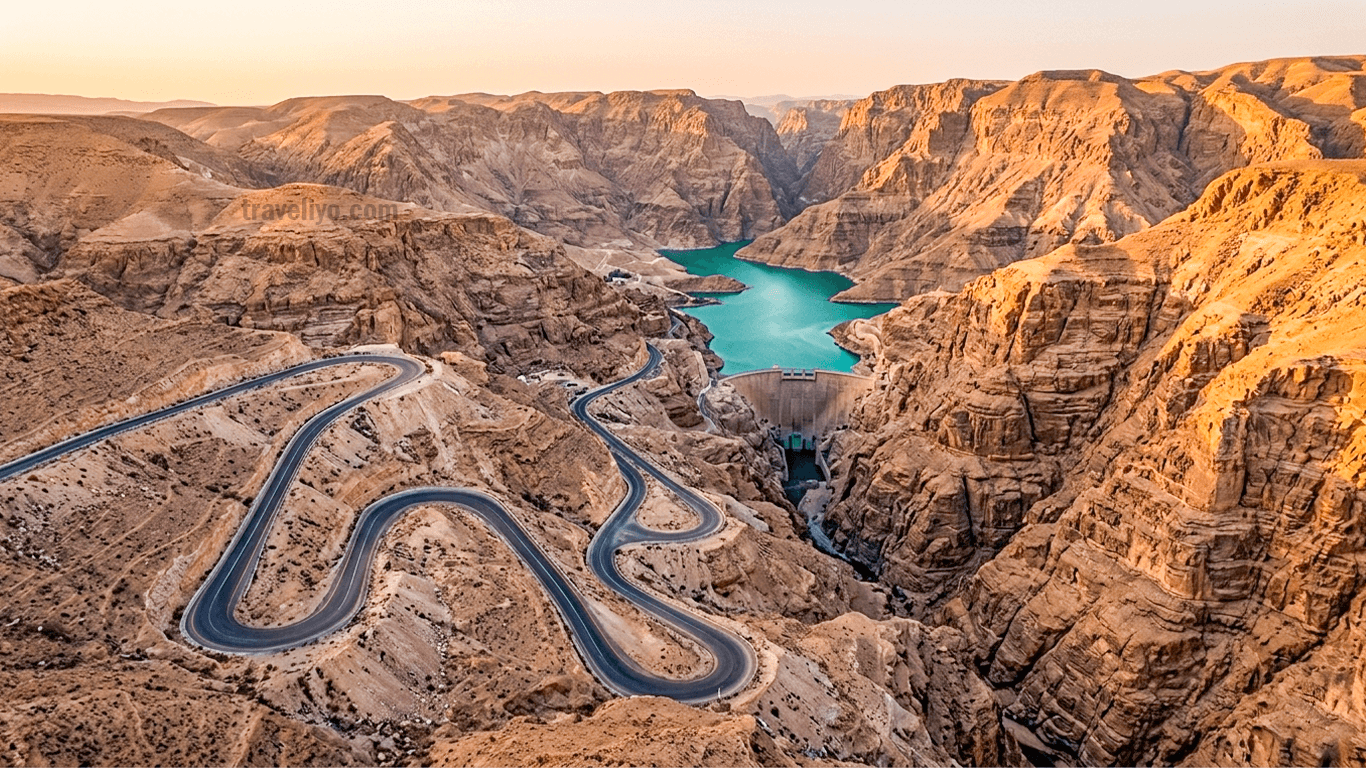
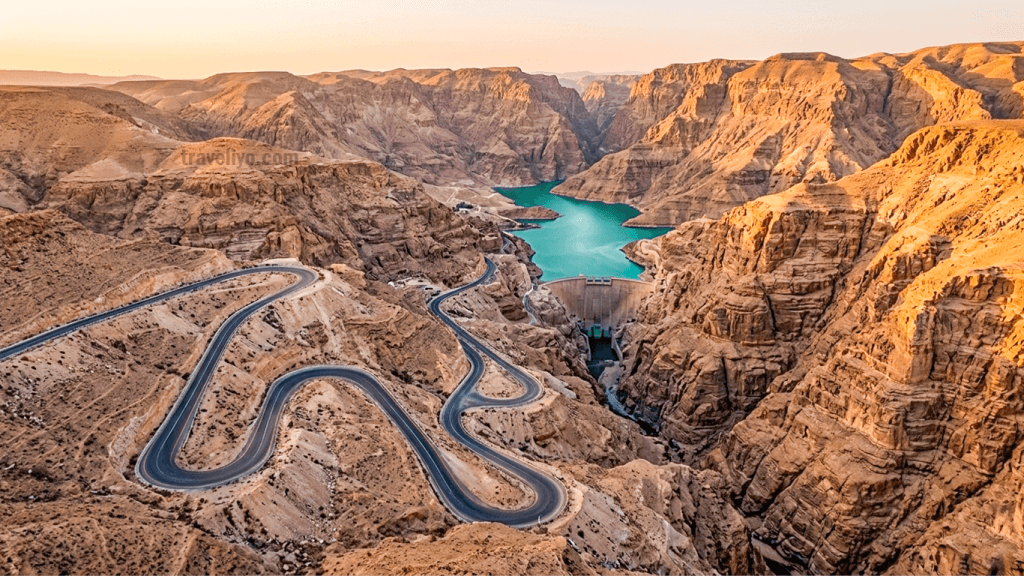
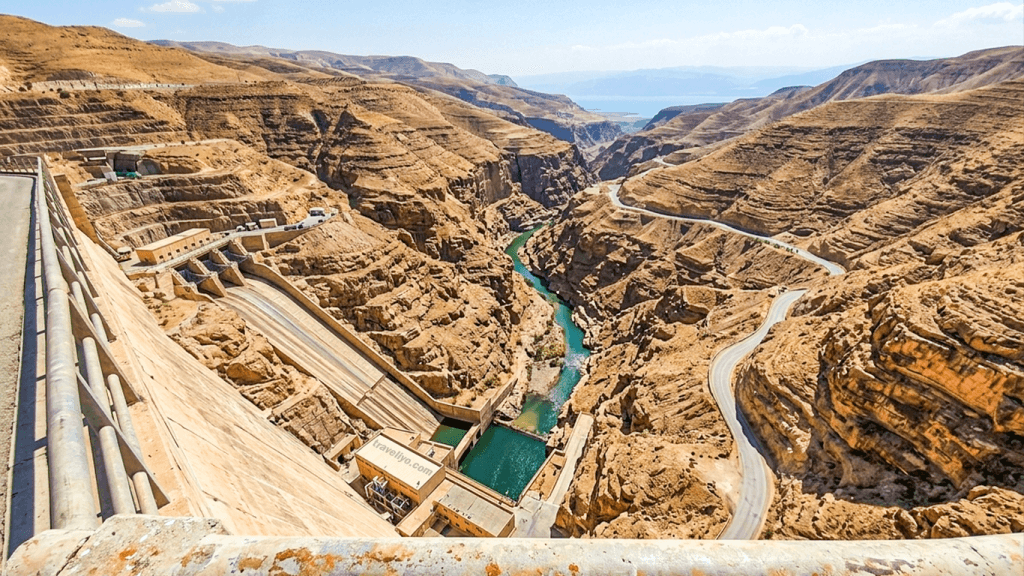
She wasn’t wrong. The Jordan grand canyon—as this massive stretch of Wadi Mujib is locally known—doesn’t have the massive global marketing machine of Petra. There is no crowded visitor center here, and you won’t find a row of souvenir shops. Instead, what you get is a raw, jaw-dropping canyon that drops over a thousand meters straight down to the Dead Sea floor, with layers of ancient rock shifting between bright orange and deep red in the afternoon sun.
Right there is a bridge on Route 35 that most tour buses cross without a second thought. We pulled over at the Wadi Mujib Viewpoint, and honestly, you should too.
📌 Planning your route through Jordan? Before you tackle the Kings Highway, make sure to read our very first post in this series: Amman Travel Guide: Best Things to Do in Jordan’s Capital (Part 1).
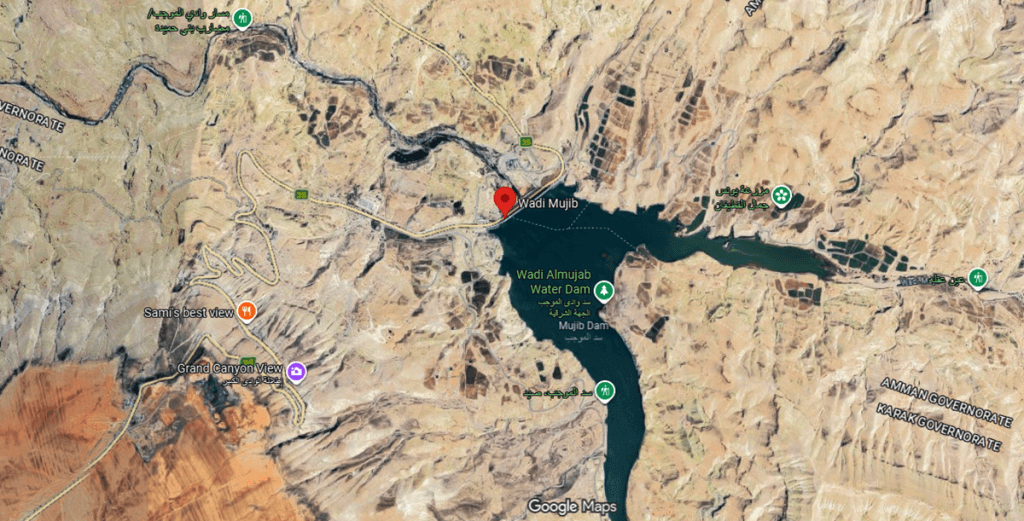
💡 Important Note: The roadside viewpoint on Route 35 is completely free and requires zero advance booking. Please don’t confuse this with the famous Wadi Mujib Siq Trail (the water hiking trail inside the canyon). The Siq Trail is a completely separate adventure accessed from the Dead Sea highway at the bottom of the canyon and is managed by the RSCN (Royal Society for the Conservation of Nature). This specific guide covers the high-altitude Kings Highway viewpoint.
01. Destination Overview — What Is the Wadi Mujib Canyon?
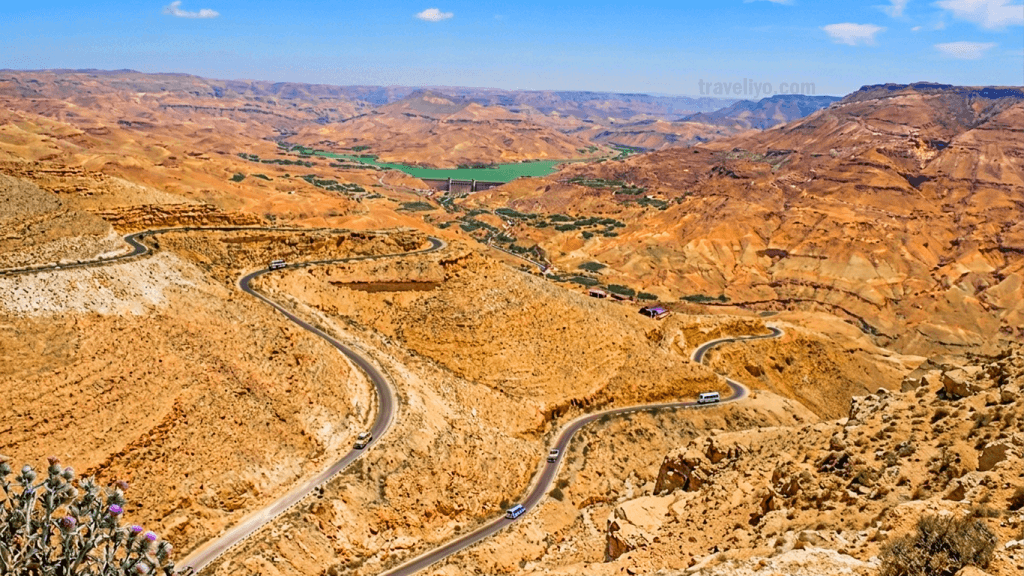
Wadi Mujib is a massive river canyon in western Jordan that cuts directly through the rugged highlands east of the Dead Sea. The entire wadi runs roughly 70 kilometers from east to west before emptying into the Dead Sea at about 410 meters below sea level. Because of this massive geographic drop, its base is officially recognized as one of the lowest points on earth.
Calling this place the grand canyon of jordan isn’t just a clever marketing phrase to grab the attention of travelers. The canyon walls in this specific section reach depths of over 1,000 meters. When you stand on the edge of the Kings Highway bridge and look out to the west, the drop is immediate, dramatic, and slightly terrifying. There is no gentle slope or gradual descent here. The road runs right along the edge of the flat plateau, and then the earth just splits open on both sides of the crossing.
===
This spectacular landscape forms the core of the Mujib Biosphere Reserve, a UNESCO-designated protected area managed by the RSCN. Spanning around 212 square kilometers, the reserve protects an incredible variety of wildlife, including the endangered Syrian ibex, mountain wolves, and over 300 distinct plant species. While most independent travelers only see the dramatic surface from the paved highway, the deeper ecosystem hidden at the bottom of the canyon is a completely different world.
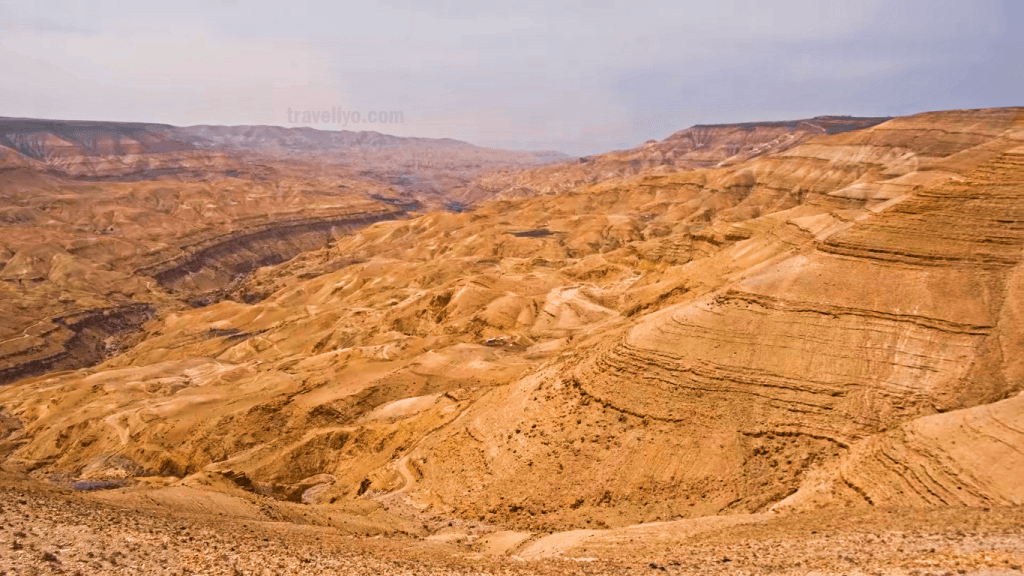
Geologically, you are looking at millions of years of sandstone and limestone erosion, carved out by seasonal floods and shaped by the same massive tectonic forces that created the Dead Sea Rift Valley. The colors embedded in the sheer rock walls—deep crimson, burnt orange, and pale yellow—constantly shift depending on the angle of the sun. Late afternoon, which is exactly when Taniya and I pulled in, is the absolute best time to be here because the west-facing walls almost seem to glow.
From the Kings Highway, this grand canyon jordan stop is as raw as it gets. There are no public restrooms, no ticket counters, and no local guides selling tours. It is simply a bridge, a small unpaved parking area, and one of the most stunning natural views in the Middle East that you can experience without having to lace up your hiking boots.
🚯 Preservation Note: Because Wadi Mujib is a strictly protected biosphere reserve under RSCN jurisdiction, please follow basic eco-travel ethics. Never throw trash or plastic into the canyon, do not attempt to scramble down the cliffs from the roadside, and stay safely behind the concrete barriers near the bridge.
02. Why We Stopped at Wadi Mujib
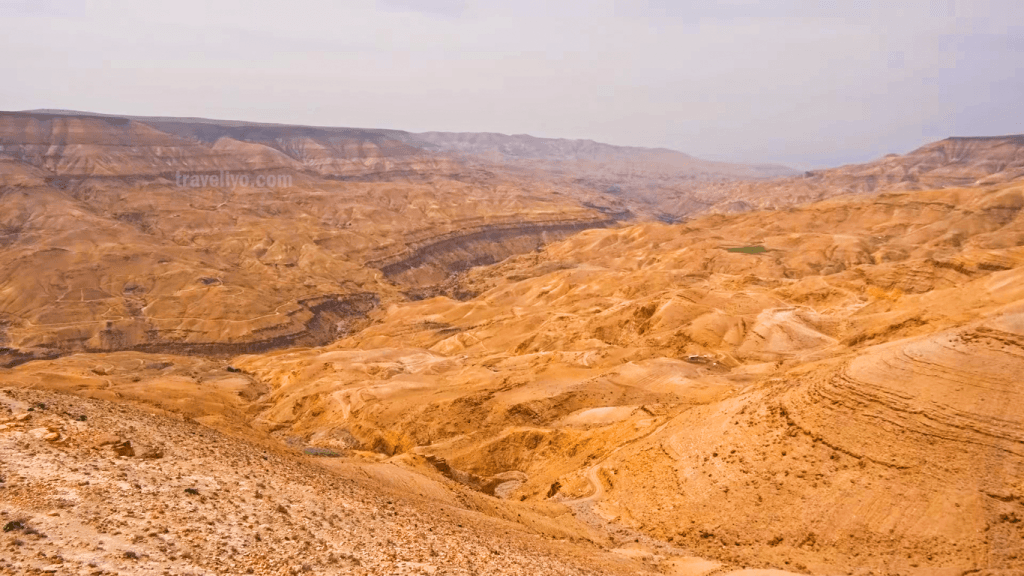
To be completely transparent, this stop wasn’t even a major highlight on our original Jordan itinerary. When I was sitting at home mapping out our route from Aqaba, the Wadi Mujib Viewpoint kept showing up on generic travel blogs as a minor bullet point under “things to see on Route 35.” Most writers dismissed it as a “quick 10-minute photo stop.” That kind of lukewarm review doesn’t exactly make you want to re-arrange your driving schedule. So, I marked it down as a “maybe if we have time” and focused on Petra and Wadi Rum.
What those online travel guides completely fail to convey is the sheer, overwhelming scale of the place.
The phrase Jordan grand canyon gets thrown around a lot on social media, and you easily get cynical thinking it’s just hype. But the moment you step out of the car, you realize the comparison is entirely fair. The canyon is genuinely that wide, that deep, and shockingly abrupt. You spend hours driving through normal, flat, sun-bleached desert towns, and then suddenly, the highway curves and the entire planet seems to open up right beneath your tires. It’s a view that doesn’t build up gradually; it just hits you all at once.
That raw accessibility is exactly what makes the Kings Highway experience feel so special compared to Jordan’s more famous landmarks. There is no entry ticket queue, no tour buses idling in a massive lot, and no choreographed walkways. It’s just an open mountain road, a bridge, and a front-row seat to nature’s raw power.
We initially planned to stay for 15 minutes just to stretch our legs. We ended up staying for nearly 40.
03. Best Time to Visit Wadi Mujib Viewpoint
The Ideal Season
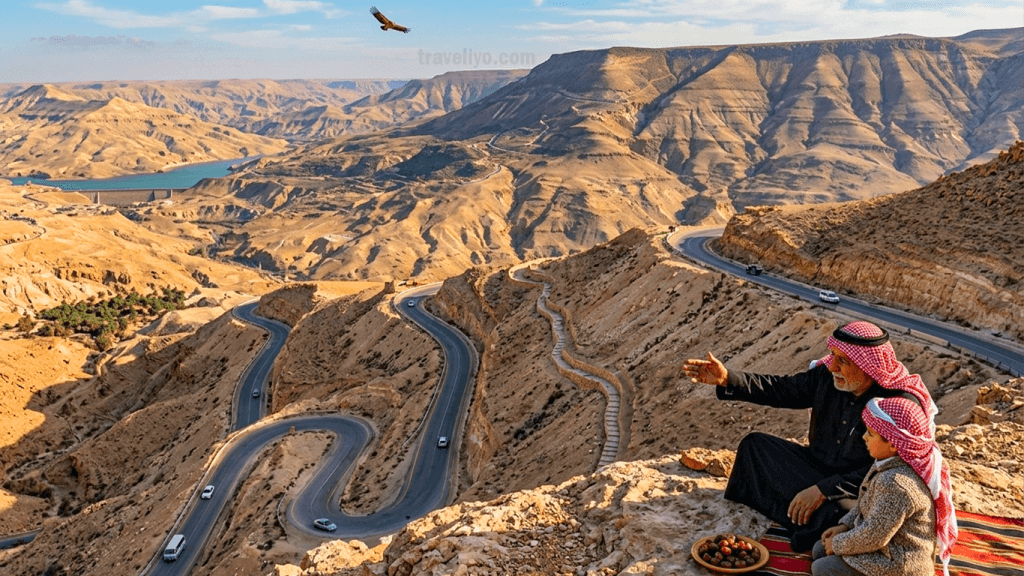
The spring months (March through May) and autumn months (September through November) are hands-down the most comfortable times of the year to drive the Kings Highway and stop at the canyon. During these peak travel windows, temperatures up on the high plateau stay comfortably between 18°C and 26°C (64°F to 79°F). It’s warm enough to stand outside and enjoy the view without needing a heavy jacket, but cool enough that the desert wind doesn’t feel like a hair dryer blowing in your face.
Spring has a distinct advantage: the riverbed far below carries a noticeable flow of water from the winter rains. On a perfectly clear spring afternoon, you can easily trace the silver line of the river cutting through the canyon floor.
Autumn, on the other hand, offers a much quieter experience. There are significantly fewer tourist crowds on Route 35, and the golden afternoon light between 3:00 PM and 5:00 PM hits the canyon walls at a low angle, making the natural red and orange pigments in the rock pop beautifully for photography.
Summer and Winter Considerations
- Summer (June to August): The high plateau gets incredibly hot, routinely spiking between 32°C and 37°C (90°F to 99°F). The viewpoint is completely exposed to the elements with zero shade. If you are driving through in summer, keep your stop brief, wear a hat, and make sure you have cold water inside the car.
- Winter (December to February): It gets surprisingly cold and windy on the plateau. However, winter has a major perk: the thick desert haze that usually sits over the Dead Sea often clears up entirely on crisp, cold days, giving you the sharpest long-distance views across the canyon. Just keep an eye out for early morning fog on the higher mountain passes of Route 35.
🕒 Traveliyo Timing Tip: Taniya and I reached the bridge at exactly 3:30 PM, and the lighting was absolutely perfect. If you are driving from south to north like we did, this timing fits naturally into a day trip—leaving plenty of time for Shobak and Dana in the morning, Al-Karak around lunchtime, and hitting the canyon right as the afternoon sun begins to directly illuminate the western rock faces.
04. How to Reach the Wadi Mujib Viewpoint
The Kings Highway Is the Point
Here is the easiest way to think about the Wadi Mujib Viewpoint: it isn’t really a place you drive to; it’s a spectacular place you drive through. If your road trip itinerary takes you along the famous Kings Highway (Route 35) between Al-Karak and Madaba or the Dead Sea, you are guaranteed to cross this massive gorge. The only question is whether you actually hit the brakes and step out.
The bridge and the small gravel pullover sit directly on Route 35, roughly 35 kilometers north of Al-Karak and about 90 kilometers south of Madaba. You won’t find massive exit signs, billboard advertisements, or formal turnoffs. As you drive, you will simply see a bridge ahead, the road will narrow slightly, and an unpaved shoulder will appear on the north side. You literally cannot miss the canyon itself, but you can easily speed past the parking spot if you’re distracted.
Taniya was glued to Google Maps as we approached, repeatedly warning me to slow down. I was already watching the road, which led to a brief, funny disagreement in the car about who almost made us drive past the grand canyon of jordan without stopping. (For the record, I was already braking. The map was totally unnecessary.)
Getting There — Journey & Practical Details
If you are putting together your own driving plan, here is what you need to know about distances:
Route | Distance | Approx. Drive Time |
|---|---|---|
Al-Karak → Wadi Mujib Viewpoint | ~35 km | 35–45 mins |
Aqaba → Wadi Mujib (via Route 35) | ~235 km | 4.5–5 hrs (with stops) |
Dead Sea Resorts → Wadi Mujib | ~90 km | 1–1.5 hrs |
Madaba → Wadi Mujib | ~90 km | 1–1.5 hrs |
We traveled in a rental car picked up from Avis in Aqaba. If you want to explore the Kings Highway properly and stop at these unmarked roadside viewpoints, renting your own car is the only realistic option. Public buses travel between major towns, but they absolutely will not pull over so you can take canyon photos.
Parking: The unpaved pullover area on the northern edge of the bridge fits about 6 to 8 cars comfortably. On a quiet weekday afternoon, we had the entire place to ourselves for 20 minutes before one other car showed up. During peak season, you might have to squeeze in, but since people don’t stay long, spots open up quickly. No gates, no entry fees, no tickets.
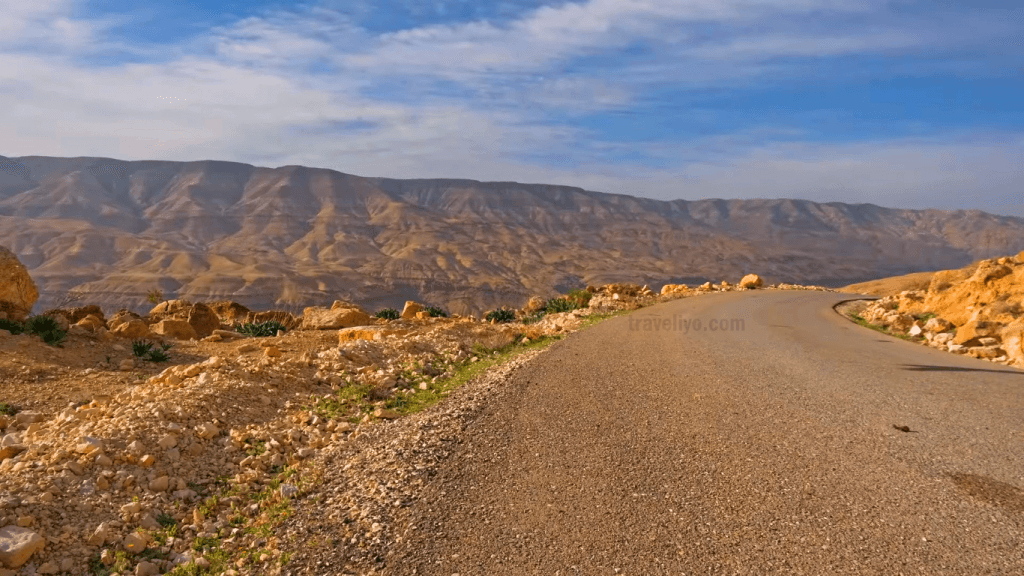
Driving Note: The Kings Highway drops rapidly as it approaches the Wadi Mujib crossing. The descent from the southern plateau and the subsequent climb out the northern side feature multiple sharp, steep hairpin bends. The tarmac is in good condition, but take these curves slowly, especially if your rental car has a small engine and a trunk full of luggage.
05. Where to Stay Near Wadi Mujib
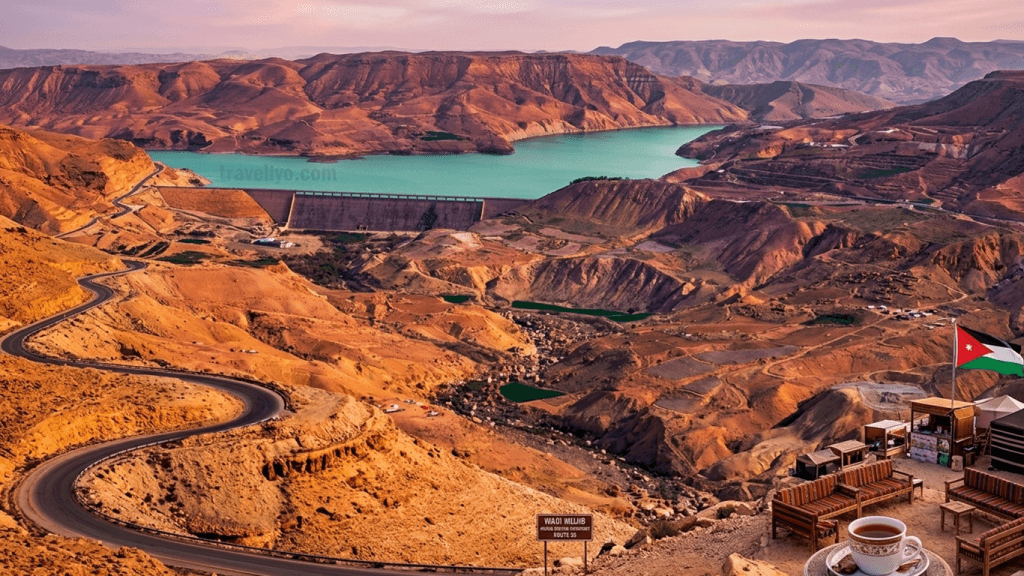
Because the Kings Highway viewpoint is literally just a bridge over a gorge, there are no hotels, guesthouses, or campsites nearby. The surrounding local villages are tiny and not built for tourism. Most travelers, like us, simply treat this as a scenic drive-through.
Depending on which direction your bumper is pointing, here are the most logical places to book your overnight stay:
If you are driving North (toward Amman/Dead Sea):
- The Dead Sea Resorts: This is the most popular choice and sits about 90 kilometers away, down at the bottom of the western descent. The resort strip features everything from luxury spots like the Mövenpick Resort and Marriott, to more affordable stays like the Dead Sea Spa Hotel. Sleeping here sets you up perfectly to float in the Dead Sea the next morning before driving up to Madaba.
- Madaba: If you prefer authentic local towns over gated resorts, Madaba is fantastic. The Mariam Hotel is a favorite among budget and mid-range independent travelers. From here, Mount Nebo and the Dead Sea are both easy, short drives away.
If you are driving South (toward Petra/Aqaba):
- Al-Karak: This is your closest practical option. The Towers Castle Hotel is the standard go-to in this town, as we mentioned in our previous Al-Karak guide. It’s affordable and puts you right next to the Crusader castle.
We were pushing north toward the Dead Sea after leaving the viewpoint. It fit perfectly into our schedule and put us exactly where we needed to be for the next day’s itinerary.
06. What to Do at the Wadi Mujib Viewpoint
Let’s manage expectations: this isn’t a half-day activity. It is a roadside viewpoint. However, inside that 20 to 40-minute window, there is a lot more to experience than you might think.
Stand on the Bridge — Both Sides
The Route 35 bridge crosses the gorge at one of its narrowest accessible points. First, walk over to the railing on the eastern side. Here, you are looking deep into the upper canyon toward the highlands. The rock walls squeeze closer together, and the ancient geological layers are incredibly defined.
Then, cross the road to the western railing.
This is the view that literally stops people mid-sentence. The Jordan grand canyon landscape completely opens up to the west. On a clear afternoon, you can actually see the Dead Sea far off in the distance—a flat, greyish-blue sliver sitting at the bottom of the world. The drop from the concrete bridge to the riverbed below is so massive that it genuinely takes your brain a few seconds to process the scale.
Taniya stood at this western edge for a long time without even reaching for her camera, which is rare for her. When I asked what she was looking at, she muttered, “I’m just trying to figure out if that’s actually the Dead Sea down there, or if my eyes are making it up.” It was, in fact, the Dead Sea.
The Photography Angle Most People Miss
Everybody points their cameras west toward the Dead Sea horizon. You absolutely should take that photo. But the eastern view—looking back into the rugged highlands—often gives you much better detail of the sheer rock faces. To capture the true depth of the grand canyon jordan style terrain, get close to the eastern railing, angle your lens slightly downward, and use the canyon walls to frame the shot instead of filling the frame with empty sky.
A quick warning: The wind whipping through the canyon from the west is relentless. Holding your camera or phone steady takes serious effort. We had a brief moment of panic when a sudden gust grabbed Taniya’s hat right off her head, sending it flying over the railing. Thankfully, a lower air current caught it and blew it back onto the dusty road shoulder. We just watched it happen; neither of us had the reflexes to catch it. The hat survived. The photo she was trying to take at that exact second did not.
Just Look — Without the Phone
It sounds cliché, but put the screen away for at least five minutes. The sheer magnitude of Wadi Mujib cannot be captured on an iPhone screen. Take your wide-angle shots, capture your video clips, and then just lean against the railing and soak it in.
🔍 Myth vs. Reality
- The Myth: It’s just a random roadside stop and not worth delaying your drive for.
- The Reality: The Wadi Mujib Viewpoint is arguably the most dramatic natural panorama accessible by a paved road in all of Jordan. Skipping it to save 20 minutes is one of the biggest mistakes travelers make on the Kings Highway.
07. FAQs About the Wadi Mujib Viewpoint
Q1: Is the Wadi Mujib Viewpoint the same as the Siq Trail?
No, they are totally different. The viewpoint is a free roadside stop on Route 35. The Siq Trail is a rugged water hike down inside the canyon, accessed from the Dead Sea road, which requires paid booking.
Q2: Do I need the Jordan Pass to visit this viewpoint?
No. Because this is simply a bridge on a public highway, you don’t need a Jordan Pass, tickets, or a reservation. Just pull over safely.
Q3: Is the Jordan Grand Canyon worth stopping for if I’m short on time?
Yes. The stop takes 20–40 minutes from road to road. The grand canyon of Jordan is the kind of view that you’d genuinely regret skipping for a time saving of half an hour.
Q4: Can I hike into the canyon from the Kings Highway viewpoint?
No. There is no trail access from the Route 35 viewpoint. The canyon walls drop directly below the road. The Siq Trail starts from the Dead Sea side and requires RSCN equipment, a guide, and booking.
Q5: What is the best time of day to visit the viewpoint?
Mid-to-late afternoon — between 2:00 PM and 5:00 PM — gives the best light on the western canyon walls. This also aligns naturally with a southbound-to-northbound Kings Highway drive from Aqaba.
Q6: Is the Wadi Mujib area safe?
Completely. Route 35 is a well-maintained national highway. The viewpoint pullover is used regularly by both local and international travelers. Standard road safety applies — pull fully off the road and don’t stand in traffic lanes for photos.
Q7: Can I visit without a car?
Not practically. There is no public transport that stops at the Wadi Mujib bridge. A rental car, private transfer, or organized Kings Highway tour are the only realistic options for this specific stop.
Q8: Is there a visitor center or facilities at the viewpoint?
No. No toilet, no cafe, no staff, no signage beyond the road itself. Bring everything you need before you arrive.
Q9: Is the Siq Trail open year-round?
No. The Wadi Mujib Siq Trail is seasonal — generally open from April to October, depending on water levels. Check the RSCN website (rscn.org.jo) for current availability and booking.
Q10: How does it actually compare to the American Grand Canyon?
The American version is vastly wider and longer. However, the sheer depth and abrupt drop of the Grand canyon of jordan deliver a very comparable immediate visual punch. It’s physically smaller, but the dramatic geology is incredibly similar—and beautifully untouched by mass tourism.
08. Food & Drink
Let me be incredibly clear: there is absolutely nothing to eat or drink at the Wadi Mujib Viewpoint. You won’t find a tea stall, a snack cart, or even a vending machine. It is a piece of functional highway infrastructure with a world-class view, not a tourist facility.
- Before you arrive: If you are driving up from the south, buy your supplies in Al-Karak. There are plenty of small mini-markets near the castle where you can grab water, sodas, and road trip snacks. We bought a large bag of local Za’atar-flavored chips and a few bottles of water in Al-Karak, which we happily snacked on at the canyon pullover.
- After the viewpoint: The road north eventually drops down into the Dead Sea basin. The resort strip has excellent restaurants and cafes, though you will be paying inflated resort prices. If you are pushing all the way to Madaba, hold off on eating until you get there. Haret Jdoudna in Madaba is a brilliant spot set in a restored stone courtyard, serving incredible traditional Jordanian food for a fair price.
Hydration Warning: You will likely spend most of your day inside an air-conditioned car. Keep at least one full bottle of water dedicated just for this viewpoint. The relentless canyon wind dehydrates you much faster than direct sunlight, and remember—the nearest convenience store is 35 kilometers behind you.
09. Traveliyo Recommendations: What to Pack
This is a quick viewpoint stop, not a rugged hike, so you don’t need much. However, having these specific items handy in the car makes a huge difference:
- Wind-resistant jacket: Even on a pleasant spring day, the canyon wind on the bridge gets surprisingly cold.
- Minimum 1 liter of water: The wind dehydrates you much faster than direct sun.
- Wide-angle lens: Phone cameras are great, but capturing the sheer width of the grand canyon jordan landscape really benefits from an ultra-wide camera lens.
- Sunglasses: Essential for the western view, which faces directly into the harsh afternoon sun.
10. Our Travel Costs & Budget Notes
Finding epic, completely free travel experiences is rare, but the Kings Highway viewpoint is one of them. There is no entry gate, no parking fee, and no tourist trap pricing.
Expense | Cost | Traveliyo Notes |
|---|---|---|
Viewpoint Entry | Free | No ticket, no Jordan Pass required. |
Parking | Free | Unpaved shoulder space. |
Water & Snacks | ~1–2 JOD | Buy in Al-Karak before driving north. |
Fuel (Al-Karak to Dead Sea) | ~5–7 JOD | Highly efficient as it’s mostly a downhill drive. |
(Note: The famous Wadi Mujib Siq Trail—the intense water hike accessed from the Dead Sea highway—is a completely separate, paid adventure managed by the RSCN. It requires advance booking and costs around 21 JOD. This guide only covers the free roadside viewpoint above it.)
11. Suggested Itinerary: The Kings Highway Day
If you want to replicate our route, here is how you can comfortably fit this stop into a single day of driving from Aqaba up to the Dead Sea.
- 7:00 AM: Depart Aqaba
- 9:30 AM: Explore Shobak Castle (1.5 hours)
- 11:30 AM: Quick stop at Dana Village Viewpoint (45 mins)
- 1:00 PM: Wander through Al-Karak Castle (2 hours)
- 3:30 PM: Depart Al-Karak, driving north on Route 35
- 4:15 PM: Stop at the Wadi Mujib Viewpoint (30–40 mins)
- 5:00 PM: Begin the steep descent toward the Dead Sea
- 6:30 PM: Arrive at your Dead Sea resort area for the night
Travel tip: The road from the canyon down to the Dead Sea drops over 1,000 meters in a short stretch. If you leave the viewpoint after 5:00 PM in the winter, be prepared to navigate steep, winding mountain roads in the dark.
12. Nearby Places Worth Exploring
- Al-Karak Castle (35 km South): The largest Crusader fortress in the region. Wandering its dark underground tunnels is a must-do before hitting the canyon.
- The Dead Sea (90 km Northwest): The natural endpoint of your day. Floating effortlessly in its ultra-salty water is an unforgettable experience.
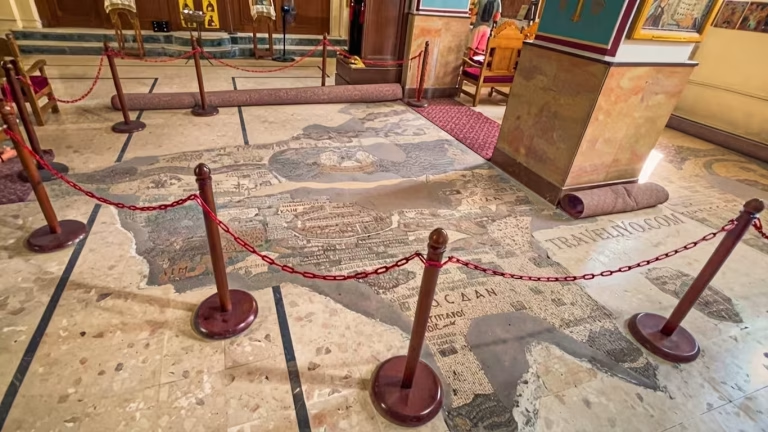
- Madaba (90 km North): A historically rich Jordanian city famous for its stunning Byzantine-era mosaics, including the legendary 6th-century map of the Holy Land.
- Mount Nebo (10 km from Madaba): The legendary hilltop where Moses is said to have viewed the Promised Land.
13. FAQs About the Wadi Mujib Viewpoint
Q1: Is the Wadi Mujib Viewpoint the same as the Siq Trail?
No, they are totally different. The viewpoint is a free roadside stop on Route 35. The Siq Trail is a rugged water hike down inside the canyon, accessed from the Dead Sea road, which requires paid booking.
Q2: Do I need the Jordan Pass to visit this viewpoint?
No. Because this is simply a bridge on a public highway, you don’t need a Jordan Pass, tickets, or a reservation. Just pull over safely.
Q3: How does it actually compare to the American Grand Canyon?
The American version is vastly wider and longer. However, the sheer depth and abrupt drop of the Grand canyon of jordan deliver a very comparable immediate visual punch. It’s physically smaller, but the dramatic geology is incredibly similar—and beautifully untouched by mass tourism.
14. Conclusion
We left the Wadi Mujib bridge just before 5:00 PM, but the day wasn’t quite finished the way we’d originally mapped it out.
Looking at the time left and what was still ahead — Madaba, Mount Nebo, and the drive into Amman — the math didn’t work. Stopping properly at two more sites and still reaching Amman before dark wasn’t realistic, not after a day that already included Shobak, Dana, and Al-Karak.
There was also a more practical detail we couldn’t ignore. Our rental car was a one-way booking through Avis Jordan — picked up in Aqaba, due back at their Dead Sea drop-off counter that same day. That settled things for us. We weren’t choosing between options anymore. We were driving to the Dead Sea, returning the car, and working out the rest from there.
So that’s what we did. We checked into a hotel near the Dead Sea for the night, returned the car that evening, and made a simple plan for the morning: be at the Wadi Mujib Siq Trail entrance by 9:00 AM, before the heat and the crowds built up.
From there, we’d switch to Uber for the remaining stretch north — two more stops, then on to Amman.
It felt like the trip changing gears. Up to that point, every day had been about distance — covering ground from Aqaba up through the highlands. From the Dead Sea onward, it became about depth: one canyon hike, a couple of unhurried stops, and an arrival in Amman without a rental car key in my pocket for the first time in days. The next morning, before the sun had fully cleared the canyon walls, we were standing at the Mujib Adventure Center, about to do something neither of us had done before — walk into the Wadi Mujib canyon, against the current, with the Dead Sea waiting at the other end.
Read Our Complete Jordan Travel Series
Planning a trip to Jordan? Don’t miss the rest of our detailed guides from this incredible journey:
- Part 01: Exploring Amman – The Capital City
- Part 02: The Ancient Ruins of Jerash
- Part 03: Floating in the Dead Sea
- Part 04: The Magic of Petra
- Part 05: A Night in the Wadi Rum Desert
- Part 06: Relaxing in Aqaba
- Part 07: Exploring Shobak Castle
- Part 08: Exploring the Dana Biosphere Reserve
- part 09: Discovering Al-Karak Castle
- part 10: Wadi Mujib Viewpoint (You are here!)
- Part 11: Wadi Mujib Canyon (Next Read 👉)
- Part 12: Mount Nebo – the View Moses Saw
- Part 13: Madaba Jordan – The Mosaic City’s Full Story
For more historical background, You can read the detailed article on Wikipedia
Did this guide help you? Have you also visited Jordan Grand Canyon? Share your experience in the comments below – it will be very valuable for other travelers.