When to Visit Jordan: Weather, Crowds, and the Best Months to Go

My wife Taniya and I have visited Jordan enough times now that we’ve stopped arguing about when to visit and started comparing notes on why. I’m German, she’s American, and between the two of us we’ve turned up at Petra in freezing December fog and sweated through Wadi Rum in July — so we’ve more or less experienced the full range of what this country’s weather can throw at you.
If you’re trying to work out the best time to visit Jordan, the short version is: it depends on what you actually want from the trip. Spring and autumn are the easy, obvious answers, and for most couples and families, they’re the right ones. But there’s more nuance to it than that, and after more than ten years of traveling through the Middle East together and separately, this is the guide we’d hand a friend who asked us over coffee.
🌤 Best Time to Visit Overall: March – May & September – November (Spring & Autumn)
🗓 Single Best Month: April or October — warm days, cool (not cold) nights
☀️ Hottest Months: July & August (up to 40°C/104°F+ in desert areas)
🌧 Coldest & Wettest Month: January
💡 Cheapest Time to Go: June – August, & December – January (outside holidays)
📈 Busiest & Priciest Months: April, May, & October
🌊 Best for the Dead Sea: Year-round, especially September – November
🛂 Visa: Required for most nationalities, usually bundled into the Jordan Pass
⚠️ Current Situation: Check your government’s official travel advisory before booking
01. A Quick Safety Note Before You Plan (2026 Update)
Before we get into seasons and temperatures, we want to address something honestly, because glossing over it wouldn’t be fair to you.
Since a regional conflict involving Iran, Israel, and the United States broke out in late February 2026, Jordan has occasionally found itself in the path of things, even though it isn’t a party to the fighting. On 28 February 2026, Iran launched drone and missile strikes at American and allied military facilities across the Middle East, and several projectiles crossed into Jordanian airspace before being intercepted by Jordanian and US forces stationed in the country. Most recently, Jordan’s armed forces intercepted around 20 missiles aimed at Muwaffaq Salti Air Base on the night of 8–9 September 2026.
The more reassuring part: as of the most recent reporting available, Jordan had gone nine consecutive days without a new drone or missile attack, the longest quiet stretch since attacks resumed in late August — a real, if cautious, sign of de-escalation.
Here’s where the official advice stands as we write this:
- United States: The State Department’s advisory remains “Reconsider Travel to Jordan due to terrorism and armed conflict.”
- Australia: Smartraveller continues to advise reconsidering travel due to the unpredictable security situation in Jordan and the region, and the threat of terrorism, with military strikes and reprisal attacks continuing to occur across parts of the Middle East, including towards targets in Jordan.
- United Kingdom: The FCDO no longer advises against all but essential travel to Jordan as a whole, but it still advises against all travel within 3km of the border with Syria, and against all but essential travel to Aqaba’s international airport and seaport, following missile interceptions nearby in July 2026.
Petra, Wadi Rum, the Dead Sea, and central Amman sit well away from the specific border and airbase areas named in these advisories, and tour operators have continued taking bookings through 2026. That said, we’re not going to tell you everything is simply “back to normal,” because that’s not really ours to decide — it’s your government’s, based on the latest facts. Please check the official advisory for your own country close to your travel dates, consider travel insurance that explicitly covers your itinerary, and register your trip with your embassy if that option is available. We go into more detail on this in the FAQ section further down, and we’ll be publishing a full, regularly updated *Is Jordan Safe?* guide separately — this is just the short version. With that out of the way, let’s get to the actual planning.
02. When Is the Best Time to Visit Jordan? (The Quick Answer)
If you only read one section of this guide, make it this one.
The best time to visit Jordan is during spring (March to May) or autumn (September to November), when daytime temperatures typically sit between 20–28°C (68–82°F) across most of the country, nights are cool rather than bitter, and rain is unlikely to disrupt sightseeing. These shoulder seasons are when Petra’s sandstone genuinely looks its best in photos, hiking in Wadi Rum or Dana is pleasant instead of an endurance test, and floating in the Dead Sea doesn’t feel like stepping into a warm bath.
If you want it narrowed down further, April and October are usually the two best months to visit Jordan — the sweet spot between good weather, manageable crowds, and reasonable prices. Both months are getting more popular every year, though, so book your accommodation early.
03. Jordan Weather by Season
Averages only tell you so much. Jordan’s geography means the weather can swing wildly depending on whether you’re standing in Amman’s hills, out in Wadi Rum’s open desert, or down at the Dead Sea, which sits more than 400 meters below sea level. Here’s what each season actually feels like on the ground.
Spring in Jordan (March to May)
Spring is when Jordan shows off. The winter rains have done their job, so by March the hills around Dana start turning green, and wildflowers spread across land that looks bone-dry the rest of the year. Early March can still be cool in the evenings — we’ve worn fleece jackets at Petra after sunset — but by late April, daytime temperatures climb into the high 20s°C (low-to-mid 80s°F) and everything feels comfortable.
The catch is that everyone else knows this too. Easter and the European spring school holidays push crowds and hotel prices up noticeably from mid-April through May, especially around Petra. If a quieter, cheaper trip matters more to you than perfect weather, aim for March instead.
Summer in Jordan (June to August)
Summer in Jordan isn’t subtle. Amman climbs into the low 30s°C (high 80s–low 90s°F), while Aqaba and the Dead Sea regularly push past 38–40°C (100–104°F), and Wadi Rum‘s open desert can feel even hotter under direct sun. It’s a dry heat rather than a humid one, which helps, but midday sightseeing at Petra in July is genuinely rough — we’ve done it, and we wouldn’t recommend it with young kids along.
The upside is that this is low season: flights and hotels drop noticeably, and popular sites are quieter, especially before 9am. Aqaba’s Red Sea coast is also at its best for diving and snorkeling in summer, since the water stays warm and visibility is good.
Autumn in Jordan (September to November)
Autumn is spring’s quieter sibling. September still carries some of summer’s heat, especially in the first couple of weeks, but by October the country settles into a genuinely pleasant stretch — warm days, mild evenings, and just enough rain by November to green things up again before winter sets in.
October, specifically, gets our vote as one of the best months to visit Jordan: the Dead Sea is warm enough to float in comfortably, hiking trails are usually still open, and the crowds haven’t quite caught up to spring levels. Book ahead regardless — tour operators know this is a good month too.
Winter in Jordan (December to February)
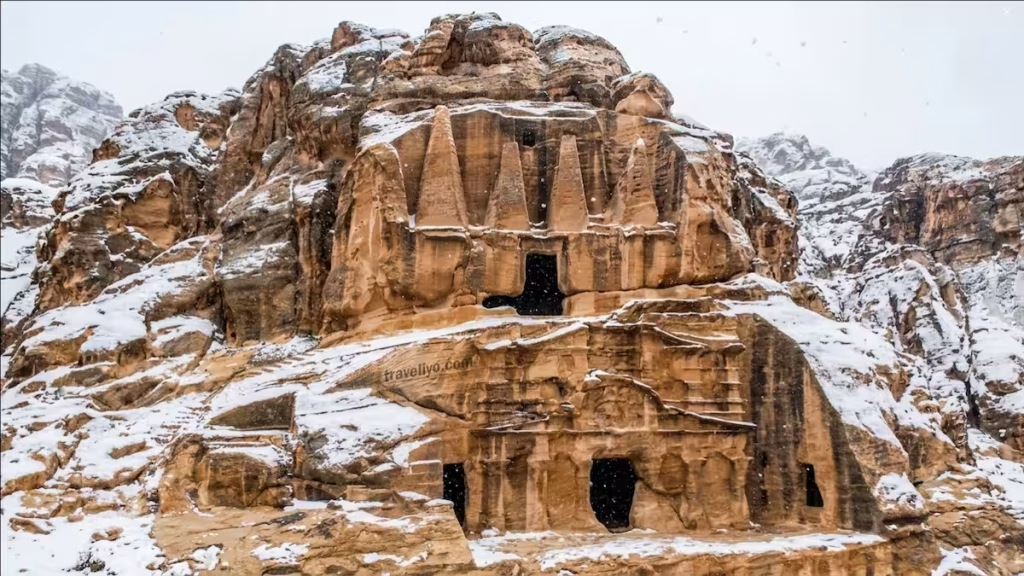
Winter surprises a lot of first-time visitors, because “desert country” doesn’t automatically mean “warm.” Amman gets genuinely cold at night, hovering close to freezing, and it isn’t unheard of for Petra or even Amman itself to see a light dusting of snow. Wadi Rum’s desert nights can drop close to 0°C (32°F), so a Bedouin camp stay in January means packing far more layers than most people expect.
January is also Jordan’s wettest month, and heavy rain occasionally forces a temporary closure of the Wadi Mujib Canyon trail due to flash flood risk — worth checking before you build a hiking day around it. On the plus side, winter is when Petra is at its emptiest, hotel rates drop the most, and Aqaba and the Dead Sea stay noticeably milder than the rest of the country, making them a good winter escape within Jordan itself.
Jordan Seasons at a Glance: Pros & Cons
Season | Typical Weather | Crowds | Prices | Best For | Watch Out For |
|---|---|---|---|---|---|
Spring (Mar–May) | Mild to warm, 18–28°C (64–82°F) | High, rising through May | High, especially Apr–May | Hiking, wildflowers, photography | Easter & school-holiday crowds |
Summer (Jun–Aug) | Hot to very hot, 30–40°C+ (86–104°F+) | Low at desert/inland sites | Low overall | Aqaba diving, budget trips | Midday heat, tough with young kids |
Autumn (Sep–Nov) | Warm, cooling by Nov, 20–30°C (68–86°F) | High, especially October | High | Dead Sea, hiking, sightseeing | Book well ahead |
Winter (Dec–Feb) | Cold nights, mild days, 5–16°C (41–61°F) | Low | Low | Budget travel, quiet Petra | Cold nights, possible trail closures |
04. Jordan Month-by-Month Weather Guide
Numbers help more than adjectives here, so this is what average daytime highs actually look like across Jordan’s main regions. These are long-term averages compiled from published climate data — actual conditions shift a few degrees year to year, so treat this as a planning guide rather than a guarantee.
Month | Amman | Petra | Wadi Rum | Aqaba | Dead Sea |
|---|---|---|---|---|---|
January | 12°C / 54°F | 13°C / 55°F | 14°C / 57°F | 20°C / 68°F | 20°C / 68°F |
February | 13°C / 55°F | 15°C / 59°F | 17°C / 63°F | 22°C / 72°F | 22°C / 72°F |
March | 16°C / 61°F | 18°C / 64°F | 20°C / 68°F | 25°C / 77°F | 26°C / 79°F |
April | 22°C / 72°F | 22°C / 72°F | 24°C / 75°F | 29°C / 84°F | 31°C / 88°F |
May | 27°C / 81°F | 27°C / 81°F | 29°C / 84°F | 34°C / 93°F | 35°C / 95°F |
June | 30°C / 86°F | 30°C / 86°F | 32°C / 90°F | 37°C / 99°F | 38°C / 100°F |
July | 31°C / 88°F | 31°C / 88°F | 34°C / 93°F | 38°C / 100°F | 39°C / 102°F |
August | 32°C / 90°F | 31°C / 88°F | 33°C / 91°F | 38°C / 100°F | 39°C / 102°F |
September | 30°C / 86°F | 29°C / 84°F | 32°C / 90°F | 35°C / 95°F | 37°C / 99°F |
October | 27°C / 81°F | 26°C / 79°F | 28°C / 82°F | 32°C / 90°F | 34°C / 93°F |
November | 20°C / 68°F | 20°C / 68°F | 20°C / 68°F | 26°C / 79°F | 29°C / 84°F |
December | 14°C / 57°F | 15°C / 59°F | 15°C / 59°F | 21°C / 70°F | 22°C / 72°F |
A couple of things jump out from this table. Amman and Petra track each other closely almost all year, since they sit at similar elevations — directly relevant if you’re wondering whether Petra runs warmer than Amman (short answer: barely; we’ll settle this properly in the FAQ section). Aqaba and the Dead Sea, both sitting far below sea level, run 6–10°C warmer than the highlands in every single month, which is exactly why they double as a decent winter escape.
Rain follows the opposite pattern, concentrated between November and March, with January the wettest month countrywide, while June through September stay bone dry almost everywhere.
If you want one answer to “what’s the best month to visit Jordan,” our pick is October. The table above shows why: temperatures have dropped well off their summer peak everywhere, but you’re still a good six weeks from winter’s cold nights and rain.
05. Best Time to Visit Jordan’s Top Destinations
Jordan is small enough to see in one trip, but its regions behave like different countries weather-wise. Here’s a quick rundown for the places most people actually put on their itinerary.
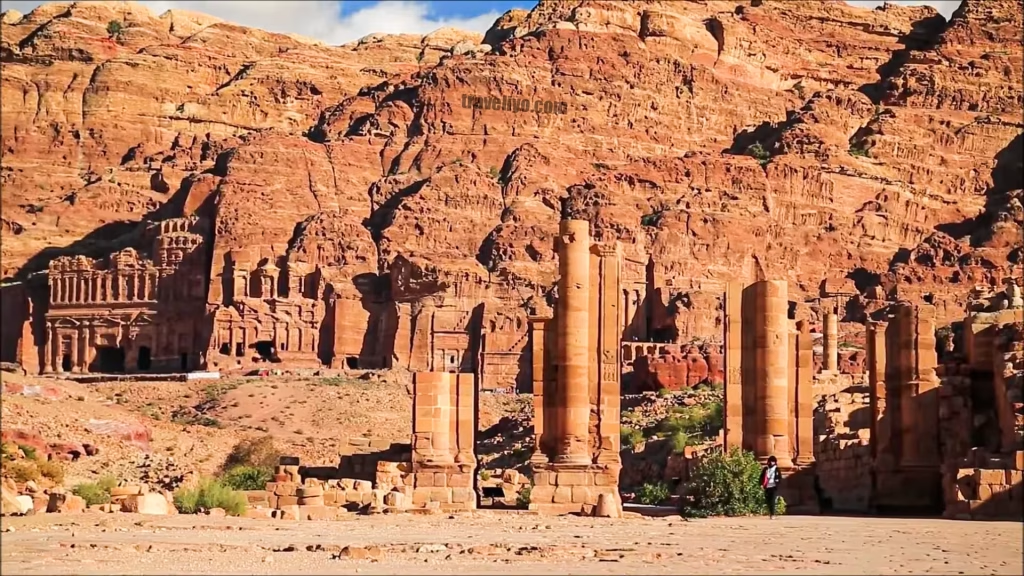
Petra sits at roughly 810 meters above sea level, which keeps it noticeably cooler than Aqaba or the Dead Sea — though it still gets hot and busy from April through May. We’d pick March or late October specifically for Petra: mild enough to walk all the way to the Monastery, and quiet enough to actually hear the wind moving through the Siq. If you’re hoping to catch the candlelit Petra by Night show, the official schedule currently runs five evenings a week, Sunday through Thursday, though it’s occasionally cancelled at short notice for bad weather, so confirm at the visitor center rather than building your whole itinerary around one specific night.
Wadi Rum‘s whole appeal is extremes — that’s sort of the point of a desert. Spring and autumn bring comfortable days for jeep tours and short hikes, plus clear, cold nights that produce some of the best stargazing we’ve experienced anywhere. Winter camping here calls for proper thermal layers, since temperatures can flirt with freezing after dark, while summer flips the problem entirely: shade, water, and starting activities before 9am become non-negotiable.

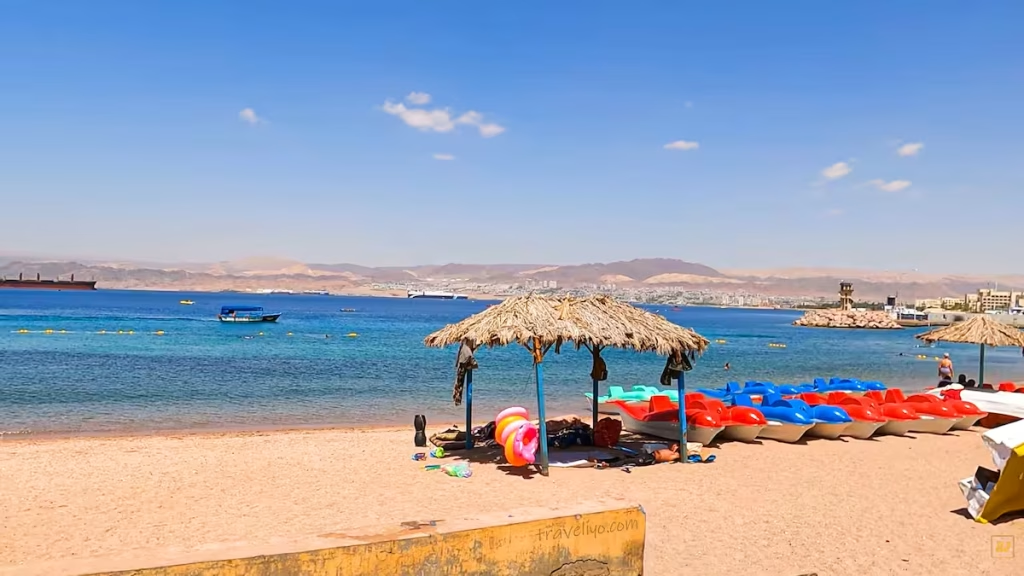
The Dead Sea is the one place in Jordan where “bad weather” barely exists, since you can float comfortably almost any month. That said, September through November is our favorite window — the water’s still warm from summer, but the air isn’t so hot that walking from your sun lounger to the shoreline feels like a chore.
Aqaba & the Red Sea stay warm nearly year-round, which is what makes this coast good for diving and snorkeling outside the peak summer crush. Visibility tends to peak from September to November, once summer’s boat traffic thins out but before winter’s occasional rough seas roll in.
Amman, the capital, sits high enough — around 900 meters — to get properly cold in winter, including the odd dusting of snow. Spring and autumn suit walking tours of the Citadel and Rainbow Street best, though honestly, Amman works as a year-round city break, since you’re rarely doing hours of exposed outdoor walking the way you are at Petra or Wadi Rum.
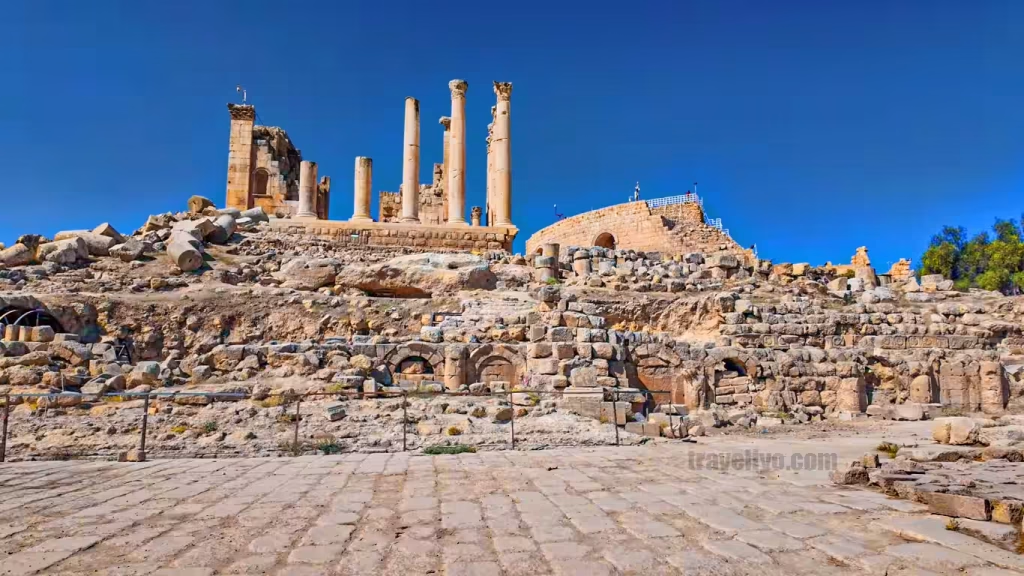
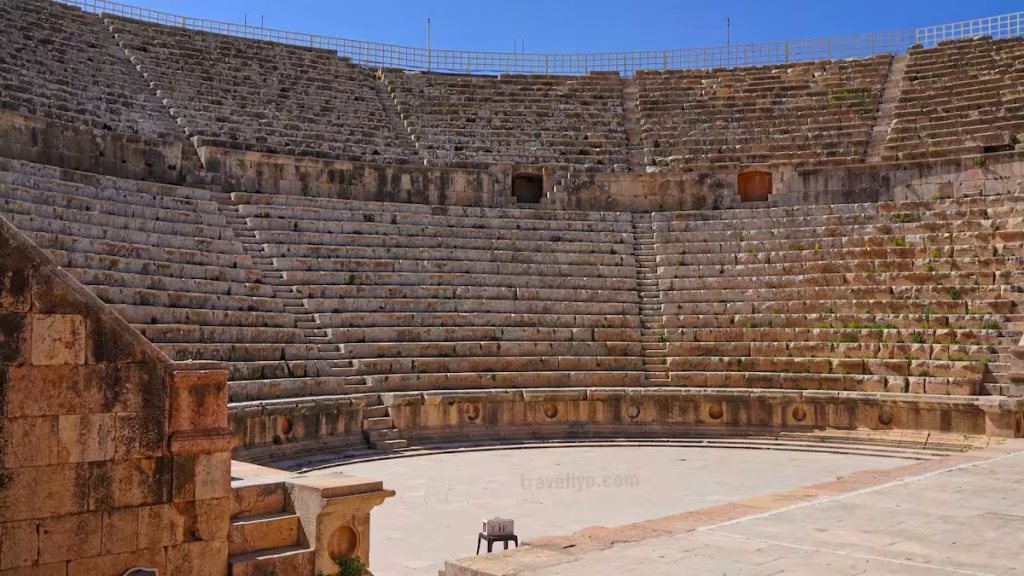
Jerash‘s Roman ruins offer almost no shade, so this is one site where summer heat really bites — we’d skip a midday visit here in July or August entirely. Spring works best, when the columns and open plazas aren’t baking, and if your dates line up with July’s Jerash Festival, the ruins host a genuinely lively arts and culture event despite the heat.
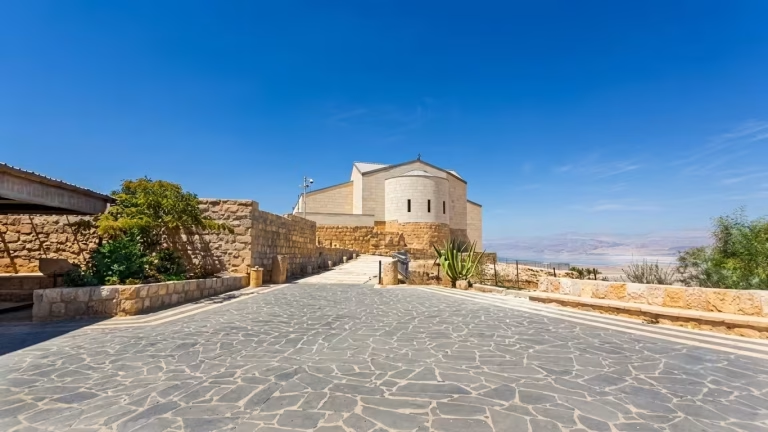
Madaba & Mount Nebo sit close to Amman’s climate, making them an easy half-day trip in almost any season. One tip worth knowing: Mount Nebo’s view over the Jordan Valley and, on a clear day, the Dead Sea, is sharpest in winter and early spring, when dust haze is lowest — summer’s hazier air can flatten that view considerably.
Dana Biosphere Reserve, Jordan’s largest nature reserve, runs cooler than Petra despite being close by, thanks to its elevation. Spring is the standout season for wildflowers and comfortable hiking temperatures, with autumn close behind. Summer hiking on Dana’s more exposed trail sections is a real slog, and winter can bring snow at the reserve’s highest points.
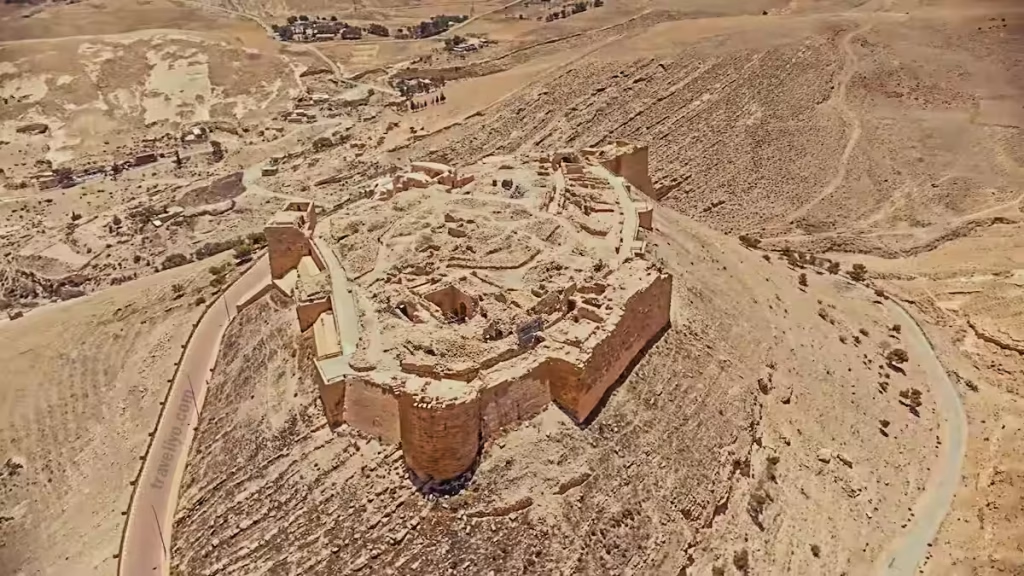
The King’s Highway — Al Karak Castle & Shobak Castle — both sit on exposed hilltops with essentially no shade anywhere on site. Spring and autumn make the whole King’s Highway drive properly enjoyable; in summer, aim to arrive early and keep the visit fairly short.
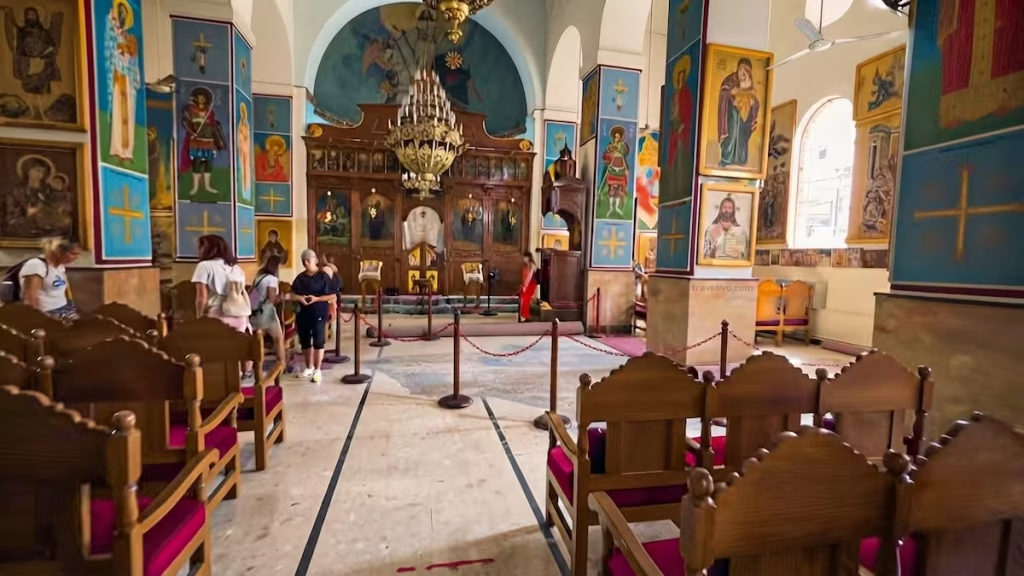
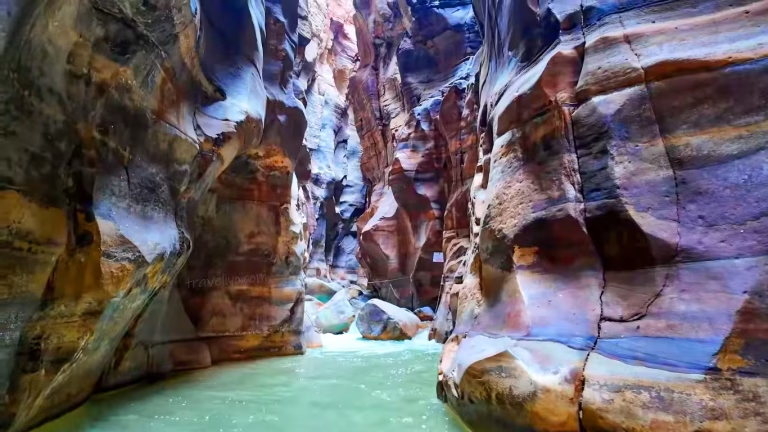
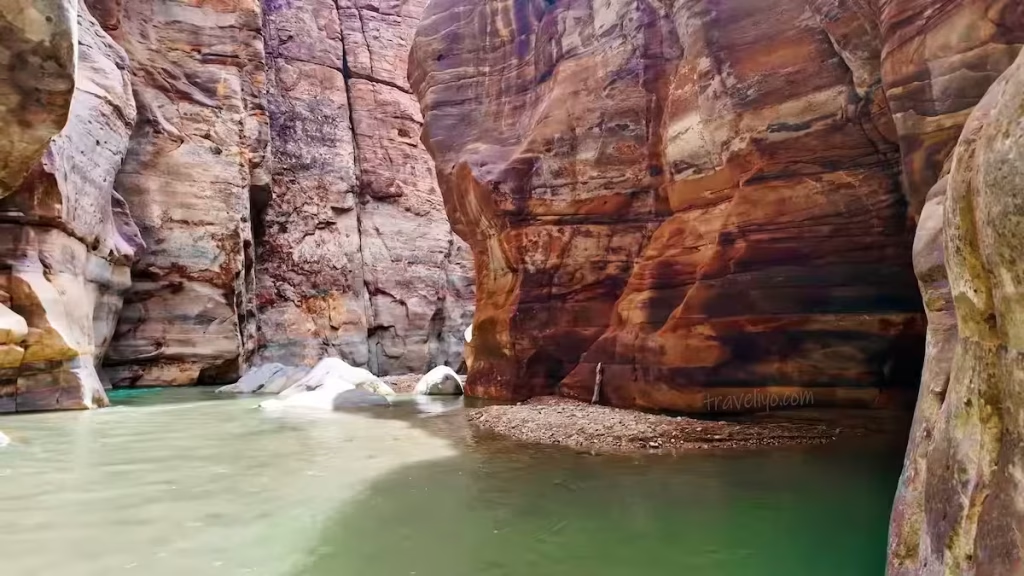
Wadi Mujib: Viewpoint vs. Canyon — these are two different experiences with two different timing rules. The Wadi Mujib Viewpoint, the scenic overlook along the Dead Sea Highway, is worth a stop year-round and especially lovely near sunset. The Wadi Mujib Canyon trails — the wade-through-the-water hiking experience — are a different story: the reserve’s wet trails are officially open only from April through October and closed the rest of the year, since winter rains turn the canyon into a genuine flash-flood hazard. A dry, year-round alternative (the Ibex Trail) exists for anyone visiting between November and March who still wants to see this part of the reserve. If the canyon hike specifically is on your list, build your trip around those seven open months.
06. Best Time to Visit Jordan for Couples
We get asked this a lot, usually by couples planning a honeymoon or an anniversary trip, so here’s our honest take.
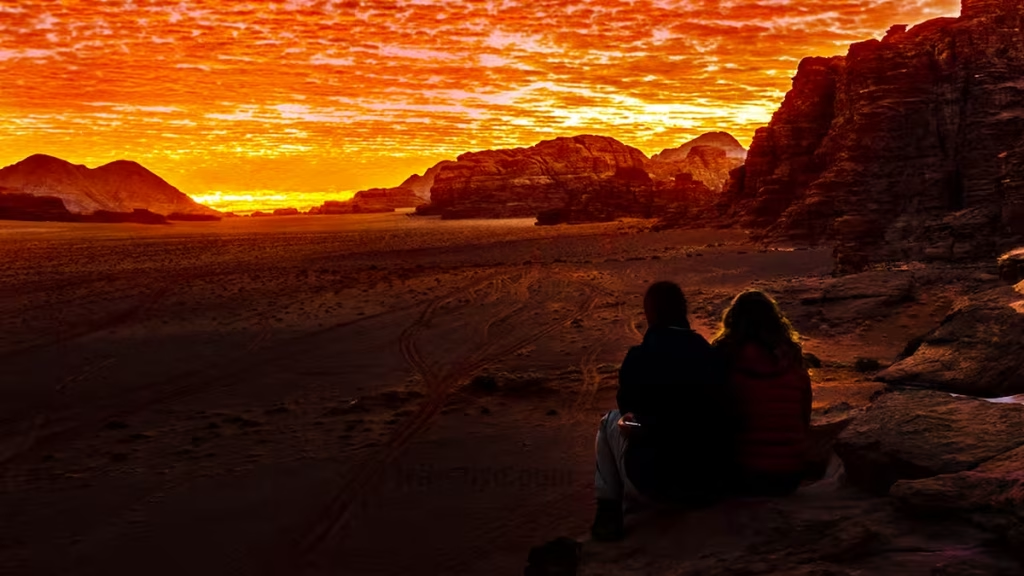
For couples, we’d lean toward the edges of the shoulder seasons — late March, or late October into early November — rather than the absolute peak of April or May. You still get comfortable weather, but hotels have more room to upgrade you, restaurants aren’t fully booked out, and Petra doesn’t feel like a theme-park queue at 10am.
Some of our own favorite moments in Jordan have been small and unplanned: sharing a pot of mint tea with a Bedouin family in Wadi Rum as the sun dropped behind the dunes; floating side by side in the Dead Sea at golden hour, both laughing at how strange it feels to not be able to sink; watching the Treasury catch the first light of morning with almost nobody else around, purely because we’d dragged ourselves out of bed early enough to beat the tour buses.
If a candlelit evening at Petra is on your list, pairing it with a desert camp night in Wadi Rum — proper Bedouin-style dinner, a fire, an absurd number of stars — works beautifully, and both are far more enjoyable outside peak summer heat, when nobody wants to sit outside after dark anyway. For a honeymoon specifically, we’d build the trip around one classic loop — Amman, Petra, Wadi Rum, and the Dead Sea — timed for either April or October, with a couple of extra nights added so you’re never rushing between stops.
07. Best Time to Visit Jordan with Family & Kids
Traveling with kids changes the calculus a bit, mostly around heat tolerance and nap schedules rather than anything Jordan-specific. Spring and autumn are still our top pick for families, for the simple reason that neither adults nor children do well trudging around Petra’s ruins in 35°C heat.
A few practical notes we wish someone had given us before our first family-style trip (borrowing nieces and nephews counts, right?):
- Petra involves a lot of walking, and there’s no way around that — the walk to the Treasury alone is about 1.2km each way on uneven ground, and the Monastery adds a serious uphill climb. Horse-drawn carriages and donkeys are available for part of the route if little legs give out, though we’d treat those as a backup rather than the plan.
- The Dead Sea needs a few ground rules with kids: the water stings badly in eyes and any small cuts, and it’s genuinely unpleasant if swallowed. Bring water shoes (the salt crystals underfoot are sharp) and rinse off at the freshwater showers provided at most beach access points.
- Wadi Mujib’s wet canyon trails have a strict minimum age of 18 — this one catches families off guard. If you’re traveling with children and want a taste of the reserve, the dry Ibex Trail (available November–March, when the wet trails are closed anyway) doesn’t carry the same restriction, though it’s a proper hike rather than a stroll.
- Aqaba is genuinely the easiest stop for younger kids — calm beaches, a marine park with glass-bottom boats, and warm, shallow water that’s far more forgiving than the Dead Sea.
- If your only available travel window is the summer school holidays, plan around the heat rather than fighting it: Petra and Jerash before 9am, indoor or shaded time (museums, hotel pools, Amman’s malls) through the early afternoon, and the Dead Sea or Aqaba’s beaches for the golden-hour cool-down.
One scheduling note worth knowing: Jordanian schools typically have their own winter break across January and February, which nudges up domestic crowds and prices at exactly the time of year when many outsiders assume the country is quiet. It’s still low season by international standards, just not a total ghost town.
08. Jordan Crowds, Prices & Peak Season Guide
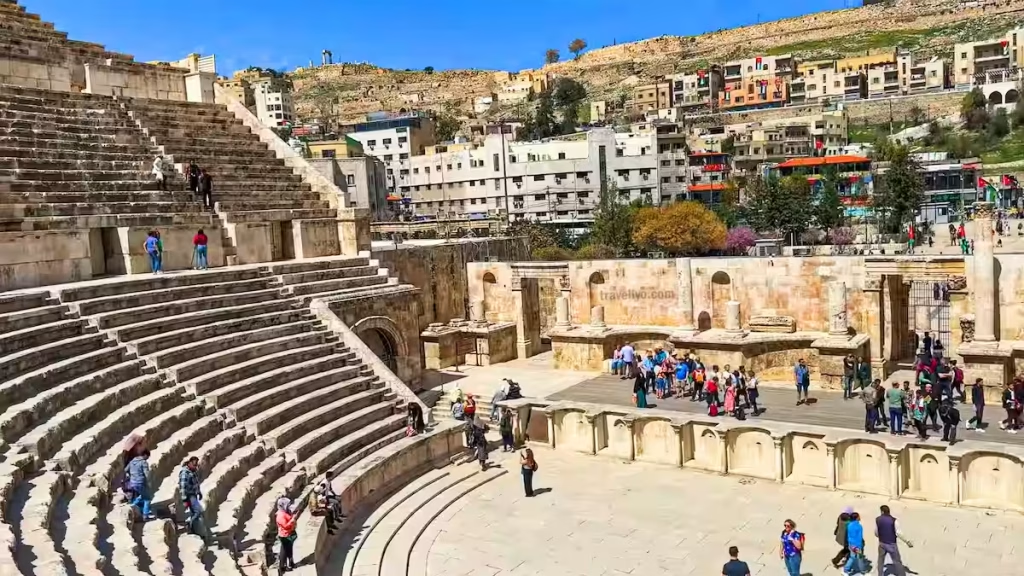
If budget or crowd levels matter as much to you as the weather does, here’s how the year actually breaks down.
Season | Months | Crowd Level | Price Level | What to Expect |
|---|---|---|---|---|
Peak Season | Mid-March–May, October | High | Highest | busiest | Book 2–3 months ahead; Petra and Wadi Rum at their |
Shoulder Season | Early March, June, September, November | Moderate | Moderate | A good balance of decent weather and reasonable rates |
Summer Low Season | July–August | Low at inland/desert sites | Lowest | Big discounts inland; Aqaba’s beaches are the exception and stay busy |
Winter Low Season | December–February | Low | Lowest overall | Cheapest hotel rates of the year, except a brief spike around Christmas/New Year |
A few things worth flagging specifically:
Easter and European spring school holidays are the single biggest driver of Jordan’s spring crowds — in 2027, Easter falls on 28 March, which will pull spring break travel into the last week of March and drag prices up right through April. If you can shift your trip even a week or two either side of that window, you’ll notice a real difference in both cost and crowding at Petra.
Cruise ship day-trippers are another factor that’s easy to overlook: several cruise itineraries route through Aqaba, and on days when ships are in port, Petra can see several thousand extra same-day visitors arriving by bus mid-morning. If you’re staying overnight near Petra, getting to the site right at opening avoids the worst of this entirely, cruise season or not.
For genuinely low prices, the sweet spot is often the back half of June or the first half of September — summer heat, but not the absolute peak of July and August, and well before the October rush.
09. Festivals, Events & Ramadan in Jordan
Jordan’s calendar has a few fixed points worth building a trip around — or avoiding, depending on what you’re after.
Ramadan is the big one to plan around either way. It’s the Islamic holy month of fasting, and because it follows the lunar calendar, it shifts roughly 11 days earlier every year. Ramadan 2027 is expected to run from around 7–8 February through 8–9 March 2027, ending with the Eid al-Fitr holiday around 9–10 March, though the exact start depends on the official moon sighting. During Ramadan, many local restaurants close or reduce their hours during daylight, and some sites shorten their opening times slightly, though hotels and tourist-facing restaurants generally keep serving visitors as normal. In exchange, evenings come alive — iftar (the sunset meal breaking the fast) has a genuinely festive, communal energy in Amman that’s worth experiencing if your dates happen to line up with it. Just know that guided activities at places like Wadi Mujib sometimes pause during the month, so double check if you’re planning anything active.
The Jerash Festival for Culture and Arts usually runs from late July into August, turning the Roman ruins at Jerash into an open-air stage for music, dance, and theatre from Jordanian and international performers. It’s a genuine highlight if your trip overlaps with it, even though July heat means daytime sightseeing there is best done early.
The Aqaba Traditional Arts Festival takes place each February, celebrating Bedouin crafts, music, and traditions along the Red Sea coast — a nice reason to build in a February trip if the winter off-season pricing already appeals to you.
Beyond these, smaller cultural events pop up throughout the year in Amman and Madaba, so it’s worth a quick search closer to your travel dates for anything happening locally.
10. Worst Time to Visit Jordan
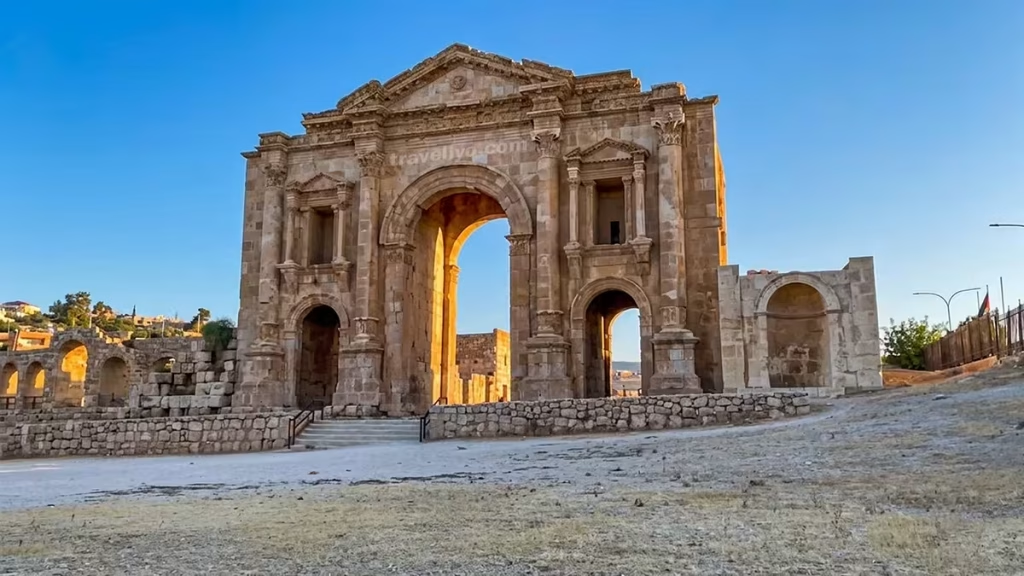
If we had to name a single worst window, it’s mid-July through August. Heat is the main issue: Amman and Petra regularly push past 30°C, while Aqaba and the Dead Sea climb into the high 30s, and there’s almost no shade at Petra, Jerash, or the King’s Highway castles. Add in higher humidity near the Dead Sea in peak summer, and outdoor sightseeing outside the early morning becomes genuinely uncomfortable rather than just warm.
A second, very different contender for “worst” is the two weeks surrounding Easter and the European spring break — not because of weather (it’s often lovely) but because of crowds and cost. Petra’s Siq can feel more like a queue than an ancient wonder, hotel prices spike, and everything from rental cars to Petra by Night tickets needs booking well in advance.
Winter (December–February) isn’t really a “worst” time so much as a different one: rain, cold nights, and the occasional snow flurry in Amman or Petra can complicate outdoor plans, and Wadi Mujib’s wet canyon trails are closed entirely. But if you don’t mind a coat and you’re chasing low prices and empty sites, winter is far from a bad choice — just not the one for a beach-and-hiking itinerary.
Honestly, if neither extreme heat nor crowds is a dealbreaker for you, there isn’t a genuinely bad time to visit Jordan — just a best time for your specific priorities.
11. Practical Tips Before You Go
A few last things worth sorting out before you book anything:
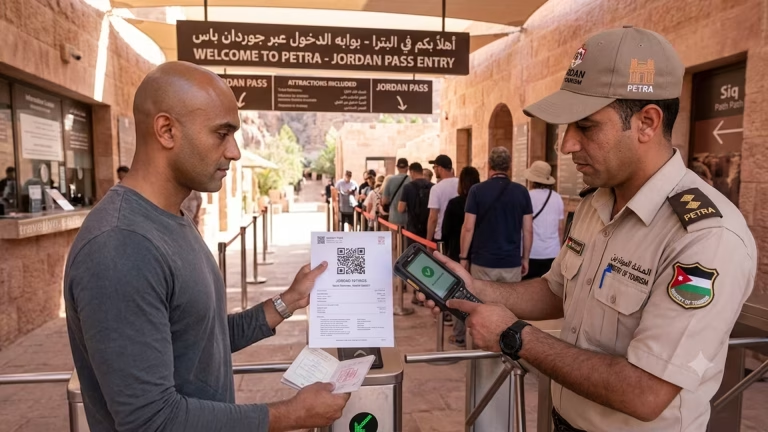
- Visa & entry — Most visitors from the USA, UK, Canada, the EU, and Australia can get a visa on arrival for 40 JOD, or apply for an e-visa in advance. If you’re staying three nights or longer, buying the Jordan Pass in advance waives that visa fee entirely and bundles in entry to 40+ sites, including Petra — full details in our Jordan Pass & Visa Guide.
- What to pack — Layers matter more than almost anywhere else we’ve traveled, given the day-to-night temperature swings in the desert. We break this down properly in our upcoming Jordan Packing List.
- Safety — We touched on the current regional situation earlier in this guide; for a deeper, regularly updated look at safety advisories, areas to avoid, and practical precautions, see our dedicated Is Jordan Safe? guide.
- Getting around — Jordan doesn’t have a rail network for tourists, so you’re choosing between guided tours, private drivers, rental cars, and the JETT intercity bus network. We cover the pros and cons of each in our Public Transport in Jordan and Driving in Jordan guides.
- Budgeting — Costs vary hugely by travel style; see our Jordan Travel Cost guide for a full breakdown, and the FAQ section below for a quick answer.
- Where to sleep — From Amman’s business hotels to Wadi Rum’s desert camps and the Dead Sea’s resort strip, accommodation styles vary a lot by region — our Where to Stay in Jordan guide walks through it region by region.
- Building an itinerary — If a week matches your schedule, our 8-Day Jordan Itinerary covers the classic loop. Shorter or longer trips are covered in our upcoming 5-Day and 10-Day Jordan Itinerary guides.
- Food — Don’t leave without trying mansaf, Jordan’s national dish; our Jordanian Food Guide covers what to order and where.
- Everything else — For odds and ends that don’t fit neatly elsewhere — SIM cards, tipping, currency, etiquette — see our general Jordan Travel Tips guide.
12. Frequently Asked Questions
13. Final Thoughts — Our Honest Recommendation
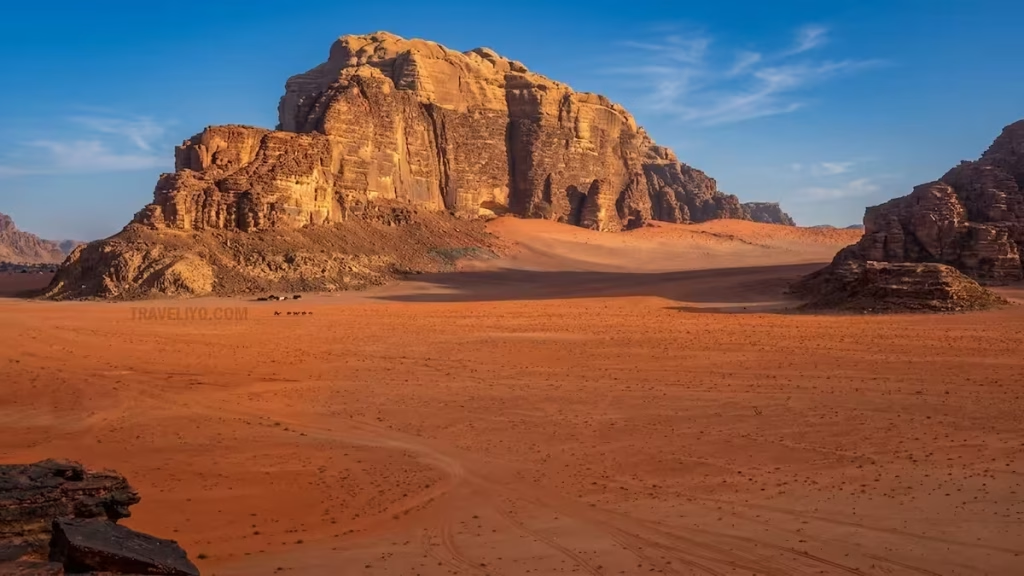
After all the tables and caveats, here’s the short version we’d give a friend over coffee: aim for April or October. Between them, spring and autumn hand you Jordan at its most comfortable — warm enough for a full day at Petra without wilting, cool enough at night in Wadi Rum to actually enjoy the stars, and calm enough at the Dead Sea that floating feels like a reward rather than an endurance test.
If your dates are locked to school holidays or a specific budget, don’t panic — we’ve genuinely enjoyed Jordan in July (early starts, long lunches indoors) and in January (empty ruins, proper coat weather). The one non-negotiable we’d flag again before you book anything: check your government’s current travel advisory for Jordan given the regional situation we outlined earlier, get insurance that actually covers your itinerary, and build in some flexibility.
Beyond that, most of what makes a Jordan trip work has less to do with the calendar and more to do with pace — this is a small country with enormous sites, and rushing between Petra, Wadi Rum, and the Dead Sea in four days does all three a disservice. Give yourself room to sit still occasionally: a second cup of tea with a Bedouin guide, an extra hour watching the light change on sandstone, a slow float instead of a quick dip.
We hope this guide helps you pick your dates with a bit more confidence than we had on our first trip. Whichever month you land on, Jordan has a way of rewarding people who show up curious — and forgiving those of us who occasionally showed up in the wrong shoes for the weather.
For more historical background, You can read the detailed article on Lonely planet
Did this guide help you? when to visit jordan? Share your experience in the comments below – it will be very valuable for other travelers.