
Madaba Jordan: Is This 6th-Century Mosaic the World’s First “Google Map”? (2026) | Jordan Travel Series – 13 of 13

By the time Tania and I reached Madaba, Jordan, the light was already going soft and low. Late afternoon. We’d conquered the canyon that morning, stood on Mount Nebo, and then took a taxi ride through streets that kept narrowing the closer we got to the old town center.
Neither of us had much left in the tank, honestly.
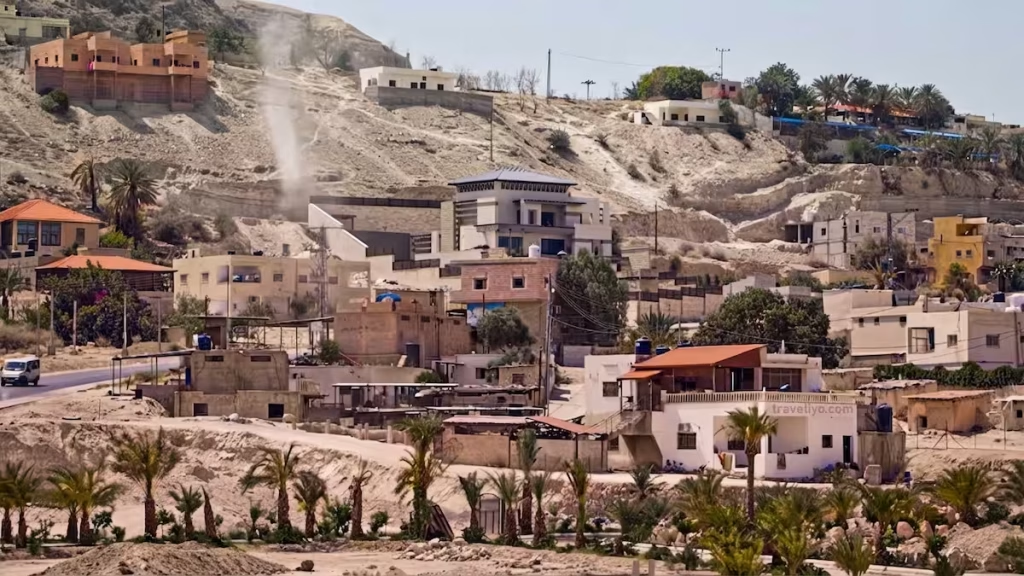
Madaba didn’t ask for much on arrival, though. No steep climbs. No desert wind trying to steal our hats. Just a quiet town with cafes on the corners, a few gift shops stacking mosaic coasters twenty high in the windows, and the ordinary hum of a place where people actually live.
This was it. The last stop of our journey.
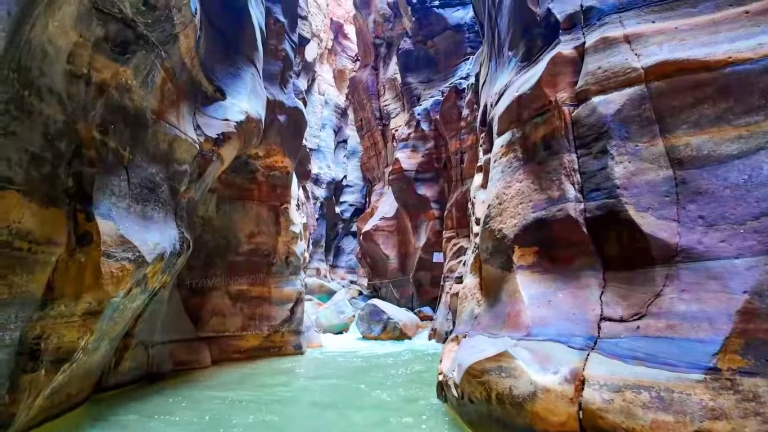
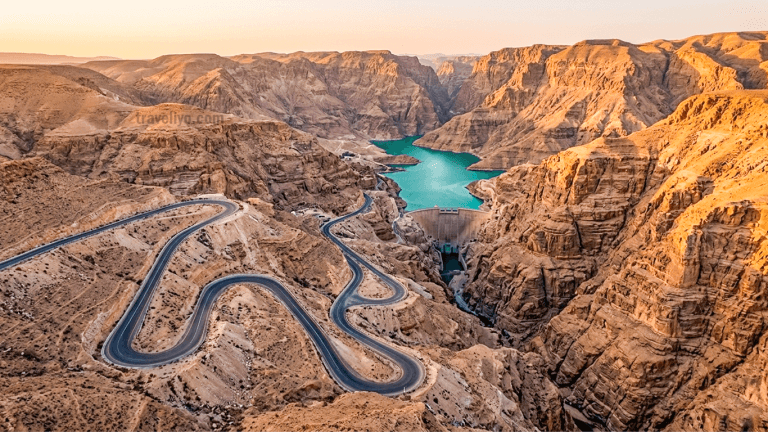
Aqaba, Shobak, Dana, Karak, Wadi Mujib—twice over, once from the road and once from inside the water—and Nebo that same morning. And now Madaba. Tomorrow we were heading to Amman, and then catching our flight home. Tonight was all about whatever this town had left to show us.
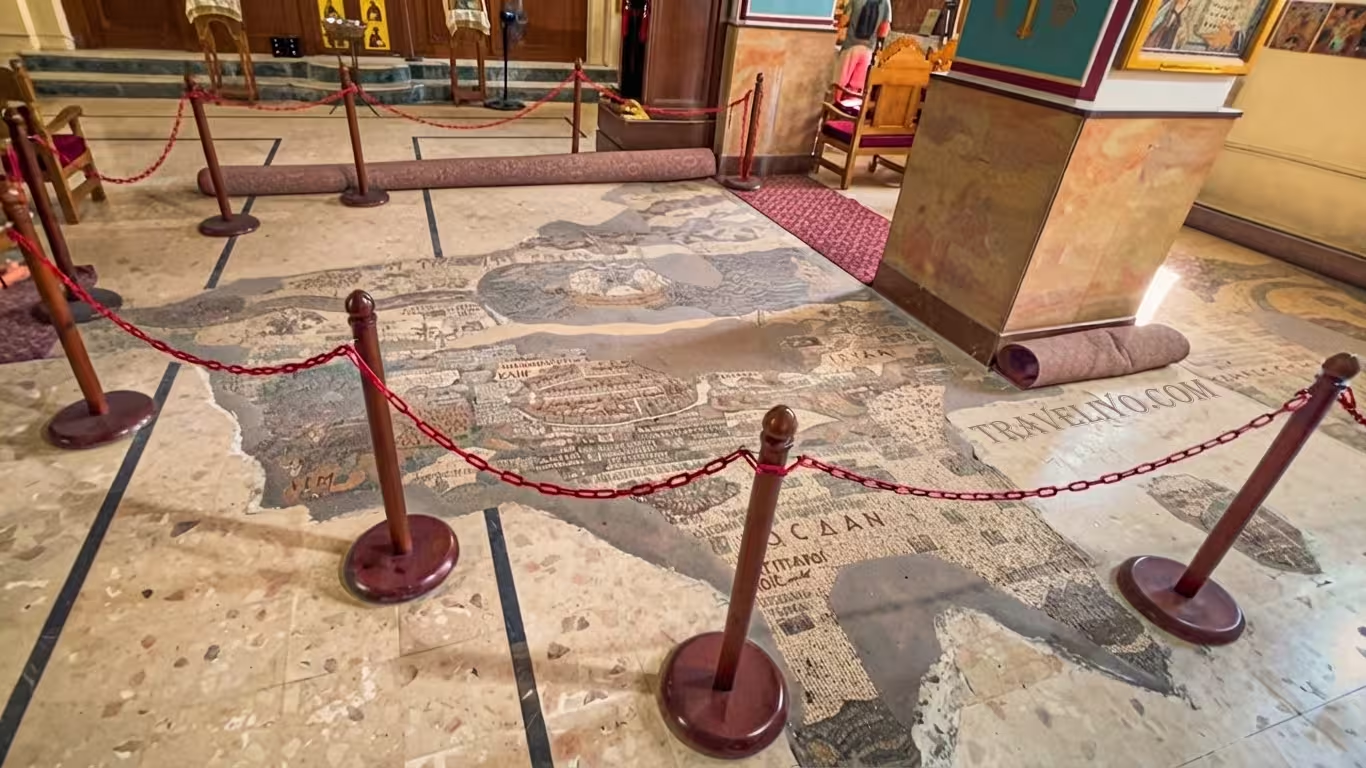
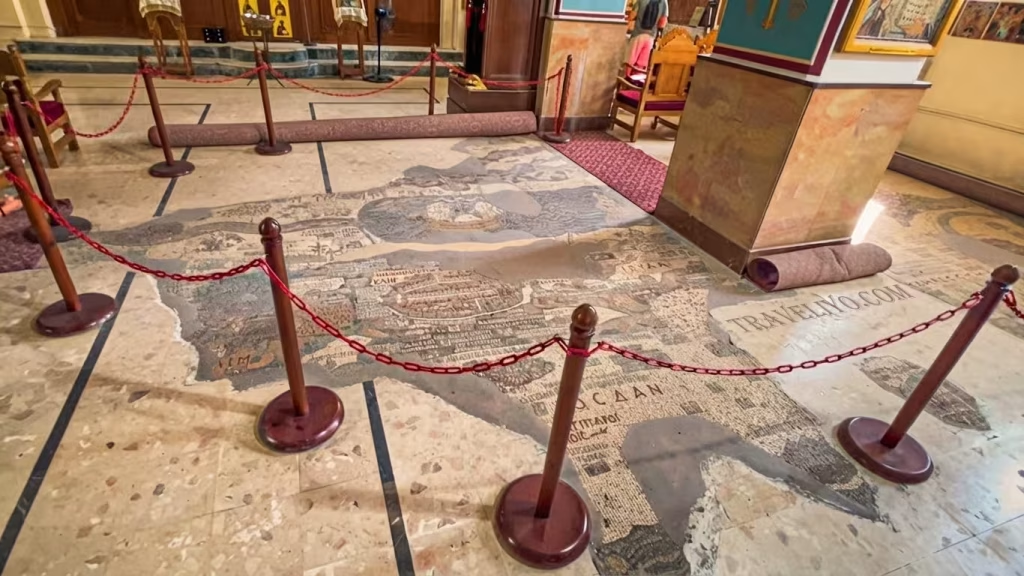
And what’s actually here is stranger than it sounds. Somewhere under a fairly unremarkable-looking 19th-century church floor sits a piece of the 6th century. An actual map. Rivers, cities, and even fish swimming toward the Dead Sea, only to turn back—according to the mosaic—once the water gets too salty. Someone fifteen hundred years ago thought that detail mattered enough to lay it in stone.
People sometimes call it the world’s first Google Maps, mostly because “Byzantine floor mosaic depicting the Holy Land” doesn’t exactly roll off the tongue. Whether that title holds up… well, Tania and I wondered about that too as we stood over it later that evening.
(If you’re just joining us, this is Part 13 of our Jordan travel series. Catch up on where it all started here: Part 1: Amman)
1. Destination Overview — What Is Madaba, and What’s This Map Everyone Talks About?
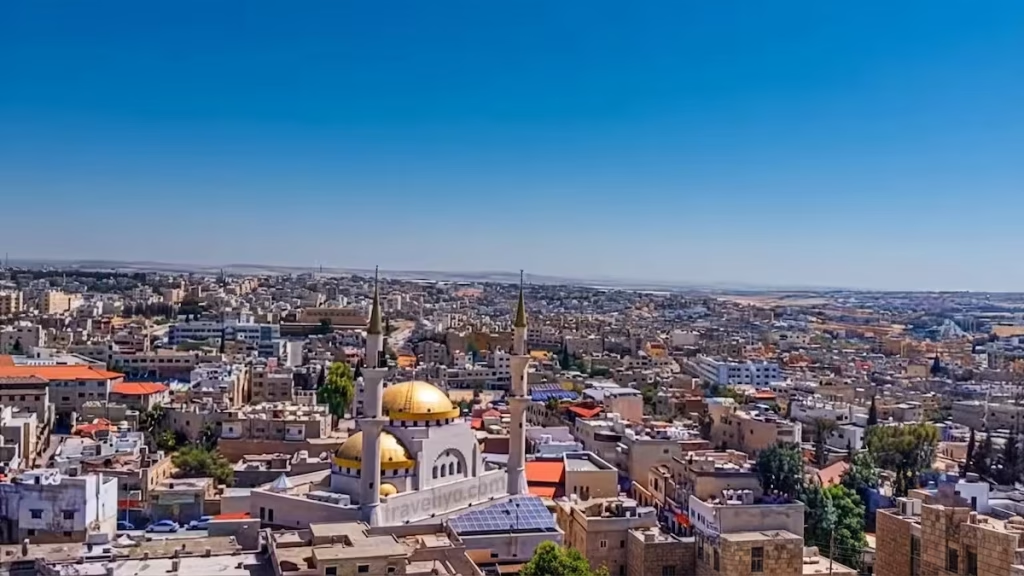
Madaba sits about 30 km southwest of Amman, still on the same King’s Highway we’d been tracking since Aqaba. It’s a small town with a highly walkable center. Historically, it’s also one of the more religiously mixed corners of Jordan. A sizable Christian community lives alongside the Muslim majority, which is partly why so many old churches survived here in the first place.
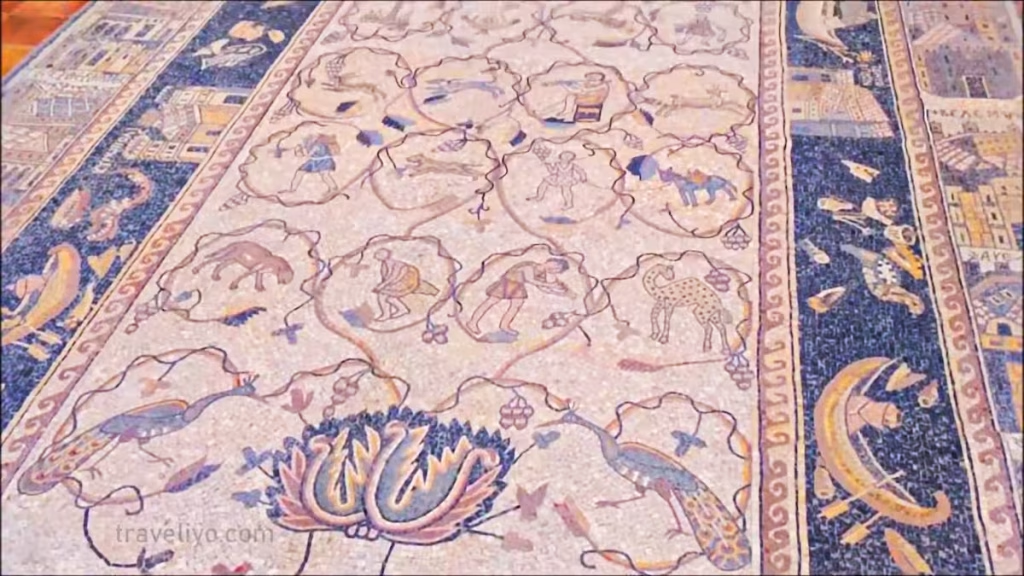
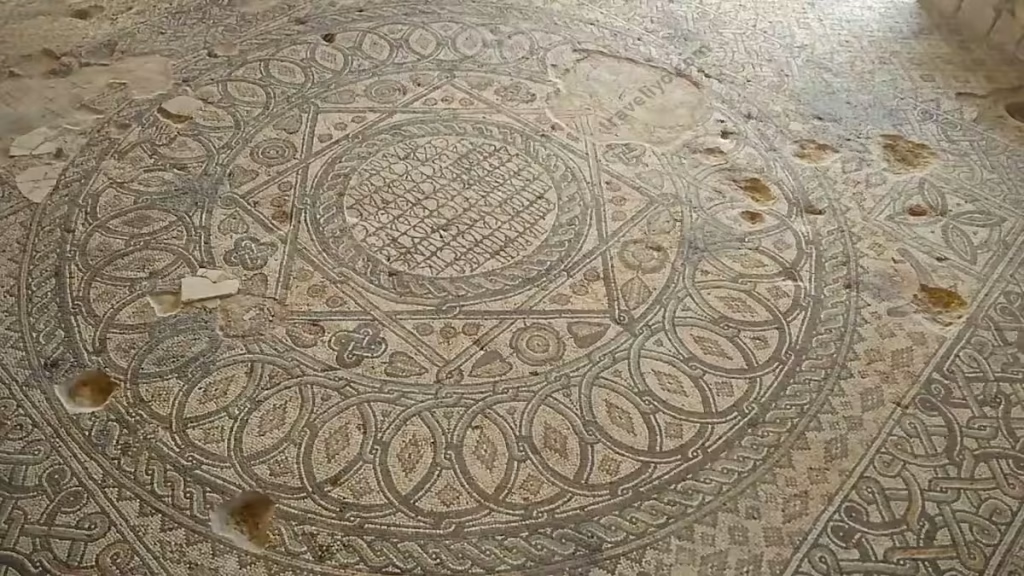
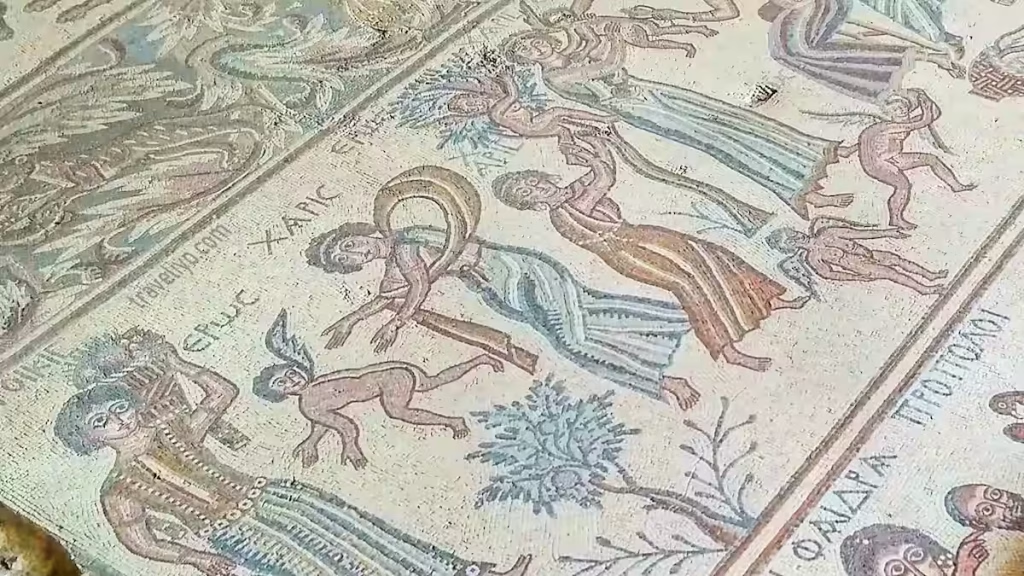
Back in the Byzantine period (roughly the 5th to 8th centuries), this place earned a nickname that has stuck in guidebooks ever since: the City of Mosaics. Christian communities across the region commissioned elaborate floor mosaics for their churches. For whatever reason, Madaba ended up with more of them—and better preserved ones—than almost anywhere else nearby.
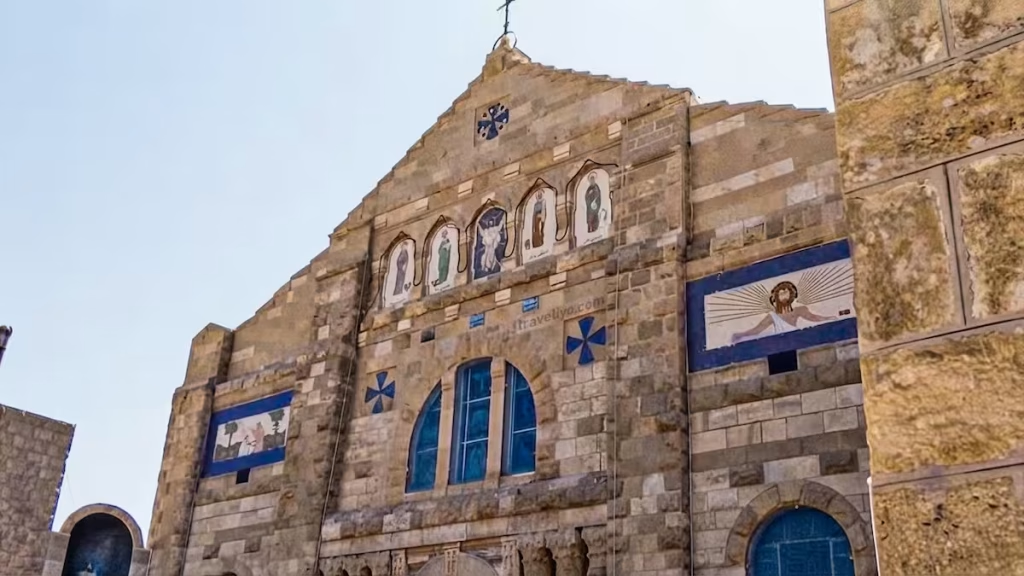
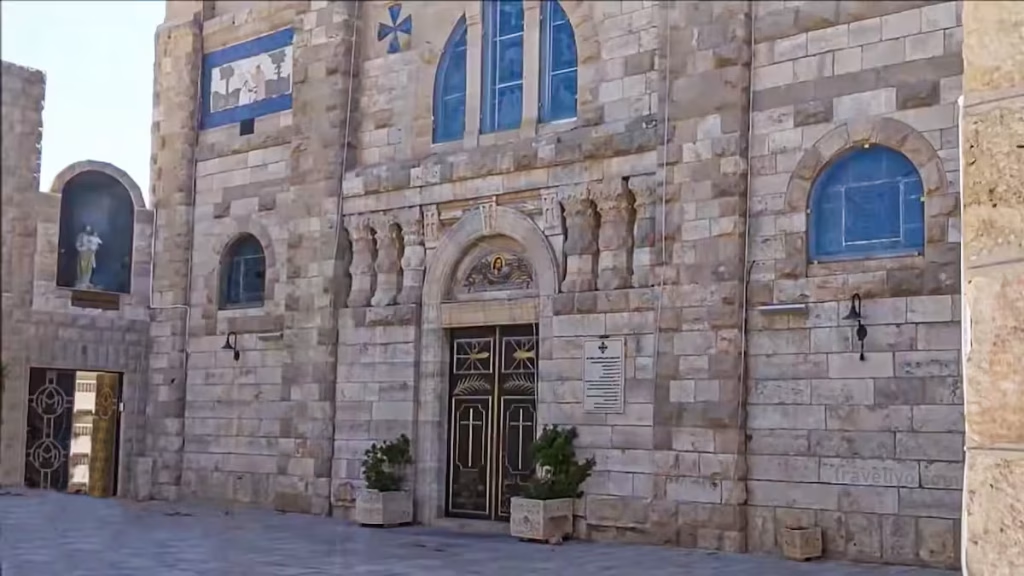
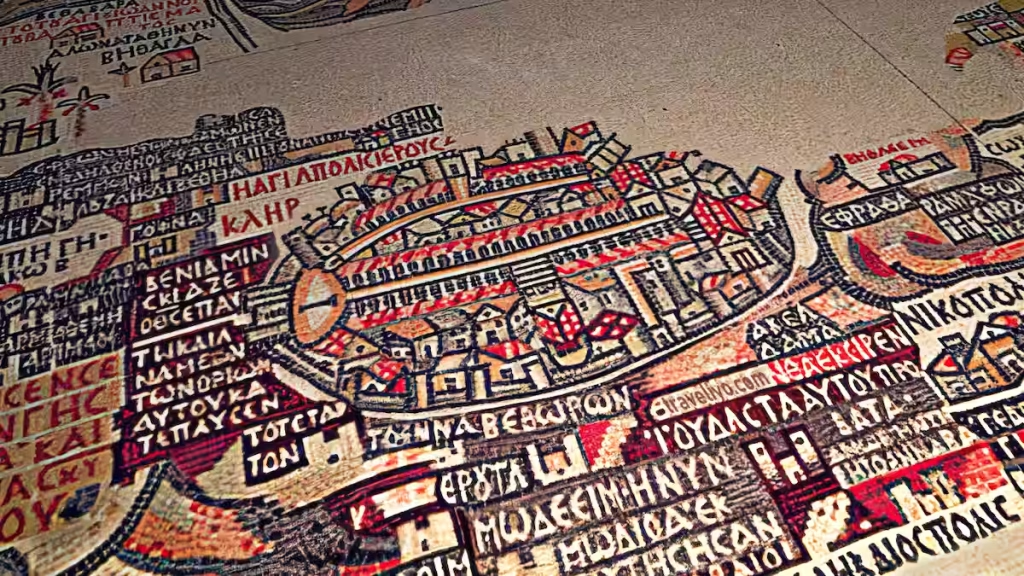
When people search for Madaba Jordan mosaics, they are usually looking for one specific masterpiece. The most famous piece is the Madaba mosaic map, set right into the floor of St. George’s Greek Orthodox Church in the middle of town.
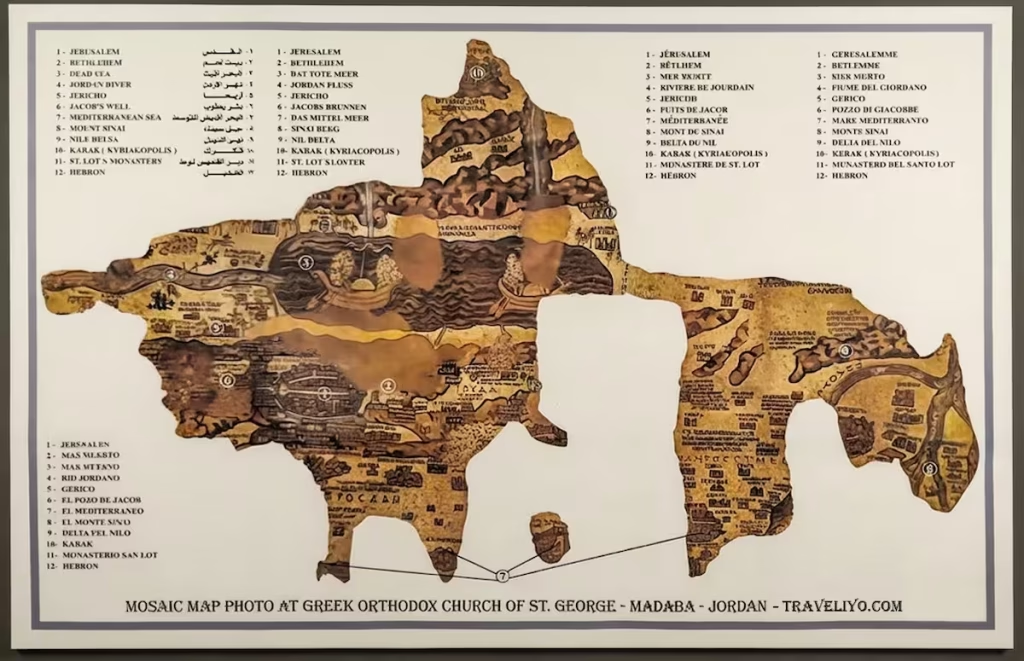
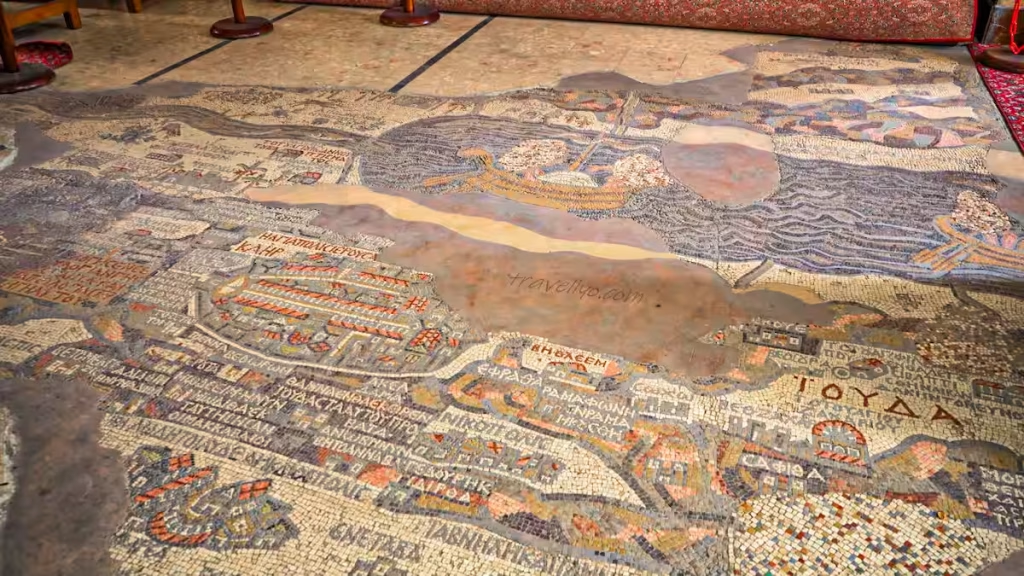
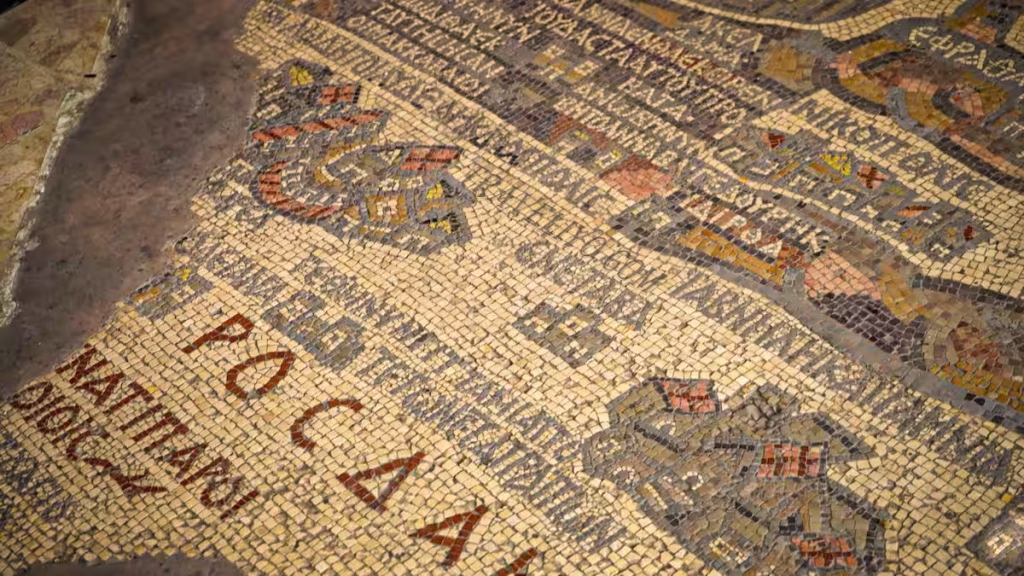
Here’s the short version of its story. Sometime around 560 AD, unknown artisans laid out a massive floor map of the Holy Land using more than two million small stone and glass pieces. Originally, it measured something like 21 by 7 meters. Today, maybe a third of it survives—roughly 16 by 5 meters, broken up by the church’s interior columns. But it’s still enough to clearly make out rivers, cities, and hills. It’s still enough to find that scattering of fish swimming toward the Dead Sea and turning back.
Tania took one look at that detail and laughed. “So people have been over-explaining directions since the 6th century.” Fair point, honestly.
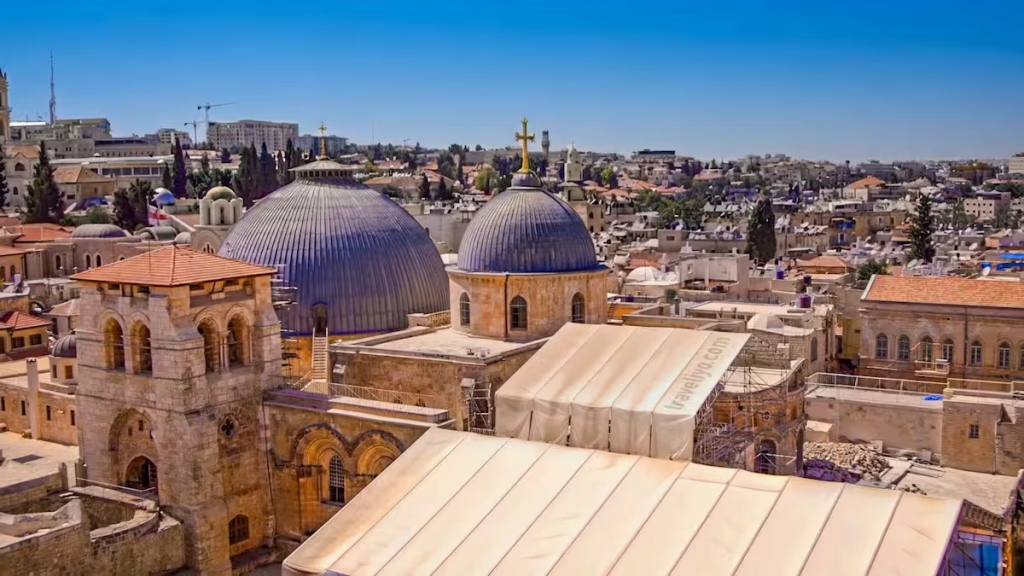
This map isn’t just decorative. It’s oriented east toward the altar, rather than north like modern maps, and carries 157 labels in Greek. It shows towns, rivers, and biblical sites stretching from Lebanon all the way down to the Nile Delta. Jerusalem sits at the center, rendered in such crazy detail that archaeologists have actually used it to locate real structures underground. A church and a main street uncovered in Jerusalem’s Old City decades later turned out to be sitting exactly where the map said they would.
Which is the whole pitch behind the headline. Is it literally the world’s first Google Maps? No. But it is a fifteen-hundred-year-old floor that people still use to double-check where historical sites actually were. That’s pretty incredible.
The church itself is younger than it looks. Built in 1896, it sits over the remains of an earlier Byzantine building that the Greek Orthodox community stumbled onto by accident while laying foundations in 1884. Nobody was looking for a map. They found one anyway, buried under centuries of rubble, an earthquake, and a long stretch of abandonment after 746 AD.
If you’re interested in exploring Madaba mosaics Jordan style, the town offers a lot more beyond St. George’s. The Madaba Archaeological Park nearby holds Roman-era remains and the Hippolytus Hall mosaic. A short walk away, the Church of the Apostles features the largest surviving mosaic floor in town, dedicated to the twelve apostles. There’s even a working mosaic school that still trains artisans, keeping the actual craft alive rather than just preserving its ruins.
We definitely hadn’t planned on spending our last night in Jordan staring at a floor. But that’s exactly what happened.
2. Why We Came Here After Mount Nebo
Funny thing about ending a trip looking at a floor.
We’d just spent the morning waist-deep inside a canyon, and the afternoon staring out from a mountain where Moses supposedly looked out over land he was never allowed to enter. Big views. Big story. Most travel guides bundle Mount Nebo Madaba trips together for a reason. They’re ten minutes apart, and they actually talk to each other historically. One gives you the grand view. The other is someone’s attempt to draw that same view in stone centuries later.
Tania made that connection before I did. Somewhere in the taxi, she pointed out that Moses saw it from up there, and this floor was basically someone’s attempt to map it out afterward. Obviously, it’s not historically perfectly aligned—the mosaic postdates Moses by a couple thousand years—but I totally got what she meant. There’s a thematic thread running through the Madaba Mount Nebo pairing that most day-trippers rush past without noticing.
We weren’t rushing. Not anymore. After two straight days of constantly moving from Aqaba, Madaba was the first place since Karak that didn’t feel like just another checklist item. It felt like arriving somewhere you’re meant to sit down and catch your breath.
So that was the real reason we came here, if I’m honest. Not the mosaic. Not yet, anyway. We just wanted one quiet evening that wasn’t measured out in kilometers.
3. Best Time to Visit Madaba
Madaba sits a little over 700 meters above sea level. That means it doesn’t bake in the heat the way the Dead Sea basin does, just an hour down the hill. That slight elevation changes everything.
Spring (March–May) and autumn (September–November) are the standard recommendations for most of Jordan, and Madaba is no exception. Daytime temperatures sit comfortably in the low-to-mid twenties (Celsius), and the evenings cool off enough to warrant a light jacket. After two days of canyon water and open desert sun, that cool breeze felt like an absolute gift.
We arrived in the late afternoon. It wasn’t strictly planned; it’s just where the day’s math landed after tackling the canyon and Nebo. It worked out perfectly, though. We got soft light, quiet streets, and an end-of-day stillness. Apparently, mornings here don’t get that same vibe, especially on weekdays when midday crowds roll in.
One crucial thing to keep in mind before you build your schedule: St. George’s Church holds Mass on Friday and Sunday mornings, starting around 7 AM. The mosaic isn’t open for viewing while the service is happening. Fridays are the regional weekend, which cuts both ways. You get quieter shops around town, but you might run into a closed church if your timing is off.
Summer works too, technically. It’s just hotter. The church interior features thick stone walls but no air conditioning, so it holds onto the heat by midday. If you’re passing through between June and August, definitely go early.
4. How to Reach Madaba
Transport Options
Madaba is pretty easy to reach, no matter which direction you’re coming from.
- From Amman: It’s about 30 km, which usually takes 35 to 45 minutes by car or taxi. You’ll find plenty of day tours that bundle Amman, the Dead Sea, and a Mount Nebo Madaba loop into a single day trip.
- From the Dead Sea / Mount Nebo: This was our route, and honestly, it’s the less commonly written-about approach. We came straight from Nebo, with no detour back through Amman first.
Our Journey & Costs
Route | Distance | Approx. Time | Approx. Cost |
|---|---|---|---|
Mount Nebo to Madaba | ~10 km | 15 min | 4–5 JOD (Uber) |
Amman to Madaba | ~30 km | 35–45 min | Taxi/tour recommended |
We actually kept the same Uber driver we had at Nebo. We asked him to wait instead of calling a fresh one. It cost a few extra dinars, but it saved us the headache of finding another ride in a place we didn’t know yet. He dropped Tania and me right at the edge of the old center, near a cluster of shops selling Madaba Jordan mosaics, and pointed us toward St. George’s before we even had to ask.
Practical note: If you’re driving yourself, know that parking around the church is street-parking only. There’s no dedicated lot, and it gets really tight by midday. We didn’t have to deal with that since we were taxi-hopping for this final stretch. Also, central Madaba is small enough that you can easily walk between St. George’s, the Archaeological Park, and the Church of the Apostles. Once you get dropped off, you don’t really need transport until it’s time to leave the city.
5. Where to Stay Near Madaba
It was our last night in the country, so we really didn’t want to overthink where to sleep.
The Mariam Hotel kept coming up in recommendations from other independent travelers before the trip. Booking it felt like the safe move—and it was. It’s right in the town center. We were within walking distance of St. George’s, walking distance to dinner, and basically walking distance to everything we still wanted to see before wrapping things up.
If you prefer something a bit more atmospheric, there are a handful of smaller, family-run guesthouses just outside the center, closer to Mount Nebo than to the madaba mosaic map itself. These are the kinds of places where the hosts cook dinner themselves and remember your name by the second morning. That personal touch is something a lot of travelers rave about when staying in this area.
Option | Location | Best For |
|---|---|---|
Mariam Hotel | Madaba town center | Walkable, budget-friendly, independent travelers |
Family-run guesthouses | Outskirts, toward Nebo | Quieter vibe, personal hospitality |
Amman hotels | ~30 km away | Full city base, wider range of prices |
Honestly, we didn’t need much from the room anyway. A shower, a bed, and a place to lay out clothes that were still stiff from the canyon that morning. The rest of our evening was happening outside those four walls.
6. Things to Do in Madaba
Seeing the Madaba Mosaic Map Properly
Here’s something you really need to know before you walk in: do not skip the ticket office.
I know it sounds like a formality. You pay, grab your ticket, and go look at the floor. But there’s a small interpretive center attached to the office with photo panels and diagrams laying out exactly what the madaba mosaic map shows. This matters way more than you’d think. Once you step inside the church, you realize the mosaic is broken up by support columns. Whole sections are just missing. Without that prior context, it’s genuinely hard to figure out what you’re looking at. A city? A river? Or just a blob that used to be a city and a river before eight centuries did their damage?
We spent maybe ten minutes in that ticket office first. Worth every single minute.
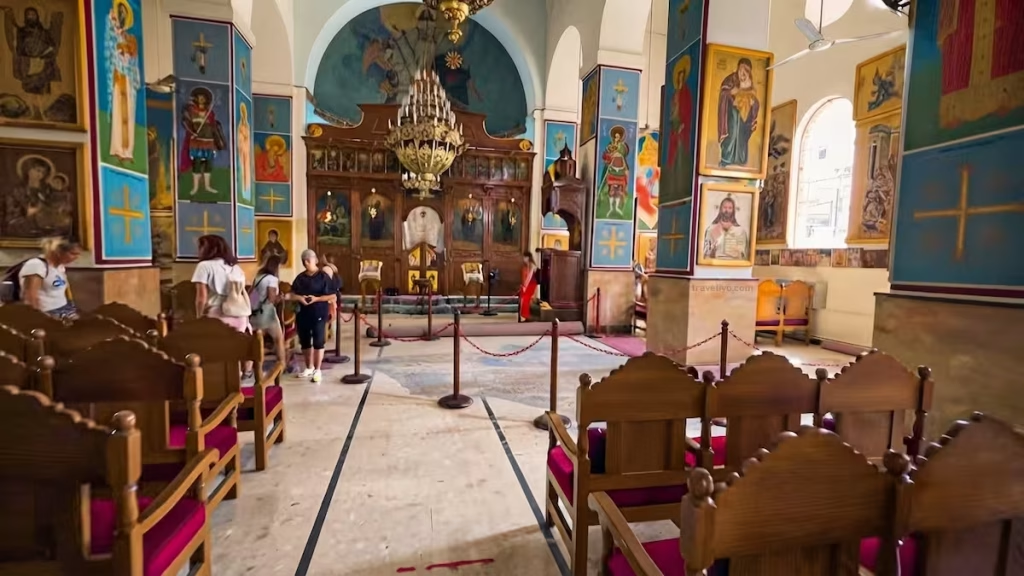
Inside, the map sits in the apse—the curved recess behind the altar. As I mentioned earlier, it’s oriented east rather than north, so your brain needs a second to catch up. Tania stood there turning her phone sideways, trying to line the interpretive photo up with what was actually on the floor. “It’s not supposed to line up the way you’re holding it,” I told her. She just smiled and kept turning the phone anyway.
Beyond St. George’s
The map gets all the name recognition. But if you’re interested in Madaba mosaics Jordan style, it is definitely not the only one in town.
The Church of the Apostles is just a short walk away and holds the largest single mosaic floor in Madaba. It’s a massive scene built around the twelve apostles. It’s less famous than the map, but arguably more complete since so much more of it actually survived.
The Madaba Archaeological Park rounds things out with Roman-era ruins and the Hippolytus Hall mosaic. Walking through it gives you a genuine sense of how much of this small town is just sitting directly on top of older versions of itself.
If you have the time (we didn’t quite have enough that evening), there’s a working mosaic school in town where you can watch modern artisans doing this by hand. Same basic techniques, just minus the earthquake risk.
🔍 Myth vs. Reality
- Myth: You need to build a half-day itinerary around the Madaba mosaic map.
- Reality: Even people who absolutely love it will tell you the actual viewing time is short—maybe fifteen or twenty minutes. What makes visiting Madaba Jordan worth it isn’t the hours you spend staring at the floor. It’s what that floor represents: a fifteen-hundred-year-old map precise enough that modern archaeologists used it to relocate buried streets. If you know that going in, those ten minutes will hit you very differently than if you just walked in cold.
7. Food & Drink
It was our last dinner in Jordan, and we didn’t have to think too hard about where to go.
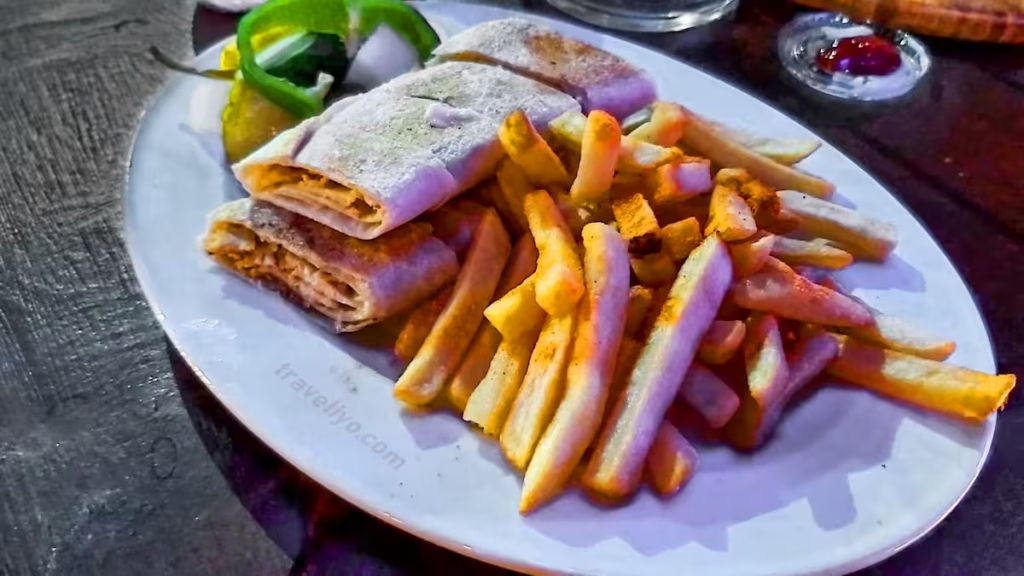
Haret Jdoudna, set right inside a restored stone house in the old quarter, had been on our radar since Al-Karak. Other travelers kept mentioning it as the place to eat in Madaba Jordan. It has a beautiful courtyard and serves traditional Jordanian dishes. You can tell they are used to feeding tourists, but it definitely doesn’t feel like a soulless tourist trap.
We ordered way too much, exactly the way you do on the last night of a trip. Mezze first, and then a massive shared plate of mansaf. Given that mansaf is basically the national dish, it felt like the perfect way to close out our time here. Neither Tania nor I could finish it, but we definitely didn’t regret ordering it.
For something lighter during the day, the streets around St. George’s have plenty of small cafes and juice stands. Nothing mind-blowing, just useful spots to grab a quick coffee between viewing the Madaba Jordan mosaics.
Practical note: If you’re visiting Haret Jdoudna in peak season or traveling with a group, reserve ahead. It’s super popular with Amman day-tours, so walk-in seating isn’t always guaranteed for lunch.
8. Traveliyo Insider Tips
✅ Practical Checklist for Visiting Madaba
- Carry small JOD notes: Entrance fees around town are cheap, and the ticket booths rarely have change for large bills.
- Check the Mass schedule: St. George’s holds services on Friday and Sunday mornings. You cannot view the madaba mosaic map during service hours.
- Start at the ticket office, not the church door: The displays outside make the mosaic dramatically easier to read and understand once you’re actually standing over it.
- The Jordan Pass doesn’t work here: A separate, small entry fee applies specifically at St. George’s.
- Wear proper shoes: The old town paths and the archaeological park are pretty uneven in places.
- Pair it up: Doing a Madaba Mount Nebo combo makes the most sense. They are so close together that splitting them across two different days is usually a waste of time.
9. Traveliyo Recommendations
Packing List for Madaba
Nothing dramatic needed here. Think town-walking gear, not canyon-hiking gear.
- Comfortable, closed shoes: As I mentioned, those old streets and ruins aren’t exactly flat.
- Modest layers: Bring something to cover your shoulders and knees for church visits. It’s standard practice at religious sites across Jordan.
- Small cash: JOD notes and coins for tickets and small purchases.
- A padded pouch: If you plan on buying mosaic pieces, they are heavier and way more fragile than they look in the shop windows.
- A light jacket for the evening: Because of the elevation, Madaba cools off a lot faster at night than the Dead Sea did.
What to Buy — Madaba’s Mosaic Art
If you want a souvenir, this is genuinely the best place in the country to buy real Madaba mosaics Jordan style. It’s the region’s most recognizable handicraft. Small workshops are clustered right around St. George’s and along the main street leading up to it. Prices range from cheap little coasters and fridge magnets to fully framed reproductions of sections of the actual map. Those larger pieces take an artisan real hours to make.
Tania and I picked up two sets of coasters and one small framed piece. It was small enough to wrap up in our checked luggage without needing its own seat on the plane. Keep in mind that prices aren’t always fixed. A bit of polite, gentle negotiation is totally normal here, especially if you step away from the shops sitting directly opposite the church entrance.
10. Our Travel Costs & Budget Notes
Expense | Cost (Per Person) | Notes |
|---|---|---|
Madaba Map entry (St. George’s) | ~2–3 JOD | Not covered by Jordan Pass |
Archaeological Park entry | ~2 JOD | _____ |
Uber (Mount Nebo to Madaba) | ~4–5 JOD (split) | Short hop, ~15 min |
Dinner at Haret Jdoudna | ~10–12 JOD | Mezze + mansaf, shared |
Mariam Hotel (per night) | ~20–25 JOD | Double room, central, budget |
Mosaic souvenirs | Variable | Negotiable |
The Bottom Line: Budget around 15–20 JOD per person for sightseeing and food in Madaba itself. That doesn’t include your accommodation or whatever you spend on souvenirs. Overall, it’s definitely one of the more affordable stops on the entire Kings Highway route.
11. Suggested Itinerary — The Full Two-Day Kings Highway Route
Since this is the last stop in our series, here’s our entire Kings Highway route laid out, start to finish.
Day 1 — Aqaba to the Dead Sea
Time | Stop |
|---|---|
7:00 AM | Depart Aqaba (rental car) |
9:30 AM | Shobak Castle |
11:30 AM | Dana Biosphere Reserve viewpoint |
1:00 PM | Al-Karak Castle |
4:15 PM | Wadi Mujib Viewpoint |
6:30 PM | Arrive Dead Sea, return rental car, overnight |
Day 2 — Dead Sea to Madaba
Time | Stop |
|---|---|
9:00 AM | Wadi Mujib Siq Trail |
12:00 PM | Finish hike |
2:00 PM | Mount Nebo |
3:30 PM | Arrive Madaba Jordan, overnight |
Day 3 — Departure
Time | Activity |
|---|---|
Early AM | Checkout, short transfer toward the airport |
10:10 AM | Flight departs |
Two days, five major stops, one intense canyon hike, and one mountain. If your own schedule allows for a third day somewhere in this stretch, Dana and Karak both really reward slowing down. Tania and I just didn’t have a spare day—and honestly, it showed a little by the time we finally reached Madaba.
12. Nearby Places You Can Visit
Most travelers’ trips keep going past Madaba, even if ours didn’t. If you have the time, here’s what’s close by:

- Amman: Just 30 km northeast. The Roman Theatre, the Amman Citadel, and the food scene around Rainbow Street all deserve a proper day. Our schedule just didn’t leave room for it.
- Iraq al-Amir (Qasr al-Abd): Sitting west of Amman, this is a lesser-known Hellenistic-era palace ruin. It’s quiet and rarely crowded compared to the bigger sites.
- Hammamat Ma’in: We mentioned these mineral hot springs back in our Wadi Mujib guide. They sit roughly 25 km from Madaba.
Traveliyo Tip: If you’re planning your own version of this trip, some travelers actually structure their whole Jordan itinerary in reverse for logistical reasons. They fly into Queen Alia and head straight to Madaba first, saving Amman itself for the very end. Given how close the airport sits to Madaba compared to the capital, it’s actually a pretty smart approach.
13. FAQs About Visiting Madaba
Q1: What exactly is the Madaba Mosaic Map?
It’s a 6th-century Byzantine floor mosaic inside St. George’s Greek Orthodox Church. It depicts the Holy Land from Lebanon down to the Nile Delta. It is widely considered the oldest surviving original cartographic map of the region, especially of Jerusalem.
Q2: How much does it cost to see it?
Reports vary between roughly 1 to 3 JOD. Just confirm the current rate at the ticket booth when you arrive—it’s a very small fee either way.
Q3: Is the Madaba map included in the Jordan Pass?
No. St. George’s Church charges a separate entrance fee, which is not covered by the Jordan Pass.
Q4: How long do I need in Madaba?
Around 2 to 3 hours covers the main sites comfortably (St. George’s, the Archaeological Park, and the Church of the Apostles). Viewing the madaba mosaic map itself only takes about 10 to 20 minutes.
Q5: Can Madaba and Mount Nebo be done in one day?
Easily. A Madaba Mount Nebo combo is the standard route since they are only about 10 km apart. Most visitors combine them into a half-day or full-day pairing.
Q6: Is St. George’s Church open every day?
Yes, but Friday and Sunday mornings hold Mass. You cannot view the mosaic while the service is happening.
Q7: What else is there to see besides the map?
A lot, actually. If you love Madaba mosaics Jordan style, the Church of the Apostles has the largest surviving floor in town. The Archaeological Park holds Roman-era ruins and the Hippolytus Hall mosaic. There’s also a working mosaic school where you can watch modern artisans.
Q8: Is Madaba worth visiting if I’m not religious?
Absolutely. The historical and artistic value of these Madaba Jordan mosaics stands completely on its own, totally separate from any religious significance.
Q9: Where should I eat in Madaba?
Haret Jdoudna, located in a restored stone house in the old quarter, is the best-known option for traditional Jordanian food. Definitely reserve ahead in peak season.
Q10: How far is Madaba from the airport?
A lot closer than most people expect. Queen Alia International Airport sits roughly 20 km from Madaba (about a 25 to 30-minute drive). It’s actually nearer to the airport than Amman city center is.
14. Conclusion
Tania and I didn’t linger in Madaba the next morning. We couldn’t, really.
The original plan—made way back when we were still packing bags in Aqaba—had a full extra day built in around Amman. Shopping, mostly. It was meant to be a cushion too, just in case something on the Kings Highway ran long and we needed a day to absorb it before the flight home.
Well, something did run long. Several somethings, actually. Every stop from Shobak onward took a little more time than the paper itinerary suggested. But that’s just how it goes when the road keeps offering viewpoints you simply can’t drive past. By the time we were standing over that mosaic map, the math of our trip had quietly rearranged itself. The buffer day wasn’t a buffer anymore. It was just the day we needed to finish the drive.
So, there was no shopping morning in Amman. No wandering down Rainbow Street, no last coffee at some downtown café before the airport—the relaxed ending we’d pictured weeks earlier was gone. Instead, we had an early checkout from the Mariam Hotel, a quick transfer, and a 10:10 AM flight to catch.
Turns out, that transfer wasn’t much of one anyway. Queen Alia International Airport sits closer to Madaba than it does to Amman. We were at the gate with time to spare, which felt like a small, undeserved mercy after two weeks of cutting things closer than either of us likes to admit.
That flight was headed to Germany. Wuppertal, specifically—home, or close enough to it these days.
Shobak, Dana, Karak, Wadi Mujib twice over, Nebo, and finally this small town that turned out to hold more history per square meter than anywhere else on the route. Somewhere between the canyon and this church floor, the trip stopped being a checklist and just started being the thing itself.
Madaba Jordan was a remarkably quiet way to end it. No fireworks, no dramatic final view. Just a floor, fifteen hundred years old, still doing the one job someone once built it to do: showing people where things actually are.
Honestly? I’ll take that over a shopping morning any day. Even if we didn’t exactly plan it that way.
This wraps our Kings Highway series through Jordan—from Aqaba’s coastline all the way to a Byzantine floor in Madaba. If you’re planning your own version of this route, Tania and I hope these guides save you some guesswork… and maybe convince you to build in a little more buffer time than we did!
📋 Explore Our Complete Jordan Travel Series:
Follow our entire Jordanian adventure step-by-step through our comprehensive Traveliyo guides:
- Part 01: Exploring Amman – The Capital City
- Part 02: The Ancient Ruins of Jerash
- Part 03: Floating in the Dead Sea
- Part 04: The Magic of Petra
- Part 05: A Night in the Wadi Rum Desert
- Part 06: Relaxing in Aqaba
- Part 07: Exploring Shobak Castle
- Part 08: Exploring the Dana Biosphere Reserve
- part 09: Discovering Al-Karak Castle
- part 10: Wadi Mujib Viewpoint
- Part 11: Wadi Mujib Canyon
- Part 12: Mount Nebo – the View Moses Saw
- Part 13: Madaba Jordan (You are here!)
For more historical background, You can read the detailed article on Wikipedia
Did this guide help you? Have you also visited Madaba Jordan? Share your experience in the comments below – it will be very valuable for other travelers.
Hansi (The Netherlands)
Slovenië is een prachtig land. Onder andere de Vintgar-kloof is een plek waar niet veel over wordt gesproken. Een prachtige wandeling tussen de watervallen! Ik had nooit gedacht dat het zo mooi zou zijn. Echt een aanrader.”