Jordan Dress Code Explained: What We Actually Wore in Amman, Petra & Wadi Rum

Everyone asks about the Jordan dress code before they go. Taniya and I spent eight days in late April driving from Amman down to Aqaba and back up the King’s Highway, thirteen stops in all. In the end, no rule gave us any trouble. What did was the cold in a Wadi Rum tent at 11 PM, and a sun hat that blew off a bridge.
That surprised me. I’d braced for something stricter, and what I found was more relaxed and a bit more nuanced. So this guide goes beyond “cover your shoulders and knees”. It explains where Jordan’s dress code really matters, where it hardly does, and why. If you only want the checklist of what to bring, our packing for Jordan guide has it. This page covers everything else.
Jordan Dress Code in Short
QUICK ANSWER
Jordan has no official dress code for tourists, but modest clothing is expected. That means loose, lightweight pieces that cover your shoulders and knees. Women only need a headscarf inside mosques. Resort pools and beaches are the main exception, where normal swimwear is fine.
Is There an Official Jordan Dress Code for Tourists?
No, and that’s where a lot of guides get it slightly wrong. Nobody will turn you away at Petra for wearing shorts. Jordan is also a mostly Muslim country with conservative everyday dress, and visitors are noticed (and judged a little) by what they wear, especially outside the tourist bubble.
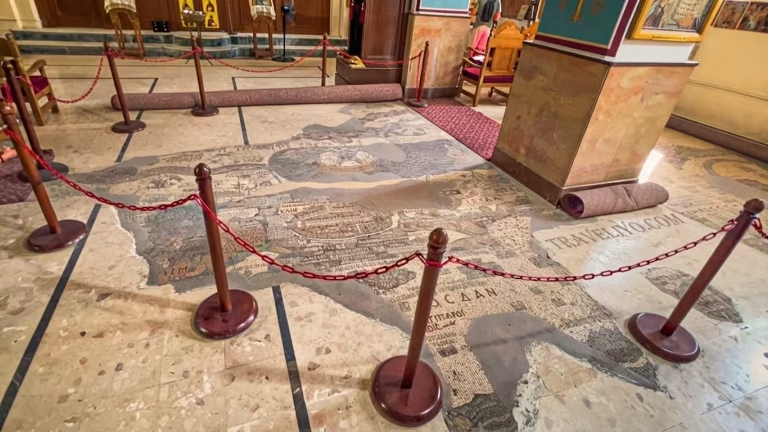
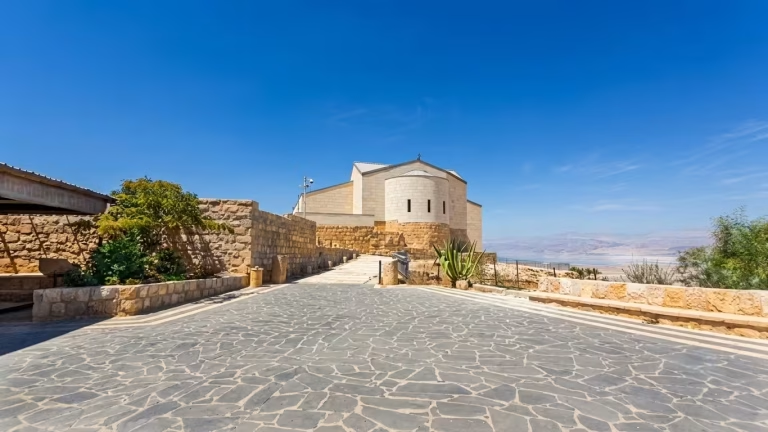
Think of it as a scale. Amman is the most mixed, with everything from abayas to jeans and T-shirts on the same street. Small towns are more traditional. At religious sites, such as mosques and churches like the Memorial Church of Moses on Mount Nebo or St George’s in Madaba, improper dress can get you refused entry. Our Amman guide shows how mixed the capital feels.
Honestly, the climate does more to set your wardrobe than any rule. Long, loose sleeves protect you from the Petra sun better than a tank top ever will. Dressing for the heat and dressing respectfully usually turn out to be the same thing. The one thing we got wrong was dressing for the day and forgetting the night. Wadi Rum drops cold fast after sunset, even in April.
What to Wear in Jordan as a Female Tourist
If you’re looking for the short version of the Jordan female dress code, it’s this. Wear loose, lightweight clothing that covers your shoulders and knees, and keep a light scarf in your bag. That’s enough for almost everywhere you’ll go as a visitor. In the heat, it’s also the most comfortable way to dress.
What Works and What to Skip
Works well | Better to skip |
|---|---|
Long, loose trousers (linen, cotton, travel fabric) | Shorts and mini skirts away from the beach |
Maxi skirts and midi dresses with sleeves | Sleeveless, low-cut or sheer tops |
Breathable tops with sleeves, in light colors | Very tight or see-through clothing |
A large cotton scarf that does several jobs | Leggings on their own, with no long top over them |
Nobody will comment on you. Still, tight or revealing clothes draw more attention than you’d like, and several guides say loose clothing covering your arms, legs and chest helps you avoid unwanted looks. The full item-by-item list is in our Jordan packing list.
Do You Need a Headscarf in Jordan?
No. You don’t need to cover your hair in daily life, or at Petra, Wadi Rum and the other major sites. A scarf is only needed inside mosques. That’s why a big, light one earns its space: sun cover for your neck, a shawl for a church, a head covering when needed, and a warm layer when the evening cools. We learned that last use the hard way in Wadi Rum.
Dressing for Mosques and Churches
The King Abdullah I Mosque in Amman welcomes non-Muslim visitors. You buy a ticket, use the visitor entrance and take off your shoes at the door. Visits aren’t allowed during prayer times. Women are asked to cover their arms and legs and wear a headscarf. If you use your own, travel blogger Adventurous Kate advises tucking in any hair, including bangs, and covering under the chin. Men should wear long trousers and a shirt with sleeves. Churches, including Mount Nebo and St George’s in Madaba, expect shoulders and knees covered too.
Dead Sea and Aqaba Beach
At resort beaches and pools, normal swimwear is fine. Aqaba’s public beaches are a different scene, with big daytime crowds of locals and visitors, so a cover-up for the walk through town makes sense. At the Dead Sea, Taniya got splashed near her eyes, so keep fresh water close and a towel within reach. Wear something modest on the way to the water, not just swimwear.
What to Wear in Jordan: Male
Long, lightweight trousers and a shirt with sleeves work everywhere. Knee-length shorts are common with visitors at Petra, Wadi Rum and the beach, but locals rarely wear them. Skip shorts and sleeveless tops for mosques and churches. Jeans feel heavy by midday, so quick-dry trousers are better. In Wadi Mujib you’ll get soaked anyway, and I slipped on a wet rock regardless, so wear shoes with real grip.
How Strict Is the Jordan Dress Code, Place by Place?
The Jordan dress code isn’t one rule. It shifts with where you’re standing. This is how it works out across the places most visitors go.
Place | How strict | What to aim for |
|---|---|---|
Relaxed to moderate | Trousers or long skirts, shoulders covered. The capital mixes styles, so you won’t stand out | |
Relaxed | Light, long, breathable clothes. It’s an open site with almost no shade | |
Relaxed | Loose clothing with shoulders covered. Knee-length shorts are common | |
Relaxed | Long sleeves and trousers against sun and sand, plus a warm layer for night | |
Relaxed at resorts | Normal swimwear at pools. A cover-up away from the water | |
Moderate | Villages are more traditional, so lean towards long trousers or skirts | |
Mount Nebo and Madaba | Moderate | Shoulders and knees covered inside churches |
Mosques | Strict | Arms and legs covered, headscarf for women, shoes off |
That one-size-fits-all feeling is why many guides sound contradictory. It really is relaxed at Petra and not at a mosque. Our own trip showed this. At Petra we only worried about sun, and at the Dead Sea Taniya’s main problem was water near her eyes. At Wadi Mujib I slipped on a wet rock, so my main clothing lesson there was grip, not modesty. Dress for the place, not the country.
What to Wear in Jordan by Season
Our packing guide has the full season-by-season table, and the best time to visit Jordan covers the crowds. For the winter months people ask about most, here’s how dressing differs between the north and the south.
Amman | Petra | Wadi Rum | Dead Sea & Aqaba | |
|---|---|---|---|---|
January | About 4–12°C, rain likely | About 5–14°C, snow possible | Cold, clear nights | Milder, Aqaba highs around 20°C |
February | Cool, a little less rain | Highs about 12–17°C, nights 3–7°C | Nights can fall close to freezing | The warmest places, around 21°C |
What to Wear in Jordan in January
January is the heart of winter. Bring a warm, waterproof jacket, a sweater, long trousers and closed shoes with grip, since wet stone at Petra gets slippery. Snow is possible at higher altitudes, especially around Petra, so check forecasts and road conditions before heading south. We’ve stood in Petra in freezing December fog, and it was nothing like the sunny photos, so I’d treat January the same way. Add a hat and gloves for desert nights. If you’re heading to Aqaba or the Dead Sea, a light jacket is usually enough in the daytime.
What to Wear in Jordan in February
February is still winter but milder, and the days start to warm. Layers work best: a base layer, a sweater or fleece, and a shell you can stuff in a daypack. Nights in Wadi Rum remain properly cold, so don’t pack only for the day. That’s exactly what caught us in April.
Ramadan and Your Clothing
Ramadan 2027 is expected to start around 7 February, so a February trip may overlap with it. The dress rules don’t formally change, but the mood does. Modest clothing feels even more fitting, and eating, drinking or smoking in public during daylight is not appropriate. Dates shift every year, so check before you book.
Dress Code for Couples in Jordan
Dressing as a couple in Jordan is mostly about two things: matching each other’s level of coverage, and keeping affection low-key. Men tend to forget the first. If one of you is in long trousers and sleeves and the other is in shorts and a tank top, it shows, especially in towns and at religious sites.
On public displays of affection, official advice is to avoid them, holding hands included. Local etiquette guides say much the same: couples are generally expected to skip kissing and hand-holding in public. Nobody will make a scene, but keeping it quiet is simply easier. Taniya and I travelled as a couple, and this is one of those things where it costs nothing to follow the local lead.
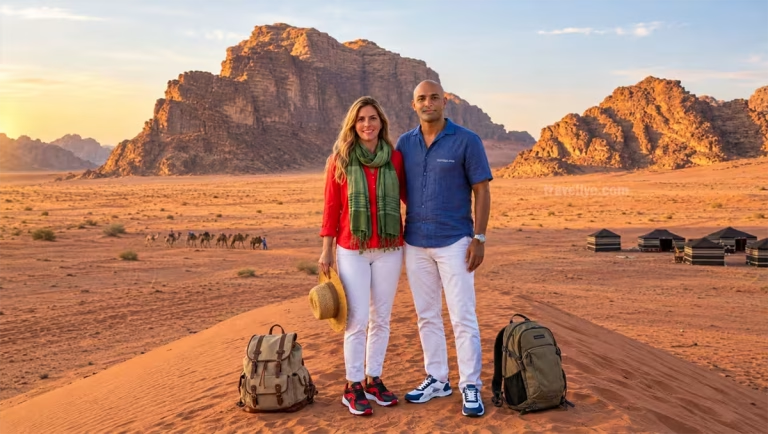
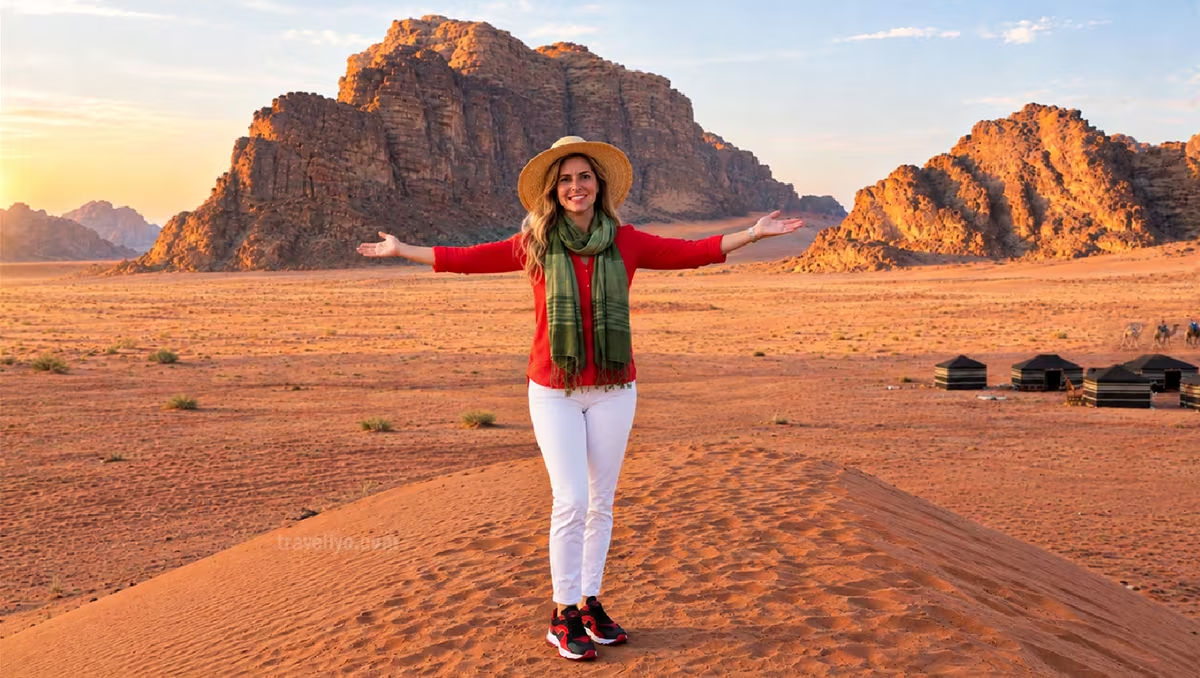
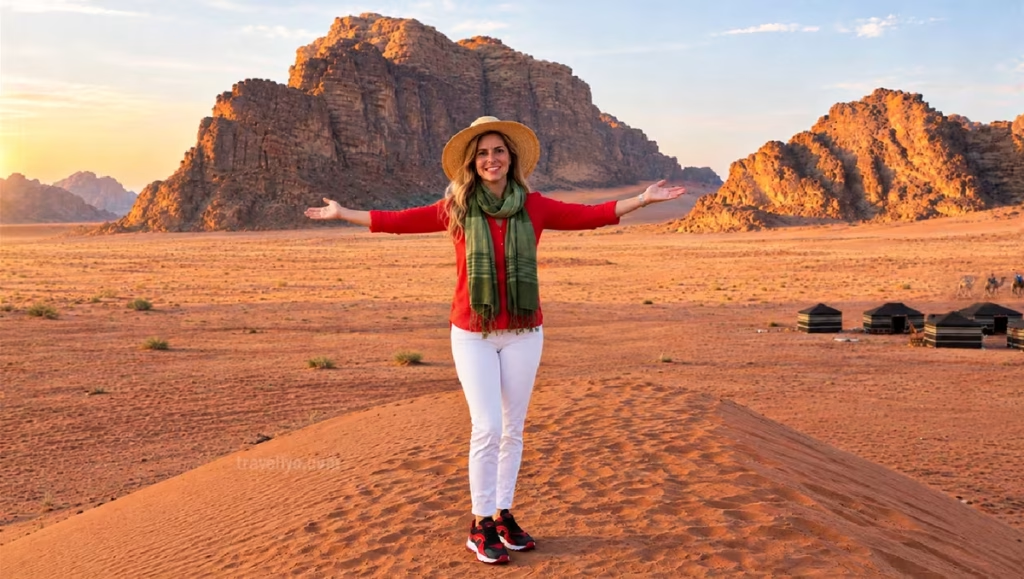
Photos are the fun part. The shot of us at Wadi Rum at sunset, with daypacks, a hat and a scarf, is one of my favorites from the trip, and it also happens to be what a sensible Jordan outfit looks like. Ask before photographing people, and never photograph worshippers inside a mosque.
If you plan to visit King Abdullah I Mosque in Amman, dress for it before you arrive. One travel blogger who turned up in ordinary clothes was handed a gown to wear over them and wasn’t thrilled. Women also need a scarf, and men long trousers and sleeves.
Dressing Kids and Teens in Jordan
We travelled as a couple, so this part comes from research and from families who’ve done Jordan, not from our own trip. The short version is that young children have no dress code. Pick whatever is comfortable, with sun protection first: hats, light long sleeves and sunscreen. Girls who have reached puberty are generally advised to dress more modestly, with arms covered and longer skirts or trousers, particularly in villages and rural areas. Teens will notice the difference in dress between the beach, a mosque and Amman, so it helps to explain it before you go.
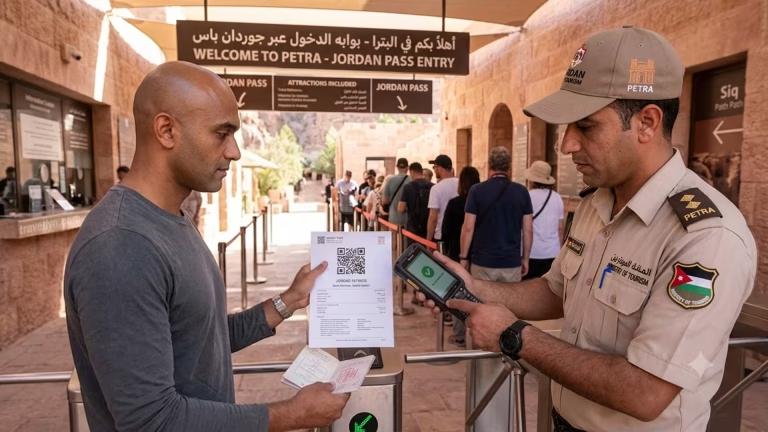
For the full family kit, see the “with kids” section in our packing guide. Children under 12 usually get into most Jordan Pass sites free, which is covered in our Jordan Pass & Visa Guide.
Jordan Traditional Dress: Female and Male
You’ll see traditional dress mostly in villages, in the desert and on special occasions. In Amman, many Jordanians wear Western-style clothes day to day.
Jordan Traditional Dress Female
The classic garment is the thobe, a long, embroidered dress. Its colorful patterns often show which region a woman comes from. In Bedouin communities, women commonly wear a dark, embroidered dress. In daily life, many women also wear an abaya and a headscarf. Several travel bloggers describe Bedouin hosts in Wadi Rum dressing them in traditional outfits as part of a camp experience.
Jordan Traditional Dress Male
Traditionally, men wear a thobe, a long white robe that reaches the ankles, and you’ll see it most in rural areas. On the head goes the keffiyeh (also called a shemagh), usually held in place by a black cord called an agal. The red-and-white one is the style associated with Jordan. The black-and-white one is tied to Palestinian identity, so know which you’re buying. As we mention in our packing guide, Bedouin scarves are sold at the camps, and they’re handy for dust and sun as well as a good souvenir.
GOOD TO KNOW
One tip for everyone: avoid camouflage and military-pattern clothing. Local travel advice lists it as a big no in Jordan.
Jordan Dress Code: Mistakes to Avoid and Quick Dos and Don’ts
Most of our own dress mistakes in Jordan weren’t about modesty at all. They were about the weather and the ground. Wadi Rum got cold fast and we both froze in the tent. Taniya’s hat blew off a bridge, because it had no chin strap. She also went barefoot on the dunes, and the red sand was still hot. And I slipped on a wet rock in the canyon. None of it was a cultural slip, but all of it came from dressing for the wrong conditions.
DO | DON’T |
|---|---|
Cover shoulders and knees, and wear loose clothes | Wear sleeveless, low-cut or very tight clothing |
Carry a big scarf (sun, church, mosque, cold) | Forget you may need to cover your head in a mosque |
Wear swimwear at the beach or pool, then cover up | Walk through town in swimwear |
Pack a warm layer, even in late April | Dress only for the daytime sun |
Choose shoes with grip and a hat with a chin strap | Wear flip-flops anywhere except the beach |
Keep affection low-key in public | Wear camouflage or military prints |
Quick Dress Checklist
If you want the full list, see our Jordan packing list. For the dress code only, this is the short version:
- Loose, light trousers, long skirt or midi dress with sleeves
- Tops with sleeves, in breathable fabric
- A large scarf or shawl
- A warm layer for evenings and winter
- Walking shoes with real grip
- Swimwear and a cover-up
Jordan Dress Code FAQ
Final Thoughts
So, is there a Jordan dress code? Not officially, but modest, loose clothing makes the trip smoother, and the weather will teach you the rest. We got that lesson in a cold tent at Wadi Rum. If you haven’t yet, get the Jordan Pass & Visa Guide sorted, and see our 8-Day Jordan Itinerary for the route we followed. Got a dress code question we haven’t answered? Tell us in the comments.
For more historical background, You can read the detailed article on touristjordan.com
Did this guide help you? when to visit jordan? Share your experience in the comments below – it will be very valuable for other travelers.