Packing for Jordan: A Tested Jordan Packing List from 8 Days on the Road (2026)

Taniya’s hat blew off a bridge in Jordan. I’d love to say we saw it coming. We didn’t, and that’s the thing about packing for Jordan: the big items are on every list, and it’s the small stuff that catches you out. (A hat with a chin strap, in case you’re wondering.)
I’ve been travelling for more than ten years, and Jordan still asks a lot of a suitcase. One bag has to cope with a Roman city, the open desert at Wadi Rum, a canyon you wade through and the Dead Sea, in a country where modest clothes matter in some places and hardly at all in others.
This Jordan packing list, updated for 2026, comes out of our eight days on the road in late April: thirteen stops, from Amman down to Aqaba and back north along the King’s Highway, in two rental cars (we handed the first one back at the Dead Sea). Think of it as a Jordan packing guide you can use, not a list of everything that could possibly fit in a bag. You’ll find the weather season by season, what to wear without overthinking it, the full list for men and women, and what to carry on each day out. Short on time?
Here’s the short version.
QUICK ANSWER
What to pack when going to Jordan?
Pack light, loose clothing that covers shoulders and knees, a warm layer for cool evenings, broken-in walking shoes, a wide-brimmed hat, sunscreen, a universal plug adapter and a printed Jordan Pass. Add water shoes if you plan to wade through Wadi Mujib, and swimwear for the Dead Sea and Aqaba. If you remember one thing, make it layers.
Still deciding when to go? Our guide to the best time to visit Jordan covers it month by month, and the route we followed is in our 8-Day Jordan Itinerary.
🧭 Our Trip: 8 days, 13 stops, late April (guide updated for 2026)
🌤 Late April Weather: Roughly 10–23°C (50–73°F) across the country, warmer in Aqaba (around 29°C); rain unlikely
🧣 How to Dress: Relaxed in Amman, Petra and the beach resorts. Shoulders and knees covered for mosques and small towns
🔌 Plugs & Power: Types C, D, F and G (J occasionally), 230V / 50Hz
💰 Money: Jordanian dinar (JOD). Keep cash for small shops, roadside stops and tips
🛂 Paperwork: Passport, printed Jordan Pass, travel insurance, driving licence (check with your rental company whether you also need an international driving permit)
🎒 The Top 8: Broken-in walking shoes • wide-brimmed hat with a chin strap • sunscreen • light layer for the evenings • loose long-sleeve shirt • scarf • universal adapter and power bank • printed Jordan Pass
01. Jordan Weather by Season (and What to Expect in Late April)
Jordan is small on the map, but the weather changes a lot depending on where you’re standing. Amman and Petra sit up in the highlands (Petra is around 1,200 metres), Wadi Rum is open desert, and the Dead Sea shore is roughly 430 metres below sea level, which is why dropping down to it feels like arriving in a different country. Aqaba, on the Red Sea, runs hotter again.
Here’s the rough pattern. These are typical daytime highs, and sources differ by a few degrees, so treat them as a guide and not a promise.
Season | Amman & Petra | Wadi Rum | Dead Sea & Aqaba | What to pack |
|---|---|---|---|---|
Winter (Dec–Feb) | About 12–14°C, cold rain, the odd snowfall | Cool days, properly cold nights | Mild; Aqaba around 20–22°C | Warm jacket, thermals, rain shell, hat and gloves for desert nights |
Spring (Mar–May) | Roughly 18°C in March, up to 27°C in May | Around 24°C in April, 29°C in May | Warm to hot; Aqaba about 29°C in April, 34°C in May | Light layers, long sleeves, sun hat, a warm layer for evenings, a rain shell in March |
Summer (Jun–Aug) | Around 30–33°C | Mid-30s and sometimes above 38°C | Jordan Valley can reach the low 40s; Aqaba 36–38°C | Light, loose cotton or linen, wide-brimmed hat, strong sunscreen, lots of water |
Autumn (Sep–Nov) | Warm in September, easing to about 20°C by November | Late 20s in October, cooler nights | Hot early on; Dead Sea high 20s by November | Light layers early, a jacket and rain shell by November |
The rainy season runs from late November to late March, and the chance of rain drops sharply from April onward.
What to pack for Jordan in late April (our trip)
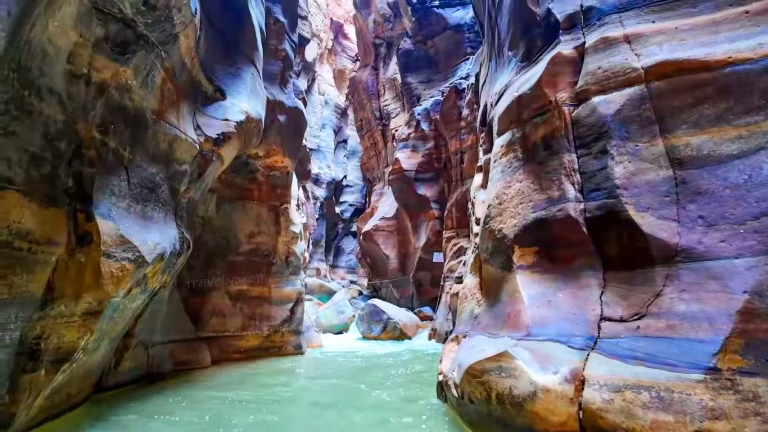
Late April is the sweet spot most guides point to, and it’s when we went. Across the country, April runs from about 10°C at night to 23°C by day (50–73°F), with Aqaba noticeably warmer. Rain gets unlikely, and the wet Siq Trail in Wadi Mujib has just opened for the season (it normally runs from April 1 to October 31, weather permitting).
For your bag, that means mostly warm-weather clothes, but not only. Evenings in Petra and Wadi Rum cool off quickly once the sun drops, so a light fleece or jacket earns its space. A thin rain shell is optional in late April. A sun hat isn’t, and the wind on open stretches and bridges is a good reason to pick one with a chin strap or a clip.
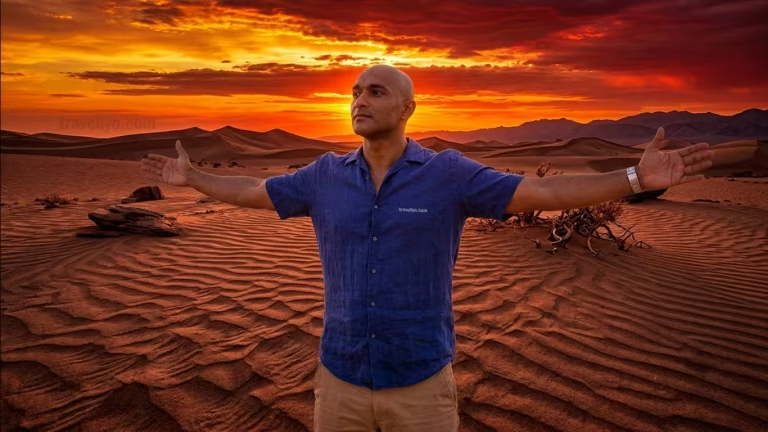
Wadi Rum is where we learned it for real. After sunset the temperature dropped faster than we expected, and by 11 PM we were both shivering in our tent, wrapped in the spare blankets and pretending to be fine. We’d packed for the daytime sun and not nearly enough for the night.
What to pack for Jordan in March
March is still the tail end of winter. Averages sit around 6–17°C (43–63°F), rain is possible, and the Wadi Mujib wet trails usually aren’t open yet, so leave the water shoes at home unless your trip runs into April. Pack a warm jacket, a light rain shell, long sleeves and closed shoes with grip. Evenings in Wadi Rum are cold, so if you’re only adding one extra item for March, make it a proper warm layer.
What to wear in Jordan in November
November is pleasant but changeable. Daytime highs are around 20°C (68°F) in Amman and Petra, and the Dead Sea is warmer at around 29°C (84°F). Mornings and evenings are cool, the first real rain of the season turns up, and desert nights are cold. Think layers: a long-sleeve shirt, a light sweater or fleece, a jacket that folds into a daypack, and shoes you won’t mind getting damp.
02. What to Wear in Jordan Without Overthinking It
Good news first: there’s no strict dress code for visitors. Nobody is going to stop you at Petra over a pair of shorts. The advice you’ll read everywhere is the same, though, and it’s easy to follow. Cover your shoulders and knees, keep things loose and light, and carry something you can throw on over the top. It’s respectful, and it’s also just sensible in a place with this much sun.
How much it matters depends on where you’re standing.
Where | What works | Good to know |
|---|---|---|
Petra and Wadi Rum | Loose, breathable trousers or skirts, a shirt with sleeves, a sun hat | Plenty of visitors wear knee-length shorts here. Sun cover matters more than any rule |
Amman and small towns (Karak, Madaba, Dana village) | Trousers or long skirts, tops that cover the shoulders | Locals dress more conservatively than tourists do at the big sites, and you’ll feel more at ease matching them |
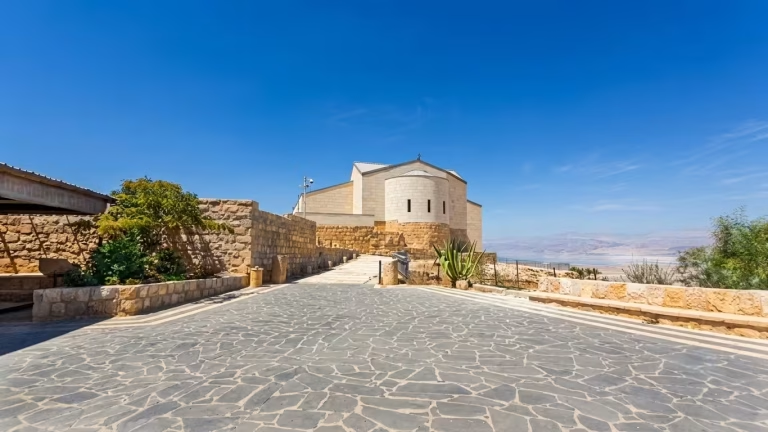
Mosques and churches (including Madaba and Mount Nebo) | Long trousers or a long skirt, sleeves, a scarf for women | Shorts and sleeveless tops are the things to avoid |
Dead Sea and Aqaba beaches, resort pools | Normal swimwear | Bring a cover-up for the walk to and from the water |
Wadi Mujib | Quick-dry clothes you’re happy to get soaked in | You will get wet, so leave the cotton in the car |
What should female tourists wear in Jordan?
Wear loose, lightweight clothing that covers your shoulders and knees: long trousers, a maxi skirt or a midi dress with sleeves, and a breathable top, with a light scarf in your bag. You don’t need to cover your hair, except inside mosques. At beaches and resort pools, normal swimwear is fine.
A big cotton or linen scarf does more jobs than anything else you’ll pack. It’s sun cover for your neck, a shawl for a church, a head covering for a mosque, and an extra layer when the evening cools down. Very tight, sheer or low-cut clothes tend to draw more attention than you’d like.
What should men wear in Jordan?
Long, lightweight trousers and a shirt with sleeves are the safest choice anywhere in Jordan. Knee-length shorts are common with visitors at Petra, Wadi Rum and the beach, but locals rarely wear them, and you’ll need trousers and sleeves for mosques and churches.
Lightweight, quick-dry trousers are far more comfortable than jeans, which you’ll regret by midday. A shirt with sleeves also saves your shoulders from the sun, which is a bonus you only appreciate on day three.
What is the dress code for Petra?
There’s no formal dress code at Petra. Wear breathable, comfortable clothes with your shoulders covered and shoes with real grip. Most visitors choose light trousers or knee-length shorts. The site is hot and sunny, so a hat and sun protection matter more than any dress rule.
The Siq, the narrow canyon you walk in through, is shaded. The climb up to the Monastery is not. Dress for a long walk in the sun and the rest sorts itself out.
For the full picture, including mosques, churches and what locals expect, we’ve put everything in one place.
03. The Jordan Packing List: Clothes, Shoes and Everything Between
This is the full Jordan packing list for a spring trip like ours: eight days, warm days, cool evenings. Travelling in another season? Swap in the extra layers or lighter fabrics from the weather table above. Going longer than a week? Plan on one wash, not a bigger bag.
Layers beat bulk
Jordan can go from a hot midday in Petra to a cold evening in Wadi Rum. One thick jacket won’t cover that. Think three thin layers instead: a breathable base (cotton, linen or merino), a light fleece or sweater, and a windproof or rain shell that squashes into a daypack.
Packing list for women (female packing list Jordan)
Item | For 8 days | Notes |
|---|---|---|
Loose tops with sleeves | 4–5 | Light colours keep the sun off your arms |
Lightweight trousers (linen, cotton or travel fabric) | 2–3 | One pair can double as evening wear |
Maxi skirt or midi dress with sleeves | | 1–2 | Often cooler than trousers on hot days |
Light fleece or sweater | 1 | Evenings and Wadi Rum |
Packable rain or wind shell | 1 | Folds into a daypack |
Large scarf or shawl | 1–2 | Sun, mosques, churches, cool evenings |
Swimsuit | 1–2 | Make one an old one; the Dead Sea mud wins |
Quick-dry top and leggings or shorts | 1 set | For Wadi Mujib |
Underwear | 6–8 | |
Moisture-wicking socks | 4–5 pairs | Better than cotton for long walks |
Sleepwear | 1 | Modest enough for a walk to a shared bathroom |
Packing list for men (what to wear in Jordan male)
Item | For 8 days | Notes |
|---|---|---|
Loose short-sleeve shirts or tees | 4–5 | Breathable, not too tight |
Lightweight long-sleeve shirt | 1–2 | Sun cover, and handy for mosques |
Lightweight trousers | 2–3 | Quick-dry beats jeans |
Knee-length shorts | 1 | Optional: Wadi Rum, Dead Sea, hot afternoons |
Light fleece or sweater | 1 | Evenings and Wadi Rum |
Packable rain or wind shell | 1 | Folds into a daypack |
Swim shorts | 1–2 | One doubles as your Wadi Mujib kit |
Quick-dry top | 1 | For Wadi Mujib |
Underwear | 6–8 | |
Moisture-wicking socks | 4–5 pairs | Better than cotton for long walks |
Both of you: a sun hat with a chin strap or clip, sunglasses, and a light scarf or neck buff.
Footwear: the one place not to compromise
Petra means a lot of walking on uneven, worn stone. Wadi Mujib means wet rock. I slipped in the canyon, so I’m biased towards shoes with real grip.
Shoe | Best for | Watch out for |
|---|---|---|
Broken-in trail runners or light hiking shoes | Petra, Dana, the castles, most days | New shoes and Petra make blisters. Break them in first |
Sturdy sport sandals | Hot afternoons, Dead Sea shoreline, Amman | Too little protection for scrambling; sand gets in at Wadi Rum |
Closed-toe water shoes with grip | Wadi Mujib, rocky Dead Sea shore | Bulky to pack; you can rent them at the Mujib centre |
Flip-flops | Hotel, pool, shower | No grip or support, and not suitable for the Mujib trail |
Dress shoes or heels | Leave at home | Nothing on this route wants them |
Water shoes: bring your own or rent at Wadi Mujib?
- Rent. Pros: no space in your bag, and no packing. Cons: guides report about 5 JOD, and you won’t know the fit or grip until you’re standing there.
- Bring your own. Pros: you know the fit, and they double as Dead Sea shoes. Cons: bulk, and a wet pair in your bag afterwards.
Sun, heat and wind
- Wide-brimmed hat with a chin strap or clip. (Taniya’s hat is the reason this is first on the list.)
- Sunglasses with UV protection
- Sunscreen (SPF 30–50) and a lip balm with SPF
- A neck buff or light scarf
- A reusable bottle of a litre or more
Bags
- If you’re renting a car, soft-sided bags are easier to fit in a boot than a hard shell.
- A 20–30 litre daypack for Petra and the hikes.
- A foldable tote or dry bag for wet kit after Wadi Mujib and the Dead Sea.
- Packing cubes are optional, but they make a two-car, thirteen-stop trip less of a daily puzzle.
Toiletries and health
- Sunscreen (more than you think), lip balm and a moisturiser; the air is dry
- Blister plasters and a small first-aid kit
- Any prescription medicines in their original packaging
- Hand sanitiser, tissues or wet wipes
Tech and power
POWER AND PLUGS
Jordan uses Types C, D, F and G sockets (J occasionally) at 230V / 50Hz. A universal adapter covers everything. Phone, camera and laptop chargers are usually dual-voltage (100–240V), but hair dryers and straighteners often aren’t, so check the label before you plug anything in.
- A power bank. Charging can be limited at desert camps.
- Offline maps. Download Jordan before you leave; some turn-offs are easy to miss.
- A phone mount and a USB car charger if you’re driving.
- A local SIM or eSIM (Zain, Orange and Umniah all sell tourist options).
Documents and money
- Passport valid for at least six months after the day you arrive
- Printed Jordan Pass with its QR code (don’t rely on your phone battery)
- Travel insurance; check it covers the wet canyon hike if you plan to do it
- Driving licence, and ask your rental company whether you also need an international driving permit
- A bank card, plus some Jordanian dinars in small notes
- Offline or printed copies of bookings and your rental voucher
04. Pack for the Day, Not the Country
Jordan packing gets simpler when you stop thinking about the trip and start thinking about the day. Each stop wants something different from your bag. Keep a daypack ready and load it for where you’re headed.
Petra day bag
- A full water bottle on the way in, and more water than you think you need for the Monastery climb (roughly 800 steps)
- Hat, sunscreen and a scarf
- A light layer; the Siq is shaded and cooler
- A snack
- Printed Jordan Pass and your passport or ID
- Small cash for toilets, tea and tips
- Phone, camera and a power bank
- Blister plasters, because someone always needs one
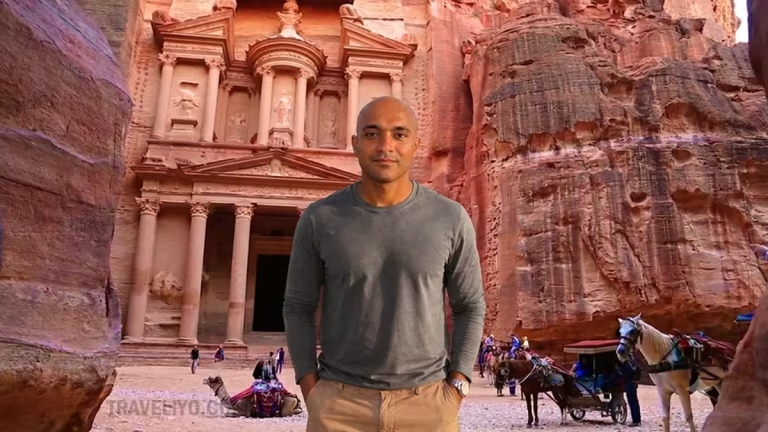
We were there early, in time for the Treasury in the morning light. It’s a good habit for packing too: going early means you’re past the hottest part of the day before it arrives.
Wadi Rum overnight
We spent a night at Sun City Camp, a mid-range camp with a private tent, a proper bed, an attached bathroom, and dinner and breakfast included. What we didn’t pack well was warmth and food. It’s worth getting both right:
- A proper warm layer, even in late April
- A few snacks. Dinner and breakfast were included, but by late evening there was nothing on offer except tea
- Closed shoes for the dunes. Taniya insisted on going barefoot, and the red sand was still quite hot
- A head torch or phone torch
- Power bank and cable, because charging in the tents is limited
- Some dinars in cash, since cards aren’t reliable out in the desert
- A buff or scarf for wind and dust
- Sunglasses and lip balm
- A cloth for your camera lens
Our tent had spare blankets, but don’t count on them as your only warm layer.
Wadi Mujib wet trail
- Your ticket includes the life jacket, and it’s required
- Water shoes and a dry bag: bring your own or rent at the centre
- A padlock for the lockers; guides say to bring your own
- Swimwear or quick-dry clothes (you will be wet, and deep in places)
- A towel and a full set of dry clothes left in the car
- A litre of water, and a waterproof pouch for your phone
- Nothing valuable
Most guides put the minimum age for the water trails at 18, so check before you plan around it. The trail normally runs from April to October and closes when it rains. The reserve is run by the RSCN.
Dead Sea float
- An old swimsuit (the mud stains)
- No jewellery
- No shaving for at least a day beforehand
- Water shoes or sandals with straps; the shore can be rocky and crusted with salt
- A small bottle of fresh water for rinsing your eyes. Taniya got splashed near hers, which is exactly why this earns its place
- A towel, and your phone kept well away from the water
Float for 15 to 20 minutes, then rinse off.
Aqaba and the Red Sea
- Swimwear and a rash guard or UV top
- Reef-friendly sunscreen
- Water shoes for rocky entries
- A cover-up for walking through town
- Check whether your hotel or dive centre rents snorkel gear before you pack your own
Road-trip car kit
- Phone mount, USB car charger and cable
- Offline maps
- Sunglasses
- Water and snacks
- Small notes for roadside stops
- Tissues
- Driving licence and rental papers
05. Packing for Jordan as a Couple (and With Kids)
As a couple
Two people, one rental car, thirteen stops. A few habits keep the packing from taking over the trip.
- Split your clothes across both bags. A few outfits from each of you in each suitcase means one lost bag isn’t a disaster.
- Share what you only need once: the first-aid kit, a universal adapter with USB ports, a dry bag, a big bottle of sunscreen.
- Keep the personal stuff personal: your own hat, water bottle, power bank and shoes. And don’t assume the other person has the spare fleece covered. We both underestimated the cold in Wadi Rum.
- Mind the weight. We were travelling with heavy luggage, and the rental car took care of that. If you’re relying on buses and taxis, pack lighter than you think you need to.
With kids
We travelled as a couple, so this part comes from research and from families who’ve done Jordan, not from our own trip. Treat it as a starting point and check the details against your children’s ages.
Stroller or carrier at Petra?
- Stroller. Pros: carries your gear, and works for naps. Cons: uneven ancient stone, lots of steps, and a long walk in.
- Carrier. Pros: hands-free, copes with steps and rough ground. Cons: hot, and hard on your back by the end of the day.
Most families do better with a carrier, with a hat or umbrella for shade.
Family add-on | Why it earns its space |
|---|---|
Child car seat or booster (or one pre-booked with your rental) | Taxis don’t carry child seats, and rear seat belts may not work |
Baby or toddler carrier | Easier than a stroller at Petra |
Sun hats and a compact umbrella | Shade is thin on the open stretches |
Snacks and familiar food | Camp and roadside menus are limited, and picky eaters struggle |
Children’s medicines and rehydration salts | Healthcare is best in Amman and thinner elsewhere, so bring what you’d normally reach for |
Downloaded games, shows or audiobooks | Some days involve hours in the car |
Swimwear and water shoes in kids’ sizes | For the Dead Sea and the Red Sea |
A few things to check before you plan around them. Children under 12 get into most Jordan Pass sites free, so ask before you buy them a pass. The Wadi Mujib water trails normally have a minimum age (often 18), so they’re rarely a family activity. And most rental companies want drivers aged 21 or over, with a credit card for the deposit.
06. What We Got Right, and What We Got Wrong
Most packing lists tell you what to bring. Fewer admit what went wrong. Here’s both, from our eight days.
What worked
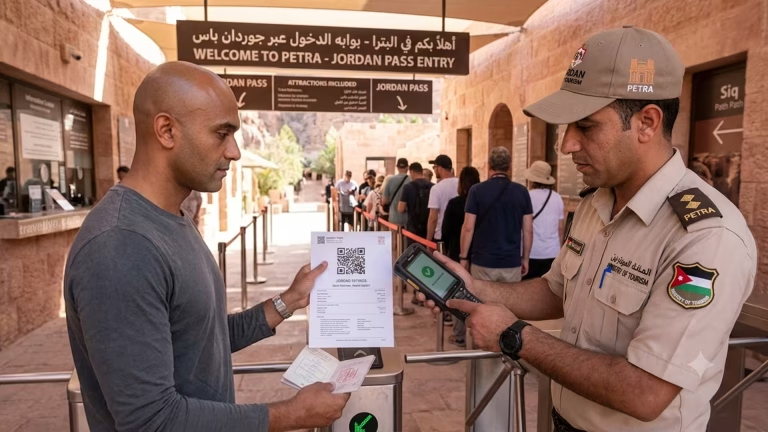
- A printed Jordan Pass. We had ours ready to be scanned at the Petra gate, with no hunting for a phone signal.
- A rental car. With heavy luggage, having our own wheels took the stress out of moving between stops.
- A day bag packed before the guide arrived. For the Wadi Rum jeep tour, it meant no scrambling at the last minute.
What didn’t
What happened | What to pack or do instead |
|---|---|
Wadi Rum got cold fast, and by 11 PM we were both shivering in our tent | A proper warm layer each, even in late April |
No snacks, and by late evening we were hungry with only tea on offer | A few light snacks in your daypack |
Taniya’s hat blew off a bridge | A chin strap or clip |
Taniya went barefoot on the dunes, and the red sand was still hot | Closed shoes in the afternoon, or wait until the sand cools |
I slipped on a rock in the canyon | Shoes with real grip, and slow steps on wet rock |
07. What’s Not Allowed in Jordan, and Other Do’s and Don’ts
Jordan is easy to travel in, but a few rules catch visitors out, and some of them affect what goes into your bag. Here’s the short version.
In your bag | The rule |
|---|---|
Drugs | Don’t bring any. Penalties are severe, even for small amounts, and a medical cannabis prescription from home isn’t recognised |
Prescription medicine | Bring enough for the trip in the original packaging, with a copy of the prescription, in your carry-on. Check that your medicine is legal in Jordan |
Drones | You need a permit in advance. Without one, customs can hold the drone until you leave. Don’t fly near airports or military sites |
Antiquities | Don’t take stones, pottery or coins from sites. Luggage can be searched on departure |
On the ground | The rule |
|---|---|
Photography | No military or government buildings, and none at border crossings. Ask before photographing people |
Alcohol | Drink only in licensed venues. Public drinking and public intoxication are offences, and authorities have warned about adulterated alcohol, so buy from licensed shops |
Driving | Zero tolerance for drinking and driving |
Public affection | Official advice is to avoid it, including holding hands. Keep it low-key |
Ramadan | No eating, drinking or smoking in public from sunrise to sunset. Ramadan 2027 is expected to start around 7 February |
Other | Insulting the royal family and religious proselytising are illegal. Carry ID or a photocopy of your passpor |
Check your government’s travel advice first
One more thing belongs on every Jordan packing list: a quick look at your own government’s travel advice, before you book and again before you fly. As of October 2026, the US State Department rates Jordan Level 3 (Reconsider Travel), Canada advises avoiding non-essential travel, and the UK Foreign Office advises against travel to certain parts of the country. The US and Canadian advisories name the borders with Syria and Iraq as areas to avoid, and they mention regional tensions and possible disruption to flights.
Advice changes quickly. Check it yourself, keep your bookings flexible, and take out travel insurance that covers cancellation and disruption.
08. Forgot Something? What You Can Buy in Jordan
You’ll forget something. We forgot snacks. The good news is that Amman makes forgetting easy to fix. The south, less so, so shop before you leave the capital.
Easy to buy in Amman | Better to bring from home |
|---|---|
Sunscreen, lip balm and basic toiletries (pharmacies and big malls such as City Mall, Mecca Mall and Abdali Mall) | Prescription medicines and any specific brands you rely on |
Hand sanitiser, wet wipes and tissues (corner shops) | Broken-in walking shoes and water shoes |
Chargers, cables and adapters (malls and electronics shops) | Anything technical, like a dry bag or a good daypack |
Snacks and water | Your own hat, with a chin strap |
Cash from ATMs, which are plentiful in Amman | Swimwear you actually like |
Two things to do before you head south. Take out cash, because ATMs are limited outside the larger cities. And buy snacks, because once you’re at a desert camp there’s nothing to buy except tea.
A scarf is one thing worth buying here. Bedouin scarves (keffiyeh) are sold at the camps, and they do double duty as dust protection and a souvenir.
09. Packing for Jordan: Your Questions Answered
10. One Last Check Before You Zip the Bag
If you only skim this Jordan packing guide, keep three things: layers, shoes with real grip, and snacks. We learned two of those the hard way, in a cold tent in Wadi Rum.
Before you close the bag:
- Passport valid for at least six months, and a photocopy
- Printed Jordan Pass
- Warm layer for the evenings
- Walking shoes (broken in) and water shoes
- Hat with a chin strap, sunglasses, sunscreen
- Universal adapter, power bank, offline maps
- Prescription medicines in their original packaging
- Cash in dinars, and a card
- A few snacks
- A quick look at your government’s travel advice
Packing for Jordan is mostly about small decisions, and most of them don’t matter much. The ones that do are on that list.
Planning the rest of your trip? These will help:
Got a question about packing for Jordan, or an item you’d never leave behind? Tell us in the comments and we’ll answer.
For more historical background, You can read the detailed article on touristjordan.com
Did this guide help you? when to visit jordan? Share your experience in the comments below – it will be very valuable for other travelers.