Deception Island Tour – Inside Antarctica’s Strangest Volcano Island (Part 02)


1. 🚢 Introduction – Arrival at Deception Island
The Deception Island tour began long before our boots touched the black volcanic land. It started in the quiet, overwhelming tension of the Southern Ocean, somewhere between grey, endless water and a sky that seemed to stretch forever. Our Ushuaia to Antarctica cruise aboard the Ocean Explorer had moved steadily south overnight, and by early morning the horizon shifted. Dark, unfamiliar landforms slowly emerged through the Antarctic mist, unlike any coastline we had seen before.
From a distance, Deception Island did not look extraordinary. It appeared as a low, broken ring of rock and ice, partially hidden by fog. Only as we moved closer did its true, dramatic form begin to reveal itself. The island was not a traditional landmass at all — it was a volcanic caldera, a giant circular structure rising out of the ocean like the rim of a submerged bowl. The center of this “bowl” was filled with seawater, forming a perfect natural harbour hidden from the outside world.

As the Ocean Explorer approached the narrow gap between the cliffs, the atmosphere on deck changed completely. Conversations became softer, almost whispers. Cameras were lifted, ready for action. Even the most talkative passengers fell silent, watching intently as the ship made its way through Neptune’s Bellows, the dramatic and narrow entrance into the caldera. From the outside, the island still looked closed and impenetrable. And then, in a matter of minutes, we were suddenly inside it — surrounded by steep, dark volcanic hills on all sides. The ocean, which had been wild and restless just an hour before, became strangely calm within this natural ring of land.
This moment marked the true beginning of our Deception Island tour. It felt less like arriving at an island and more like entering a hidden, secret world. The air smelled faintly of minerals and wet stone. Patches of steam drifted upward from the land, barely visible against the cold Antarctic air. There was no welcoming shoreline, no palm trees, no bright colours — only ash-covered ground, rock, ice, and profound silence.

Standing on the deck, wrapped in layers of thermal clothing, we realized that we were not just visiting another destination on our Ushuaia to Antarctica cruise. We were about to walk inside a living volcano — the strangest Antarctica volcano island — one that still slept uneasily beneath the surface of the ocean. And this was only the beginning.
If this entrance felt surreal, what waited inside Deception Island promised to be even more unsettling, mysterious, and unforgettable.
If you missed the beginning of our polar adventure, catch up with Part 01 of our journey.
2. ❓ Why is it called Deception Island?

To understand why is it called Deception Island, you must try to see it the way early explorers saw it — approaching from the open, hostile Southern Ocean. From that perspective, the island looks almost ordinary: a curved line of dark cliffs rising out of the water, with snow resting here and there like a thin blanket. There is nothing to suggest that inside this ring lies one of the safest natural harbours in Antarctica — or that you are looking at an active volcano.
This is exactly what “deceived” the first sailors.
In the early 1820s, British naval officer Captain Edward Bransfield and American sealer Nathaniel Palmer were exploring the harsh, unmapped waters. When they first came across Deception Island, they believed it to be just another rugged, uninhabitable mass of rock and ice, like many others scattered through the Antarctic Peninsula region.
But everything changed when they noticed a narrow, almost invisible break in the forbidding cliffs.

This tiny gap, later named Neptune’s Bellows, was so tight and well hidden that it visually blended into the surrounding rock from a distance. Strong currents moved violently through it, making it look dangerous and impassable. But once a ship successfully passed through the treacherous entrance, an extraordinary sight opened up: a perfectly sheltered inner harbour, large enough to hold dozens of vessels.
That moment of profound surprise — the discovery of a warm, calm, navigable harbour hidden inside what looked like a solid, hostile landmass — is what gave birth to the name Deception Island. The island had literally tricked its visitors.
Standing on the deck of the Ocean Explorer now, listening to our expedition guide from Quark Expeditions describe this history, it was easy to imagine the shock of those early explorers. Even today, with modern navigation systems, the entrance still feels unreal. The cliffs rise on either side like the jaws of the Earth itself, and then suddenly, impossibly, an open water basin appears in the middle.
Unlike many other Antarctic landings, a Deception Island tour is not just a visit — it is an experience of illusion and revelation. You approach what seems like a closed world, and then you are unexpectedly invited inside its core. That sense of being “tricked” by nature hasn’t disappeared over time. If anything, the isolation and silence make the illusion even more powerful.
One moment you are battling the edge of the world, and the next you are safely floating in the heart of an Antarctica volcano island. And the question “why is it called Deception Island” suddenly answers itself. You are living the deception.
3. 🔥 Inside an Active Volcano – Deception Island Volcano

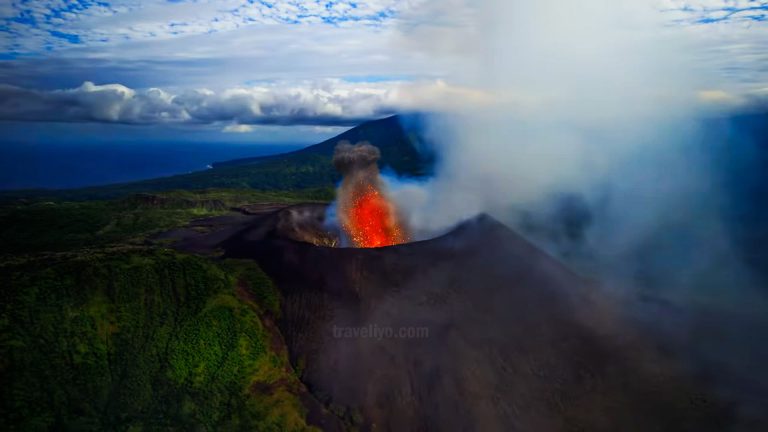
Stepping onto Deception Island doesn’t feel like stepping onto a normal island; it feels more like walking straight into the heart of a sleeping giant. The entire inner bay that welcomed our Deception Island tour exists because of an active volcanic caldera, formed by a massive eruption thousands of years ago. We weren’t just visiting land — we were standing inside an active Deception Island Volcano.
At Pendulum Cove and Whalers Bay, thin streams of steam curled up from the black volcanic sand, as if the ground itself was gently breathing. Where the hot geothermal water met the icy sea, the ocean turned into a surreal, multi-temperature pool. One step closer to the shore and the water felt strangely warm. One step away and it was back to instant, bone-freezing cold.
Of course, someone in our group had to test it.
A brave (or perhaps slightly foolish) guy dipped his gloved hand into a “warm spot” near the shore and immediately pulled it out, yelping. “Warm… but very wrong warm!” he shouted, while the rest of us laughed through frozen lips. Moments like these make a visit Deception Island truly memorable.

The expedition leader from Quark Expeditions gave us clear safety boundaries. Even though it is an active site, volcanic activity is closely monitored by international scientific teams from nearby stations. Certain zones are kept off-limits to protect both visitors and the fragile environment.
Walking on the ash-covered ground felt soft and slightly unstable, like walking on a dark, sandy cloud. Every single footprint reminded me that this land had once been molten, and could be again one day. That thought should have been scary. Instead, it was oddly humbling. Inside this Deception Island Volcano, nature wasn’t violent or dramatic—it was calm, patient, and powerfully silent. And we were just tiny visitors passing through its ancient memory.
4. ⚓ Whalers Bay – History Frozen in Time
As our Deception Island tour continued deeper into the caldera, we reached one of the most haunting places on the island — Whalers Bay. This was once a busy and brutal whaling station, first used by Norwegian companies in the early 1900s, and later controlled by the British. Today, it stands as a quiet, rusted reminder of human ambition in one of the most remote places on Earth.

Old, broken fuel tanks lay scattered along the shore, their metal skins eaten away by decades of icy wind and salt. Wooden remains of buildings lay half-collapsed, slowly sinking into the volcanic ash. Even the tracks where whales were once dragged from the sea were still faintly visible. It felt surreal to walk through a place that had once echoed with machines, voices, and struggle — now replaced by absolute silence.
In 1969, a violent volcanic eruption struck Deception Island, forcing scientists and remaining personnel to abandon the area almost overnight. Equipment was left behind. Structures were destroyed or buried. What we were seeing wasn’t a rebuilt historical site — it was an abandoned one, dramatically frozen in time.

I remember lifting my camera, then stopping for a few seconds instead. Something about the scene demanded stillness. The contrast between the dark volcanic ground, old metal, and pure white snow created a natural documentary frame — no filter needed.
Even with my gloves on, my fingers slowly went numb while adjusting the camera. And in true clumsy-traveler fashion, my grip failed and I dropped the lens cap into the deep, black ash. Gone forever. A tiny sacrifice to the spirit of Deception Island, it seems. Whalers Bay isn’t just photogenic. It tells a story — of exploration, exploitation, disaster, and finally, silence. A chapter of Antarctica that refuses to be forgotten.
5. 🐧 Wildlife Encounters Near Deception Island

Stepping onto the black volcanic ground of Deception Island, it didn’t take long to realize that we were not the true owners of this place. The real locals were already there — and they were watching us. Chinstrap and Gentoo penguins dotted the shoreline, waddling confidently between snow patches and warm, steamy sand as if tourists like us were a perfectly normal sight on a Deception Island tour.
Some of them seemed genuinely curious. One penguin stopped a few feet in front of me, tilted its head, and just… stared. For a moment, it felt like I was being judged for my fashion choices — bulky red jacket, oversized boots, and fogged-up glasses. If penguins can laugh, I’m pretty sure that one did. They definitely make you feel like the visitor when you visit Deception Island.
Beyond the penguin colonies, we spotted Antarctic skuas and petrels gliding above us. These birds are powerful, sharp-eyed, and surprisingly alert. Our expedition guide reminded us not to leave anything unguarded. “If it looks edible, it’s already stolen,” he joked. I tightly zipped my backpack, just in case one of them was developing an interest in my protein bars.
Closer to the water, a seal lay completely still on the shore, like a forgotten rock. Only when it slightly lifted its head did we realize it was perfectly alive — and extremely uninterested in our presence. It was a quiet, peaceful moment, watching it breathe slowly by the icy water.

We were strictly reminded to keep a safe, ethical distance from all wildlife — at least 5 metres from penguins and even more from seals. No touching, no feeding, no flash photography. It wasn’t just a rule, it felt like a responsibility. This Deception Island tour was not a zoo visit or a photo-op playground. It was a respectful encounter — a short moment inside a world that belongs, fully and completely, to nature. And honestly? I felt like the visitor… and they felt like the hosts.
6. 🥾 Deception Island Tour – Our On-ground Experience
Our Deception Island tour began with an exciting landing by Zodiac boats, the only way to access this volcanic horseshoe-shaped island. As the boat cut through the icy Antarctic waters and entered the flooded caldera, the surrounding cliffs seemed to close in around us, creating a surreal, almost cinematic moment. It felt unreal to know that we were literally sailing into an active volcano.

Stepping onto the shore was the next thrill. The black volcanic sand beneath our boots created a striking contrast against the snow-covered peaks in the distance and the pale grey sky overhead. The temperature hovered around -2°C (28°F), making the slight warmth emanating from the steam vents feel strangely noticeable. This subtle reminder of the Deception Island Volcano beneath the surface made the walking experience both eerie and magical — a mix of beauty, danger, and wonder.
Of course, not everything went smoothly. There were plenty of funny moments. A few of us slipped on the wet, muddy ground, and at one point, icy water found its way into a boot — an instant “Antarctic footbath” and a shock to the system we won’t forget anytime soon. Between laughter and frozen toes, those small mishaps somehow made the experience even more memorable.
Safety was taken seriously throughout the Deception Island tour. The expedition crew, whether from Hurtigruten, Quark Expeditions, Polar Pioneer, or similar operators, gave clear group rules before we even stepped ashore. We had to maintain distance from wildlife, avoid sensitive areas, stick to marked paths, and always stay within sight of the guides. These guidelines ensured that both visitors and the fragile environment remained protected.
7. 🧘 Emotions & Human Experience – Standing Inside a Volcano
The silence of Deception Island was overwhelming. No traffic, no city noise, no human-made sounds — just the distant call of seabirds and the gentle crash of waves against the shore. It was the kind of silence that makes you instantly aware of your own heartbeat and every single breath you take.
The scale of the landscape was truly humbling. Towering cliffs, endless stretches of volcanic sand, and vast open skies made us feel incredibly small. Standing there, inside the walls of a massive Deception Island Volcano, created a strange sense of insignificance — yet at the same time, a deep appreciation for being part of something much bigger than ourselves.

There was a powerful feeling of standing on the very edge of the Earth. So far from cities, borders, and everyday life, it felt like we had reached the end of the world, a place untouched by time. In that moment, everything slowed down, and all the usual worries seemed irrelevant.
It became a moment of self-reflection. Standing in such a raw and extreme environment forced us to think about life, time, and our place on this planet. More than anything, the Deception Island tour strengthened our connection to nature. This place didn’t just impress us — it changed the way we felt about the world.
8. 💡 Practical Tips for Deception Island Tour

If you plan to visit Deception Island as part of your Antarctic cruise, here are the essential tips we learned on the ground to ensure your experience is safe, comfortable, and truly unforgettable.
Best Time to Visit: January is the ideal month for a Deception Island tour, as it offers relatively milder temperatures (around -2°C / 28°F), better sea conditions, and increased wildlife activity.
What to Wear: Dress in multiple thermal layers, a waterproof and windproof outer jacket, insulated gloves, wool socks, and sturdy waterproof boots. Weather conditions can change rapidly from sun to snow in minutes.
Battery Management: Cold temperatures drain batteries quickly. Carry spare batteries for your camera or power bank and keep them close to your body for warmth.
Waterproofing: Always use waterproof covers for your camera, phone, and backpack. Zodiac landings often involve splashes, and the volcanic ground is wet and muddy.
Physical Fitness Level: A moderate level of fitness is recommended. The terrain on Deception Island is uneven, slippery, and sometimes steep, requiring balance and stability.
Sea Sickness Advice: If you are prone to sea sickness during the Zodiac transfers, take medication in advance and choose a seat in the middle of the boat for maximum stability.
Following these tips will help ensure that your Deception Island tour is safe, comfortable, and truly unforgettable.
9. 🥶 Challenges & Unexpected Moments

Antarctica has a strange way of reminding you that you are only a guest.
The moment we stepped off the Zodiac boat onto the ash-covered shore of Deception Island, the wind made its presence known. It wasn’t dramatic or loud, but it was sharp — the kind that cuts through layers and finds a way to creep into every gap of your jacket. The ground beneath our boots was soft and slippery, a mix of wet volcanic ash and gravel. Walking felt slightly uncertain, like taking slow steps on black snow that refused to cooperate.
At one point, I tried to look confident, almost like I had done this a hundred times before. The truth is, I had not even done this once. One careless step was enough to send a small wave of icy water inside my boot. I looked down, then up at Taniya. She didn’t say anything — she just smiled. That made it worse. For the next twenty minutes, every step came with a gentle reminder that I was walking with an Antarctic “souvenir” inside my shoe.
Photography was another battle on this Deception Island tour. The cold affected everything — fingers, focus, and batteries. My camera froze twice, as if it needed its own tea break. Just as I thought I had framed the perfect shot of Whalers Bay, the screen went black. Meanwhile, Taniya managed to capture a photo of me desperately warming the camera with my hands. I’m sure it will appear in some future “behind-the-scenes” collection.
The funniest moment, however, belonged to a fellow traveler whose hat flew off dramatically, as if answering a personal call from the South Pole. Everyone watched in silence as it disappeared across the ash-covered ground, finally resting near an old rusted tank. No one volunteered to retrieve it — and for good reason.
Returning back by Zodiac was another adventure. A sudden wave soaked half of our group. For a brief moment, we all looked like survivors from a shipwreck instead of explorers. And yet, we laughed. Loudly. Because that’s the strange magic of places like this — even the discomfort on your Deception Island tour feels unforgettable. In a way, Deception Island didn’t just challenge the body. It challenged control itself. And that was the most honest experience of all.
10. ⭐ Traveliyo Insider Recommendations

Based on our experience, several cruise companies stand out for a Deception Island tour. Quark Expeditions, Hurtigruten Expeditions, and Polar Pioneer offer well-organized landings, experienced guides, and strong safety measures. These cruises usually include expert-led zodiac transfers and informative briefings about the island’s volcanic and whaling history.
Traveling in January has clear advantages for those who visit Deception Island. It is the peak Antarctic summer, meaning milder temperatures, longer daylight hours, and easier landings due to reduced ice buildup. Wildlife is also more active during this time, making it ideal for photographers and nature lovers.
For photography, bring wide-angle lenses to capture the vast crater and dramatic landscapes. A zoom lens is useful for wildlife and distant ruins. Always use a waterproof cover, because unexpected splashes from zodiac boats are almost guaranteed — as we painfully learned. Also remember to carry spare batteries and keep them warm inside your jacket pockets.
From a Traveliyo perspective, Deception Island is not just a stop — it is an experience that perfectly blends adventure, history, and raw nature. It is one of those rare places that makes you feel small in the most powerful way.
11. 🗺️ Link to Next Destination – King George Island
From the haunting beauty of Deception Island, our journey naturally continued towards King George Island — one of the most important and active locations in Antarctica. Unlike the untouched, deserted feel of Deception Island, King George Island is known for its research base stations and even an operational airstrip.
This next stop matters because it represents the human side of Antarctica — scientists, researchers, and international teams working together in one of the harshest environments on Earth. It is where science meets survival, and where the wild meets the structured.
After standing inside a volcano on this Deception Island tour, arriving at a place filled with life, activity, and scientific purpose was a striking contrast. This shift from abandoned landscapes to human presence created the perfect transition for Part 03 of our Antarctic journey.
👉 Next: From Deception Island to King George Island — where Antarctica speaks in a different voice.
12. 💬 FAQ Section – Deception Island Tour

01. Is Deception Island safe to visit?
Yes, Deception Island is considered safe to visit Deception Island when you travel with licensed Antarctic expedition operators. All landings are strictly managed under Antarctic Treaty environmental guidelines, and visitors are carefully monitored at all times.
02. Is Deception Island part of Antarctica?
Yes. Deception Island is part of the South Shetland Islands archipelago, which lies just north of the Antarctic Peninsula and is officially part of the Antarctic region.
03. Is Deception Island part of every Antarctica cruise?
No. Only certain Ushuaia to Antarctica cruise routes include it.
04. Is Deception Island an active volcano?
Yes. It is one of the most active volcanoes in Antarctica. The last major eruptions occurred in the late 1960s and early 1970s, but today the Deception Island Volcano is monitored and considered safe for controlled tourism.
05. Can you swim at Deception Island?
Some travelers do take a “polar plunge” due to the geothermally warmed water near the shore. However, it is optional and depends on weather conditions and the expedition team’s decision.
06. How long is a typical Deception Island tour?
Most landings last between 2 to 4 hours, depending on conditions, weather, and itinerary. Zodiac transfers and guided walks are included within this time.
07. What kind of wildlife can be seen there?
You may see Chinstrap and Gentoo penguins, Antarctic skuas, petrels and seals resting near the shorelines or swimming close to the island.
08. When is the best time to visit Deception Island?
The best time is January, which is peak Antarctic summer. Weather conditions are more stable, wildlife activity is high, and daylight lasts much longer.
09. Do I need special fitness to visit?
Basic physical fitness is enough. You should be able to walk on uneven ground, step in and out of Zodiacs, and tolerate cold weather for a few hours.
10. Which cruises visit Deception Island?
Well-known expedition operators like Hurtigruten, Quark Expeditions, Oceanwide Expeditions, and Polar Pioneer frequently include Deception Island in their Antarctica itineraries.
13. ✅ Short Reflective Conclusion
Standing inside Deception Island felt unreal — not just because it is a volcano island hidden within the ocean, but because it quietly reminds you how small you truly are. History, geology, silence, and time all exist together in a strange balance here. There are no loud voices, no distractions, and no familiar landmarks — only raw Earth and reflection.
As we left the island behind on our Ushuaia to Antarctica cruise, I realized that Deception Island wasn’t just another destination. It was a moment — one that stripped away routine and replaced it with perspective.
But our journey is far from over. Ahead of us lies King George Island, a place where Antarctica feels strangely closer to humanity — research stations, airstrips, and stories from across the world waiting to be discovered.
That will be Part 03
And this time, the ice will speak differently.
If you missed the beginning of our polar adventure, catch up on part 01 our journey from Ushuaia to Antarctica
For more historical background, You can read the detailed article on Wikipedia
Did this guide help you? Have you also visited Deception Island ? Share your experience in the comments below – it will be very valuable for other travelers.