
Akchour Waterfalls Tours: 9 Insider Secrets for First-Time Morocco Hikers


Our journey to the Akchour Waterfalls actually began a day earlier in Chefchaouen—the Blue Town that feels like it was dipped in pastel paint and left to dry under the Moroccan sun. Taniya and I spent our first day wandering through the narrow blue alleyways, stopping every few minutes because she wanted “just one more picture,” which, as usual, turned into ten. That slow, relaxed start set the perfect tone for what came next: heading deep into Talassemtane National Park toward one of the most talked-about natural spots in northern Morocco.
When we finally arrived at the trailhead for the Akchour Waterfalls, the atmosphere shifted immediately. The town’s calm hum faded and was replaced by the sound of moving water, rustling leaves, and the cheerful voices of hikers returning with mud on their shoes and huge smiles on their faces. The air felt cooler, cleaner—the kind that makes you unconsciously take a deeper breath. Taniya kept saying, “This already feels different,” and she was absolutely right.
The first section of the walk was simple enough, but the setting pulled us in more than we expected. Clear streams ran alongside the path, small wooden bridges guided us over the water, and cliffs rose sharply on both sides, creating a sense of walking into a completely separate world. There was no dramatic “wow moment” right at the start—just a slow build-up of natural beauty that kept getting better with every step. It felt unfiltered, untouched, and genuinely peaceful.
By the time we properly entered the Akchour Valley (the heart of the Akchour Waterfalls Morocco experience), the surroundings had changed from merely pleasant to quietly impressive. That’s when I realised that this place doesn’t try to impress you instantly. It grows on you—every sound, every shade of green, and every turn in the path preparing you for the majestic waterfalls still waiting deeper inside the Rif Mountains.
🏞️ 2. Destination Overview: Akchour Waterfalls Morocco
Akchour Waterfalls sits deep inside Talassemtane National Park, approximately 30 minutes by taxi from the famous blue streets of Chefchaouen. The location itself is part of what makes the experience truly unique. It is not a tourist-made attraction; it is simply a raw, dramatic valley shaped by rushing rivers, sheer cliffs, and dense forest, and people visit because the landscape naturally compels them to. The area is divided into two main highlights: the Small Waterfall (Petite Cascade) and the Grand Waterfall (Grande Cascade), with an entirely different route leading to the famous God’s Bridge (Pont de Dieu), a massive natural rock arch that spans across the gorge.
The path to the waterfalls follows the Oued Farda river, a clear, cold stream that runs all year round. Even in the dry summer months, the water remains surprisingly fresh because it originates high up in the surrounding Rif Mountains. This steady flow of water is what created the deep pools, narrow passages, and smooth rock surfaces that characterize the hiking trail. It’s not a dramatic canyon, nor an overly dense forest—it’s more of a balanced mix of river, rich greenery, and rugged mountains, with each element perfectly complementing the others.
Unlike many popular tourist spots in Morocco, Akchour feels distinctly like a local sanctuary. You see Moroccan families picnicking near the water, small tea stalls built simply from wood and tarpaulin, and local hikers greeting each other along the trail. Everything feels simple but intentional—nothing artificial, nothing staged specifically for visitors. Even the path itself is a combination of natural ground, fixed stones, and wooden bridges built by locals to make the walk easier.
Another defining feature of the Akchour Waterfalls experience is its quiet progression. You don’t see the falls immediately. Instead, you walk through a valley that slowly changes shape—the river narrows, the cliffs rise higher, and the trees grow thicker. It’s a destination where the journey to reach the waterfalls is just as meaningful as the waterfalls themselves.
🗺️ 3. Why I Chose to Visit Akchour Waterfalls

When Taniya and I planned our northern Morocco route, Chefchaouen was always a must-visit. But Akchour Waterfalls entered the plan for a much simpler reason: almost everyone we met in the Blue Town kept saying, “If you have one extra day, go to Akchour.” It wasn’t about aggressive hype or advertising; it was the way they said it—casual, confident, as if they knew we would appreciate the raw beauty once we got there.
Another major reason was the desirable mix of activities. We loved the idea that it wasn’t just a single viewpoint. Akchour offered a proper, rewarding hiking trail, quiet riverside spots, places to rest, and multiple natural attractions (the two falls and God’s Bridge) all within one accessible area. For us, that balance mattered. We wanted something active but not punishingly extreme, peaceful but definitely not boring, and authentic without being completely isolated. Akchour Waterfalls Morocco seemed to perfectly fit all of those requirements.
We had already visited Talassemtane National Park the previous day, so going deeper into the same mountain range felt natural—almost like continuing a story we had already started. And honestly, I wanted a break from the beautiful blue walls and the city rhythm. I wanted dense trees, the restorative sound of the river, and a place where time slowed down a little.
If you prefer outdoor destinations that feel unforced, naturally stunning, and budget-friendly, you will likely find the exact same compelling reasons to visit Akchour Waterfalls tours for yourself.
🚶♀️ 4. My Favorite Things to Do in Akchour Waterfalls
Akchour Waterfalls is not a “one spot, one picture, and leave” type of place. It’s a slow, layered experience where every part of the trail feels different. These are the moments and activities that stood out the most for me and Taniya, including a few of our usual travel miscalculations and funny little setbacks.
4.1 Walking the Riverside Trail to the Small Waterfall
The first stretch of the trail toward the Small Waterfall is the kind of hike where you keep saying, “Let’s walk just a bit more,” because the surroundings gently pull you forward. The river stays right beside the path almost the entire time, sometimes calm, sometimes making a soft rushing sound as it moves through narrow rocks.
One thing I immediately liked was how incredibly green the whole valley felt, even though Morocco is famously known for deserts and drier landscapes. Here, the air had that subtle mix of moist soil, running water, and crushed leaves. It reminded me a little of some hikes in southern Germany, but with a more rugged, unpolished Moroccan charm.
Our first mini-mistake of the day happened early. I tried to take a shortcut by stepping over a set of rocks in the river, thinking it would save us a few minutes. It saved nothing. One rock was loose, my foot slipped, and I ended up ankle-deep in freezing water while Taniya stood there laughing before finally helping me out. Expecting sympathy from her on hikes is always a gamble.
But the rest of the path was easy, and reaching the Small Waterfall felt rewarding without any dramatic effort. It’s not huge, but the pool underneath is beautiful and clear, often taking on a soft turquoise shade. Some travelers swim here, but the water was genuinely too cold for both of us—especially after my earlier “foot bath.” Instead, we sat near the rocks, dipped our feet again (this time on purpose), and enjoyed the quiet atmosphere.
4.2 Hiking Deeper to the Grand Waterfall
If the Small Waterfall feels like a warm-up, the route to the Grand Waterfall of Akchour is where the real hike begins. The path gets narrower, slightly steeper, and more technical in a few spots. Nothing dangerous, but enough to make you feel like you’re genuinely earning the final view.
This part of the trail passes through dense greenery, past tiny wooden tea stalls, and over makeshift bridges, each one looking like it was built by someone who grew up knowing the river better than the mountains themselves. We stopped at one stall run by an older man who seemed to have no interest in speaking, but made incredibly good mint tea. His entire shop consisted of a kettle, two benches, and a simple bamboo shade. It felt perfectly placed.
A funny moment came about halfway through. Taniya insisted she knew the correct turn because “the map says so.” The map definitely did not say so. Her shortcut took us into a dead-end area with slippery rocks, no discernible trail, and one very patient donkey staring at us like we were lost children. We had to backtrack three minutes uphill while she pretended not to hear me lightly complaining. A classic Taniya navigation error.
The final approach to the Grand Waterfall feels cooler, darker, and more enclosed. The cliffs rise dramatically on both sides, and the sound of falling water grows steadily louder. When we finally reached it, the waterfall appeared much taller than I expected—a long, clean stream of water dropping into a deep blue pool. Not a dramatic rainforest-style cascade, just a simple, tall, quiet waterfall with a compelling sense of calm power.
This was easily the best moment of the day. We stayed there almost an hour, partly because the scenery was deeply peaceful, and partly because Taniya wanted the “perfect picture” but couldn’t decide whether she liked the left side or the right side better. Akchour Waterfalls tours are definitely designed for patient photographers!
4.3 Exploring the Trail to God’s Bridge
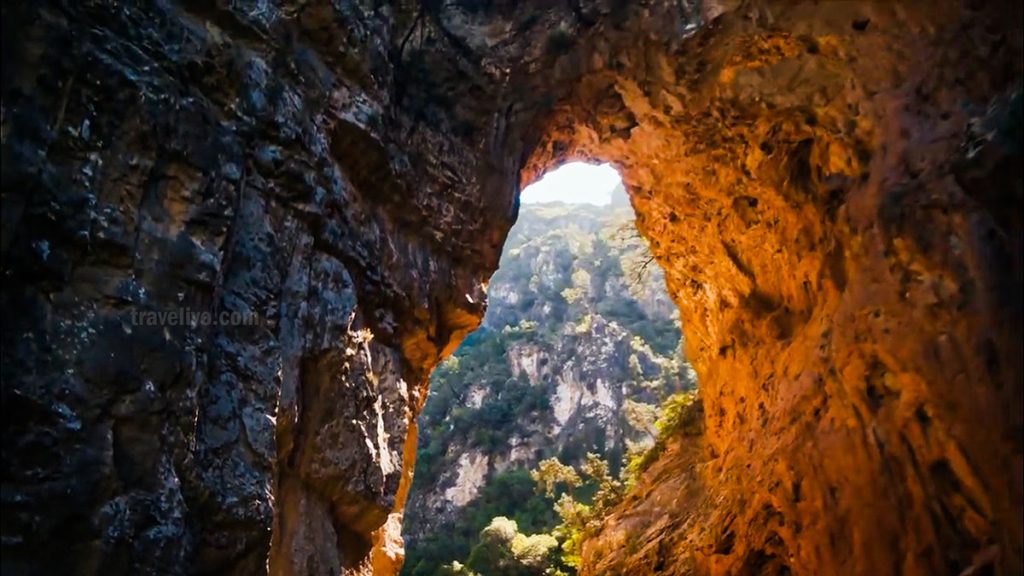
Akchour is famous not only for its impressive waterfalls but also for Pont de Dieu (God’s Bridge), a massive natural rock arch. The trail to God’s Bridge splits from the main path, and it’s slightly more rugged than the waterfall route.
We weren’t originally planning to go, but curiosity won the argument. The path had a few steep sections where you need to use your hands for balance, and we met several local hikers who were doing the entire route in sandals, which immediately made me question my own expensive hiking gear choices.
The highlight, of course, is the rock arch itself. It’s huge—much larger than photos make it seem—and standing beneath it gives you a real sense of scale. The river runs far below, carved into the rock over centuries. We didn’t climb down to the lower pools, but we watched a few people take the challenge, which included a slippery descent that looked like something we’d both fail miserably at.
4.4 Resting at Local River Cafés
One of the most charming aspects of the entire Akchour Waterfalls Morocco experience is the line of small cafés set right along the river. Some have tables literally placed inside shallow water. We stopped for a simple lunch: chicken tagine, fresh bread, olives, and orange juice. Nothing fancy, nothing overtly touristic—just good homemade food enjoyed with our feet soaking in the cool running water.
The owner joked that the natural “air conditioning” was included in the price. He wasn’t wrong.
4.5 Slow Moments and Observations
Some of my favourite memories weren’t tied to specific attractions. They were small, simple moments:
Watching the sun fall between the towering cliffs.
Listening to the water running behind us while we walked.
Seeing hikers return muddy and genuinely laughing.
Hearing Taniya counting her steps to “stay motivated.”
A stray, friendly cat following us for nearly half an hour for no apparent reason.
Akchour Waterfalls isn’t a place where you rush from one highlight to the next. It’s the kind of destination where the journey itself becomes the highlight.
🚕 5. How I Got There: Navigating the Akchour Waterfalls Transportation
Reaching the Akchour Waterfalls from Chefchaouen is one of the simplest day trips in northern Morocco, and almost everyone follows the same straightforward route. We did too—though with our usual mix of good planning and small miscalculations.
We left Chefchaouen early morning from the CTM Bus Station side, where a cluster of grand taxis wait for travelers heading to Akchour. These are the large beige Mercedes taxis you see everywhere in Morocco. The price is standard: 25–30 MAD per person (one way) for a shared taxi. If you hire the whole taxi privately, expect to pay around 150–200 MAD depending on your bargaining skills and the driver’s mood that morning.
Our driver, an older gentleman named Youssef, drove calmly, barely speaking unless I asked a question. He wasn’t a “tour guide type,” but he shared a few useful points—mainly that the return shared taxis tend to disappear after 5 p.m. That proved to be true, though we ignored the advice at first.
The road from Chefchaouen to Akchour is surprisingly smooth with continuous mountain views, small villages, and sudden turns where goats seem to appear from nowhere. The drive takes about 30–35 minutes. Taniya spent most of the ride staring at the scenery while I tried to catch a signal to check the route on Google Maps—but network coverage drops halfway, so that didn’t work.
Once we reached the trailhead, we found a small parking and visitor area with several food stalls, local guides, and a few mid-range cafés. These guides aren’t official “companies”—they are licensed local mountain guides from the Talassemtane region, many associated with the Association Talassemtane Pour l’Environnement et le Développement (ATED), a real environmental and hiking association in the area. Their guides usually charge 150–250 MAD for the full hike, depending on the route (Grand Waterfall, Small Waterfall, or God’s Bridge).
We didn’t hire a guide at first, thinking the trail looked straightforward. That confidence lasted only until we reached our first confusing fork. Eventually, a local guide named Hamid—clearly used to rescuing confused tourists—pointed us in the right direction. He didn’t charge; he only smiled and said, “Just follow the river. Not the goats.” Practical advice that saved us.
At the end of the day, our only real logistical mistake was ignoring Youssef’s warning about return taxis. When we finished our hike around 6:15 p.m., there were no shared taxis left. For a moment, we thought we might have to walk halfway back. Luckily, a private driver associated with Akchour Transport Service (a small local group that usually takes hikers back to Chefchaouen) was still waiting near the entrance. He charged 120 MAD for the two of us—more expensive than the morning ride, but completely reasonable considering the time and our tired legs.
The ride back felt quiet and slow, partly because both of us were exhausted, partly because the mountains during sunset look different—softer, darker, almost still.
If I were going again, I would definitely:
Leave Chefchaouen before 8:30 a.m.
Try to book a guaranteed return taxi time with a specific driver.
Carry plenty of cash (there’s no ATM anywhere near the falls).
Keep offline Google Maps ready for the start/end points.
Akchour Waterfalls is close enough for an easy day trip, but far enough to feel like a separate, peaceful world once you enter the valley.
☀️ 6. Best Time to Visit Akchour Waterfalls – From My Experience

We visited Akchour Waterfalls in late summer, around early September. It was warm, but not overwhelmingly hot, and the river still had a steady, beautiful flow. The trail was dry enough to walk comfortably, and the water at the Small and Grand Waterfalls looked clear with that soft turquoise shade. For us, this felt like the ideal balance—sunny weather for hiking, but still enough water to make the waterfalls look impressive.
If you visit in July or August, expect the highest temperatures and a busier trail. Families from nearby towns come for picnics, and many locals swim in the pools. It’s lively but not chaotic. The water levels drop slightly, yet the main cascades remain reliable.
Spring (March–May) is probably the most impressive season for Akchour Waterfalls Morocco. The mountains are at their greenest, small streams appear everywhere, and the falls are at their fullest volume. The weather is cooler, and the trail feels fresher, especially in the morning.
Winter is calm and less crowded, but the trail can get muddy and slippery. The water is freezing cold. It’s good for photography, but perhaps not ideal for swimming or long picnic breaks.
If I were choosing again, I would still pick September or late May—warm days, cool mornings, and manageable crowds for the best overall experience.
🍲 7. Food & Drink I Tried at Akchour Waterfalls
Food at Akchour Waterfalls isn’t fancy, but it feels perfectly suited for the place. Most river cafés serve simple homemade dishes cooked on traditional clay pots or small stoves. After a few hours of rewarding hiking, even basic food tastes better than usual!
We stopped at a small café built partly over the river—the kind where the tables literally stand in shallow flowing water. The owner served us delicious chicken tagine, fresh bread, olives, and a steaming pot of mint tea. The tagine had soft potatoes, carrots, and a mild spice blend—nothing dramatic, just clean, warm flavors that felt incredibly comforting after the climb.
Taniya ordered a fresh orange juice that tasted like someone squeezed it seconds before handing it to us. Moroccan oranges always feel sweeter and more fragrant, and this one was no different.
Later in the afternoon, we shared a Berber omelette at another wooden hut café. It came piping hot in a metal pan with tomatoes, onions, and herbs cooked into a soft mix. I honestly didn’t expect something so simple to taste that good after hours of walking, but it genuinely hit the spot.
We didn’t try big restaurants here because Akchour doesn’t really have them. The charm is exclusively in these tiny river cafés. Every meal feels like an essential part of the landscape—feet soaking in cool water, birds singing above, and the tranquil sound of the river running beside you.
💰 8. My Travel Costs & Budget Notes for Akchour
Akchour Waterfalls is one of the more affordable outdoor experiences in Morocco, especially if you start your journey from Chefchaouen. These are the real costs we paid, along with the general ranges travelers (particularly those looking for Akchour Waterfalls tours on a budget) can expect:
Category | Item | Our Cost | Typical Cost Range (MAD) |
|---|---|---|---|
Transport (Shared) | Shared grand taxi (Chefchaouen> Akchour) | 30 MAD pp | 25-30 MAD pp |
Transport (Private) | Return private taxi (evening, no shared available) | 120 MAD total for tow | 150-200 MAD total |
Food (Main) | Chicken tagine near the river | 50 MAD pp | 40-60 MAD |
Food (Snack) | Berber omelette / sandwich | 30 MAD | 25-35 MAD |
Drinks | Fresh orange juice / Mint tea pot | 10-15 MAD | 10-15 MAD |
Guides | Local Guide (not required) | N/A (We tipped Hamid) | 150-250 MAD per group |
Parking | Visitor Area Parking | N/A | 10-20 MAD |
Total Day-Trip Budget for Two People:
Expect to spend around 250–400 MAD (approximately €25–€40 or $27–$44 USD) for the day, depending on your transport choices and how much you snack.
Compared to most national parks or popular hiking spots around the US, Europe, or Australia, Akchour Waterfalls is extremely budget-friendly. The biggest cost factor is transport—food and activities remain accessible to everyone.
If you want to keep your spending low:
Always share a taxi both ways.
Bring snacks and bottled water from Chefchaouen.
Eat one main meal instead of two at the river cafés.
Akchour Waterfalls is one of the rare places where your total cost mainly depends on how comfortable and quick you want the journey to be.
💡 9. Traveliyo Insider Tips: Planning Your Akchour Waterfalls Hike
After spending a full day hiking to the Akchour Waterfalls, here are the lessons, small mistakes, and practical hacks we gathered—the kind of insider information that actually makes a difference when you’re on the trail.
Tips | Why It Matters (My Experience) |
Carry at least 1.5L of water per person. | We underestimated the heat during the second half. Tea stalls are there, but carrying your own is easier and cheaper. |
Start early and finish before 5 p.m. | Return shared taxis get extremely scarce after sunset. We learned this the hard way and had to negotiate a private ride back. |
Offline maps help, but don’t rely on them completely. | The trail has several confusing forks. If unsure, always follow the river or ask locals—they are expert trail-pointers. |
Wear hiking shoes with good grip. | Some rocks near the water are extremely slippery. My attempt to take “the easier way” ended up with my shoe soaking in freezing water. |
Bring small change (low-denomination MAD). | Mint tea, fresh juice, and snacks are cheaper when paid correctly. Most tiny stalls cannot easily break 100 MAD notes. |
Avoid swimming near the Grand Waterfall. | The water is deep and very cold. Currents can be unpredictable. The smaller, shallower pools are much safer. |
Protect your camera/phone. | Several river crossings involve splashes, and one misstep can end badly for electronics. A dry bag is a smart idea. |
Don’t rush the trail. | Akchour Waterfalls is about slow enjoyment—riverside breaks, shaded rest spots, and the quiet build-up toward the main falls. |
Expect crowds on weekends. | Moroccan families visit heavily on Fridays and Sundays. For a calmer experience, pick a weekday morning. |
If hiring a guide, ask for ATED-affiliated locals. | They know the trails well, are officially licensed, and support conservation work in the national park. |
These are the small things that make your Akchour Waterfalls Morocco experience smoother, safer, and more enjoyable from start to finish.
⭐ 10. Traveliyo Recommendation (Curated)

Based on our visit and the valuable insights we’ve gathered from other seasoned travelers, here is Traveliyo’s curated recommendation for first-time visitors planning Akchour Waterfalls tours from Chefchaouen:
If you’re short on time: Focus on the Small Waterfall and enjoy the riverside cafés. It gives you the authentic Akchour atmosphere without a demanding hike.
If you want the best viewpoint: The Grand Waterfall offers the most rewarding scenery. The final approach is slightly challenging but manageable for most travelers.
If you’re looking for something unique: Choose the God’s Bridge trail. It’s more rugged but leads to one of northern Morocco’s most impressive natural rock formations.
Best time to hike: Start between 8:00–9:00 a.m. to avoid midday heat and guarantee return transport availability.
For couples (like us!): Plan a slow, full-day experience. Take breaks by the river, have lunch with your feet in the water, and enjoy the gradual build-up of the trail. Akchour is less about rushing to a single attraction and more about the peaceful transitions between each segment.
For budget travelers: Use shared taxis, bring your own snacks, and eat at the simple local cafés. Akchour Waterfalls can easily be a 150–200 MAD day trip.
Overall Traveliyo Verdict:
Akchour Waterfalls is worth visiting not because it’s dramatic or “Instagram-perfect,” but because it feels genuine and restorative—a quiet mix of mountains, clear water, and local life. It’s ideal for travelers who enjoy simple, real landscapes and don’t mind earning their views with a bit of satisfying walking.
❓ 11. FAQ – Akchour Waterfalls
We’ve collected the most common questions travelers ask when planning their visit to the Akchour Waterfalls Morocco area:
1️⃣ Are Akchour Waterfalls safe to visit?
Based on our visit, yes! The trails are generally safe, but some slippery rocks near the river can catch you off guard. Always wear sturdy shoes and watch your step—Taniya almost slipped while trying to take a perfect selfie!
2️⃣ How long does it take to reach the waterfalls?
From Chefchaouen, it’s around 30–35 minutes by car to the trailhead, then a 1.5–2 hour hike to the main Grand Waterfall, depending on your pace.
3️⃣ Can I do a guided tour?
Absolutely! Local guides, often affiliated with ATED (Association Talassemtane), offer excellent guided hikes. While we managed without one for most of the way, having a guide can be great for exploring the God’s Bridge route or finding hidden swimming spots.
4️⃣ What should I wear?
Comfortable hiking clothes, a hat, sunscreen, and proper shoes with grip. A quick tip: a light rain jacket can help with the waterfall spray near the Grand Cascade.
5️⃣ Is it kid-friendly?
It is of moderate difficulty. Children who can handle hiking on rocky paths will enjoy it, but toddlers may struggle on the steeper and more technical sections near the Grand Waterfall.
6️⃣ Are there entry fees?
No official fees, but parking near the trailhead may cost around 10–20 MAD. A tip: support local guides and café owners—they rely on small tips and purchases.
7️⃣ Can I swim in the pools?
Yes! The pools under the waterfalls are incredibly refreshing, but the water is cold, and currents near the Grand Waterfall can be strong. Taniya tested the shallower pools first and gave me the thumbs-up!
8️⃣ How crowded is it?
Weekends (especially Friday and Sunday) can be busy with locals and tourists. Early weekday mornings are ideal for quieter hikes and better photography.
9️⃣ How hard is the hike?
Moderate. Expect some uphill walking, rocks, and river crossings. We slipped a couple of times, so laughter and patience definitely help!
🔟Are dogs allowed?
Yes, locals often hike with dogs. Just be mindful of wildlife and other hikers on the trail.
🗺️ 12. Nearby Attractions – Extending Your Trip
If you are already in the region for your Akchour Waterfalls tours, consider extending your itinerary to these nearby highlights:
Chefchaouen (The Blue City): Only ~30 km from Akchour. Don’t miss wandering the famous blue alleys, tasting local goat cheese, and picking up handmade rugs.
Talassemtane National Park: Just a short drive past Akchour. Expect dense cedar forests, scenic viewpoints, and hidden rivers—perfect for a deeper immersion into Moroccan nature.
God’s Bridge (Pont de Dieu): This is a separate, more challenging hike near Akchour. A massive natural rock arch perfect for incredible photos and a short, rugged adventure.
Oued Laou Beach: About 1.5 hours’ drive to the north. If you want a fantastic mix of mountains and sea on the same day or weekend trip, this is a great coastal option.
For more historical background, You can read the detailed article on Wikipedia
Did this guide help you? Have you also visited Talassemtane National Park? Share your experience in the comments below – it will be very valuable for other travelers.